Governor Kim Reynolds recently took a decisive step by signing a new law in Iowa, which she believes will protect the rights of women and girls. This law removes “gender identity” from the state’s civil rights code, a move that has sparked significant debate. “It is common sense to acknowledge the obvious biological differences between men and women,” Reynolds stated.
The new legislation, Senate File 418, eliminates gender identity as a protected class and changes how sex and gender are legally defined in Iowa. Reynolds emphasized that the previous Civil Rights Code blurred the biological line between the sexes and that it was unfair for Iowa taxpayers to fund gender reassignment surgeries. She declared this practice unacceptable for herself and most Iowans.
The bill quickly moved through the Iowa Legislature, passing both the Senate and the House with considerable support, though a few Republicans sided with Democrats in opposition. The civil rights code in Iowa now prohibits discrimination based on education, employment, housing, and public accommodations, while clearly defining “male” and “female” according to reproductive anatomy. It also specifies that “gender” should not be confused with gender identity or expression.
Governor Reynolds argued that the bill aligns Iowa’s laws with the federal Civil Rights Act and mirrors policies in many other states. She referenced previous state laws that restricted transgender participation in sports and the use of certain public spaces, explaining that this measure bolsters those protections. Reynolds expressed that every Iowan deserves respect and dignity, emphasizing that the bill strengthens protections for women and girls.
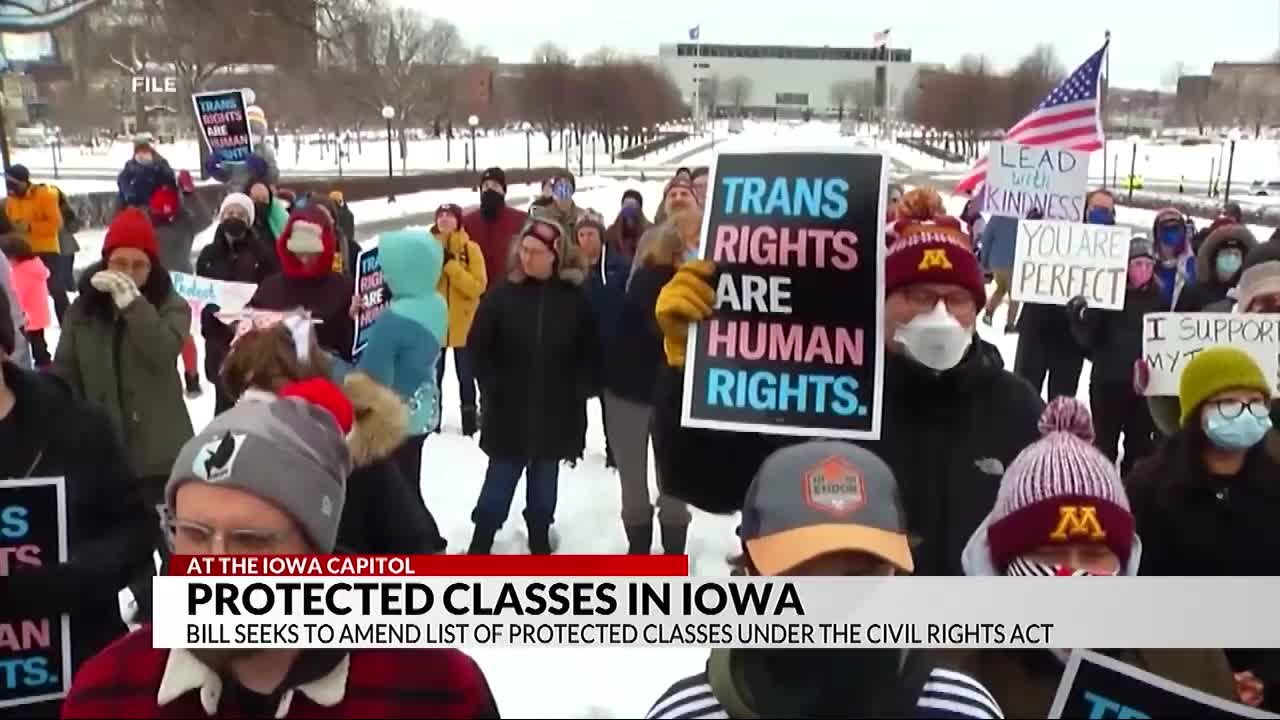
The bill’s passage stirred protests at the Iowa State Capitol, where hundreds of LGBT advocates gathered, chanting and holding signs that declared “Trans rights are human rights.” The demonstration was met with a strong police presence as activists voiced their disapproval. Democratic state Rep. Aime Wichtendahl, Iowa’s first openly transgender legislator, criticized the law as “anti-trans.”
Wichtendahl argued that the purpose of the bill is to erase transgender individuals from public life and stigmatize their existence. She expressed concerns that such legislation aims to make their existence illegal and force them back into hiding. Despite these criticisms, Reynolds and her supporters believe the law is a necessary step.
Before this change, Iowa was among 23 states that included gender identity in anti-discrimination protections. Reynolds’ decision aligns Iowa with broader efforts by former President Donald Trump to undo transgender policies set by the previous administration. Trump’s executive order reinforced the recognition of only two sexes, which he stated are “not changeable and are grounded in fundamental and incontrovertible reality.”
Trump’s policies, including ending federal support for gender-reassignment procedures for minors, have faced legal challenges. These actions reflect a larger national debate over gender identity, one that continues to divide opinion. The conversation remains heated as both sides present their arguments.
Conservative news outlets like Fox News and the New York Post have reported on these developments, highlighting the ongoing discussions surrounding gender identity and civil rights. The dialogue includes varied perspectives, with some emphasizing traditional views on gender and others advocating for broader protections. The debate shows no signs of slowing down.
While Reynolds’ actions have been praised by some as a step forward in protecting women and girls, others see it as a regression in civil rights. The protests and opposition highlight the deep divides within the state and the nation. The issue remains a contentious topic, with strong feelings on both sides.
This legislative change is part of a broader national conversation about gender identity and its place in society. As more states consider similar measures, the debate is likely to continue, with both supporters and opponents voicing their opinions. This topic remains a significant point of contention in today’s political landscape.
Reynolds stands firm in her belief that this law is right for Iowa, prioritizing what she sees as the protection of biological distinctions. Her supporters argue this approach is necessary to maintain fairness and clarity in civil rights. Opponents, however, continue to challenge this viewpoint, advocating for more inclusive protections.
The law’s implementation is set for July 1, and its effects will be closely watched by both supporters and critics. As the nation observes Iowa’s actions, the conversation about gender identity and civil rights remains a dynamic and evolving issue. The implications of this law will likely influence future legislative decisions across the country.
Meanwhile, the voices of those affected by these changes continue to resonate, with advocates and opponents alike sharing their stories and perspectives. The ongoing dialogue underscores the complexity of the issue and the varied experiences of those involved. As the debate persists, the nation remains engaged in a broader discussion about rights, identity, and societal values.