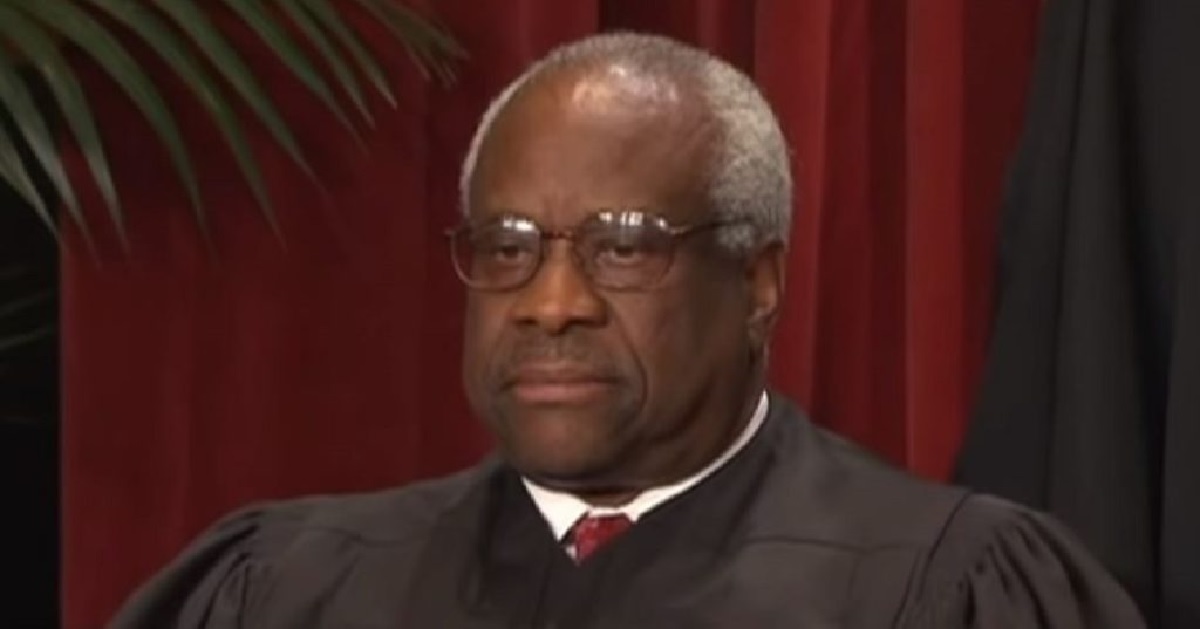
Justice Clarence Thomas continues to be a polarizing figure, often targeted by critics from the left. Despite facing harsh criticism and even racially charged attacks, Justice Thomas remains undeterred. Recent reports highlight his willingness to voice dissent more frequently than his fellow Supreme Court justices.
According to a Newsweek analysis, Thomas dissented in four out of 17 opinions this term. This sets him apart from Justices Neil Gorsuch and Ketanji Brown Jackson, who each dissented three times. Justices Sonia Sotomayor and Elena Kagan have dissented fewer times, with one and two dissents, respectively.
Amy Coney Barrett and Samuel Alito have shown varied dissenting patterns. Barrett dissented once in full and twice in part, while Alito dissented once in full and once in part. Meanwhile, Chief Justice John Roberts and Justice Brett Kavanaugh have not dissented at all this term.
American University law professor Stephen Wermiel notes Thomas’s unique approach. Wermiel emphasizes that Thomas has consistently written more dissenting and concurring opinions than his peers. This term, Thomas has tied for the most dissenting and concurring opinions, reflecting his independent stance.
Wermiel explains that Thomas has his distinct interpretation of the Constitution. He is unafraid to express his views whenever he sees fit, often challenging established doctrines. Thomas’s willingness to spell out an agenda is a hallmark of his judicial philosophy.
Burton Craige, a University of North Carolina law professor, echoes Wermiel’s observations. Craige is not surprised by Thomas’s frequent disagreements with other justices. He attributes this to Thomas’s tendency to adopt extreme positions that challenge settled constitutional law.
Craige points out that Thomas’s record is indicative of his broader judicial approach. Thomas’s willingness to challenge precedent distinguishes him from other justices. This has been a consistent aspect of his time on the bench.
Justice Thomas’s independent stance often places him at odds with his colleagues. His approach reflects a broader commitment to questioning prevailing legal doctrines. This has solidified his reputation as a maverick on the Supreme Court.
Thomas’s judicial philosophy continues to spark debate among legal scholars. His willingness to dissent has earned him both criticism and admiration. Despite the controversy, Thomas remains steadfast in his beliefs.
For conservatives, Thomas represents a pillar of principled judicial leadership. He is seen as someone who is unafraid to speak his mind and uphold conservative values. His dissents serve as a reminder of his commitment to his interpretation of the Constitution.
Many conservatives view Thomas as a crucial voice on the Court. His approach resonates with those who value strict constitutional interpretation. Thomas’s record of dissent is not just about disagreement but about advocating for his vision of the law.
Critics may disagree with Thomas’s positions, but his impact is undeniable. His judicial philosophy challenges the status quo and encourages rigorous debate. For supporters, this is a testament to his dedication to conservative principles.
While some may question Thomas’s methods, his influence is clear. His willingness to dissent underscores his commitment to his beliefs. This has made him a prominent figure in the conservative legal movement.
Justice Thomas’s legacy will likely be defined by his bold stances. His willingness to challenge precedents has shaped the Court’s dynamics. For many, Thomas embodies the spirit of an independent and principled jurist.
As debates continue, Thomas’s role in shaping the Court’s direction remains significant. His dissents often serve as a counterpoint to the majority opinions. This highlights his pivotal role in the ongoing discourse surrounding the Constitution.