Appeals Court OKs National Guard in Illinois, Says They Can’t Be Deployed
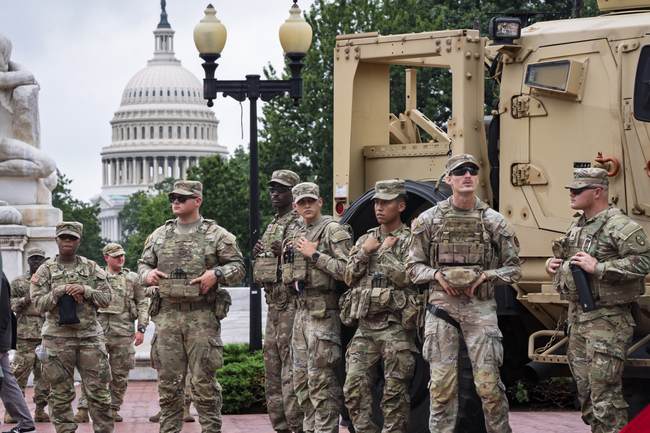
The Seventh Circuit issued a split decision this weekend that allows President Donald Trump to federalize the Illinois National Guard but blocks their deployment on federal ground within the state. The ruling responds to a lawsuit brought by Illinois and the city of Chicago after federal troops were sent to help curb violent crime. The court’s order changes the immediate legal landscape while the upper courts consider the appeal.
The lawsuit targeted the White House move to send troops toward Chicago in an effort to reduce violence, arguing the federalization and deployment exceeded presidential authority. Illinois and Chicago argued the deployments violated state control over its Guard unless certain federal conditions were met. The case moved quickly through the courts given the political stakes and public attention.
“IT IS ORDERED that appellants’ request for an administrative stay is GRANTED as to the federalization of the National Guard and DENIED as to the deployment of the National Guard. Pending a decision on the request for a stay pending appeal, the district court’s October 9, 2025, order is temporarily STAYED only to the extent it enjoined the federalization of the National Guard of the United States within Illinois. Members of the National Guard do not need to return to their home states unless further ordered by a court to do so.”
The court’s written opinion was posted publicly and outlines why the judges split over federal authority versus the limits on deployment inside Illinois. The technical distinction could matter in future fights over federal intervention in violent cities. Legal teams on both sides say the appeal will likely proceed toward a definitive ruling.
In a television interview, J.D. Vance tore into Illinois Gov. J.B. Pritzker over Chicago’s violence and blamed local leadership for failing residents. Pritzker “is the governor of a state where its biggest city has murder rates that rival the most violent places in the Third World,” Vance said. Why is he so mad at Donald Trump for trying to keep Chicagoans safe? He should be mad at the criminals that he has failed to keep at bay.”
Governor Pritzker insists Illinois and Chicago do not need federal troops to address crime and that local authorities should lead the response. The governor’s team argues that federal involvement risks overreach and undermines state control of the Guard. That stance sits alongside longstanding tensions over sanctuary-city policies and federal immigration enforcement.
.@VP: JB Pritzker "is the governor of a state where its biggest city has murder rates that rival the most violent places in the Third World. Why is he so mad at Donald Trump for trying to keep Chicagoans safe? He should be mad at the criminals that he has failed to keep at bay." pic.twitter.com/RVgmjJ1uWR
— Rapid Response 47 (@RapidResponse47) October 12, 2025
Chicago Mayor Brandon Johnson announced that city officials would not assist federal immigration efforts, reaffirming the city’s sanctuary stance and refusing cooperation with certain federal deportation actions. That declaration escalates the dispute between federal authorities and city leaders over how to handle crime tied to illegal immigration. The mayor’s position became a focal point in the legal fight over federalization.
The Trump administration has moved federal personnel to Washington D.C., Memphis, Portland, and to operations near Chicago to secure federal facilities and tamp down violence. Authorities pointed to recent incidents, including a deadly shooting at an ICE facility in Dallas, as reasons for beefed-up federal security. Protests and confrontations with federal agents in Portland and Chicago have made these deployments politically charged.
The White House framed the moves as delivering results for Americans, noting that federal efforts are focused on protecting facilities and assisting local law enforcement when asked. Supporters argue federal resources are necessary when cities face sustained violence and local responses fall short. Opponents say those actions blur constitutional lines between state and federal authority.
Editor’s Note: The Schumer Shutdown is here. Rather than put the American people first, Chuck Schumer and the radical Democrats forced a government shutdown for healthcare for illegals. They own this.