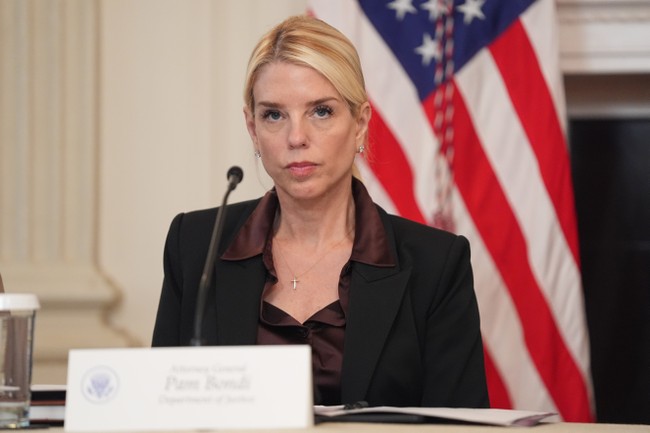
Federal agents arrested a Minnesota man after an online post offering a $45,000 bounty for U.S. Attorney General Pam Bondi appeared on TikTok. The post allegedly included a sniper-style image and an explicit threat, which triggered an FBI investigation and led to criminal charges. Court documents and law enforcement actions in the case underline how social media threats can cross into federal crimes. This piece outlines what happened, the legal fallout, and the wider context of rising political threats in the country.
Authorities say the arrest took place on October 16 when agents detained Tyler Maxon Avalos in Ramsesy County on multiple charges. Investigators allege Avalos posted a murder-for-hire style threat on TikTok that ran afoul of federal law prohibiting interstate transmission of threats to injure another person. The FBI opened its inquiry after receiving a tip at its National Threat Operations Center describing a “threatening post against United States Attorney General Pam Bondi.”
The TikTok post reportedly showed an image of Bondi with “a sniper-scope red dot on AG Bondi’s forehead” and carried the caption “WANTED Pam Bondi REWARD 45,000 DEAD OR ALIVE PREFERABLY DEAD.” The same account allegedly left a comment reading “cough cough when they don’t serve us then what?” according to investigators. The affidavit also notes the account had a pinned reference to “An Anarchist FAQ.”
Federal prosecutors treat public threats against government officials seriously, and this case moved quickly into federal court. Authorities cite statutes that make it a crime to transmit threats across state lines, and law enforcement agencies have broadened monitoring of violent online rhetoric. When a post names or targets a public official, it can prompt immediate investigative resources and potential arrest actions.
Avalos’ record is described as lengthy in court filings, with prior convictions that include felony stalking and domestic violence. A magistrate judge later ordered his release under strict conditions: restricted travel limited to Minnesota, mandatory mental health treatment, and bans on firearm possession and alcohol use. Those conditions reflect a court effort to balance public safety with procedural safeguards while charges proceed.
This arrest arrives amid a measurable uptick in threats against public servants and elected officials. Capitol Police data indicate threats against members of Congress rose by more than 18 percent in recent years, and academic tracking notes that vigilante-style violence has become a more common form of political aggression. Law enforcement officials warn that online platforms can amplify dangerous content and make direct threats easier to spread and harder to trace.
MINNESOTA:
Tyler Maxon Avalos, a 30-year-old man from St. Paul, Minnesota, was arrested by the FBI for posting a TikTok video that offered a $45,000 bounty for the assassination of U.S. Attorney General Pam Bondi.
Avalos has a criminal history that includes a 2022 felony… pic.twitter.com/Gc5yK90nwi— Just the Facts. No BS! (@Daniell39173501) October 27, 2025
Cases like this also test how social media companies handle violent posts that may amount to criminal conduct. Platforms face pressure to remove explicit calls for violence quickly, but critics argue automated moderation and inconsistent enforcement leave gaps. When a post appears to promise a bounty or to incite lethal action, federal investigators will often seek records and cooperation from the platform to identify the account holder and corroborate evidence.
The legal pathway from online post to arrest is increasingly well-trod: a tip or referral leads to an affidavit, which can support search warrants or criminal complaints. From there, arrest, detention, and pretrial conditions follow established procedures, with judges balancing community safety against defendants’ rights. In this case, authorities say the content and accompanying materials gave sufficient cause to file charges and seek restrictions on the accused.
Republican-leaning commentary has emphasized that political violence threatens public servants across the spectrum and that law enforcement must act decisively when threats appear. At the same time, debates persist over free speech boundaries, online moderation, and whether social media platforms are doing enough to prevent escalation. The Avalos case is a stark reminder that violent rhetoric online can carry real legal consequences and real danger for targeted individuals.