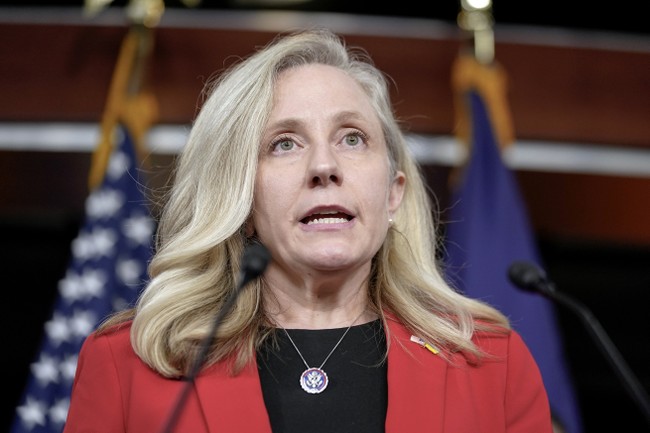
Rep. Abigail Spanberger (D-VA) has declared she would refuse to work with President Trump on economic matters, even if doing so would help Virginians find jobs. That stance has become a centerpiece of criticism from conservatives who say it puts partisan grievance above practical results. This piece looks at her refusal, the consequences of that posture, and where responsibility for job growth should lie.
Spanberger’s refusal to cooperate with the president on jobs is not a small political quibble; it is a policy position with real consequences for working families. Voters in Virginia deserve officials who prioritize economic opportunity over personal dislike. When a candidate promises to shut the doors on cooperation with the White House, that promise should raise alarms for anyone concerned about job creation.
That stance was made public when PBS NewsHour asked whether a Spanberger administration in Richmond would work with Trump to create job opportunities, and the answer was no. Turning away from the federal government when it can deliver infrastructure, trade wins, or regulatory relief is a choice that limits options for the commonwealth. Refusing to work across the aisle because of partisan hatred is a luxury Virginians cannot afford in a fragile economy.
Reporter: Would you work with President Trump on areas like job creation?
Spanberger: No pic.twitter.com/82yw7QIXDk
— Greg Price (@greg_price11) October 31, 2025
Her rhetoric on other issues has also raised eyebrows among conservatives who see inconsistency and incoherence, and that contributes to a broader narrative about readiness for executive office. Candidates for governor should be judged on how they handle pressure, how they negotiate, and whether they can put constituents first. If your default is obstruction for the sake of a grievance, that is not governing, it is political theater.
What’s on fire? The stock market is cruising, Trump secured key trade deals in Asia, inflation is stabilizing, and interest rates were cut. Those are not abstract talking points; they are economic conditions that affect hiring, investment, and confidence. Turning away from a White House delivering those conditions is a refusal of tools that could help Virginians find steady work.
There are straightforward ways a governor can help job growth: reduce regulatory red tape, make the state tax code predictable, and invest in workforce training tied to real industries. Working with federal partners can amplify state efforts, especially around trade and infrastructure. To reject collaboration outright is to shrink the toolbox available to anyone running the state government.
Spanberger’s position also plays into a wider problem on the left, where tribal loyalty sometimes overrides practical governance. Republicans have watched this pattern for years: ideology first, results second. When politicians treat the presidency as an enemy to be shunned rather than an institution to be engaged for the public good, voters suffer the consequences in lost jobs and stalled projects.
Practical leaders focus on measurable outcomes for families, not on scoring points in the media. A governor should be working to cut through bureaucracy, not burn bridges with federal officials who can secure contracts, accelerate permitting, or support workforce grants. Effective leadership means using every available resource to help people get into good jobs, regardless of who occupies the White House.
Voters in Virginia are watching which candidates will prioritize pragmatic solutions and which will choose protest politics. Refusing to work with a president who has delivered favorable economic indicators is a political choice that narrows options for job-seekers. It also signals to businesses that the state may prefer ideology over economic partnership.
Local businesses and industries want steady policy signals they can plan around, not promises of permanent partisan obstruction. When state leadership closes off collaboration, companies weigh that risk alongside taxes, regulations, and labor availability. The consequence can be slower hiring, fewer expansions, and jobs moving elsewhere.
Spanberger’s comments are a test for voters who care more about results than rhetoric. Republicans argue that a leader willing to pair conservative pro-growth policies with federal cooperation can deliver better outcomes than one who starts from a refusal to engage. The choice comes down to whether the next governor will act like a steward of Virginia’s economy or a partisan protester.
Conservatives will keep pressing the contrast: whether candidates put Americans and Virginians first, or put political hatred ahead of practical gains. The debate is simple and urgent — jobs, investment, and stability versus tribal loyalty and performative opposition. Voters should demand clarity on how any candidate plans to create work and improve livelihoods without shutting off avenues that actually lead to results.