President Trump, while on an Asia trip, refused to rule out seeking a third presidential term and even toyed with the idea of a Rubio‑Vance ticket, a comment that predictably enraged the left and lit up political chatter. This piece looks at the constitutional questions, the political theater, and why many conservatives see value in the provocation rather than panic. I’ll lay out the context, the legal reality, the reactions from allies and critics, and why this is effective campaign theater from a Republican perspective.
On Air Force One and in press encounters, Trump left the door open on a move that would collide with the 22nd Amendment and every current constitutional interpretation. He didn’t announce a plan, but he didn’t shut the idea down either, and that ambiguity is intentional. The result is the same: liberals erupt, media runs hot, and conservative bases rally around the shock factor.
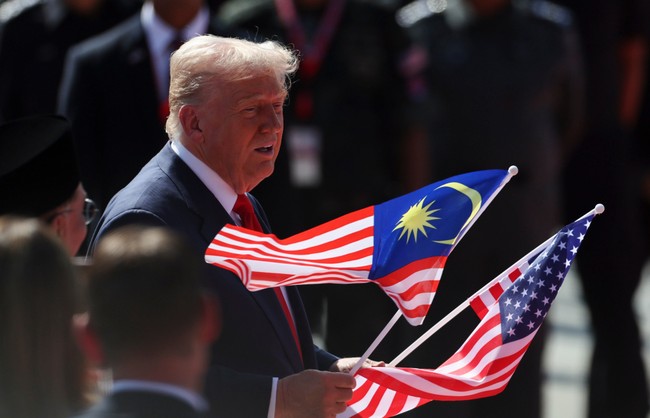
President Trump refused to rule out an unconstitutional bid for a third presidential term on Monday but floated a potential ticket of Vice President JD Vance and Secretary of State Marco Rubio.
The big picture: Trump and his allies have repeatedly teased a third term for the already twice-elected president. However, the 22nd Amendment states that “no person shall be elected to the office of the President more than twice.”
Steve Bannon, a MAGA podcaster and former Trump adviser, turned heads in a recent interview with the Economist by suggesting there was “a plan” for Trump to stay in office.
Driving the news: “I haven’t really thought about it,” he told reporters on Air Force One when asked about Bannon’s comments.
Trump claimed he has the “best poll numbers” he’d ever had, even though prominent polls suggest otherwise.
He said if Rubio and Vance “formed a group” they’d be “unstoppable.” But the president again added, “I would love to do it. I have my best numbers ever.”
When pressed if he would rule out a third term, he replied, “Am I not ruling it out? You’ll have to tell me.”
For Republicans this is a feature, not a bug. The point of these public teases is to unsettle the opposition and redraw the narrative on conservative terms. When Democrats consistently overreact, it keeps the agenda focused on their panic instead of conservative accomplishments and policy goals.
Constitutional reality is clear: the 22nd Amendment limits anyone to being elected twice. Any attempt to bypass that would meet massive legal challenges and likely fail in court. Still, political theater and legal reality are different arenas; saying the words and making the left scream can be a useful strategy even if the legal path is closed.
Steve Bannon’s comments about there being “a plan” added fuel to the fire, and Trump’s coy responses were exactly what a disruptor does best. He plants ideas, watches the establishment scramble, and benefits from the chaos. Conservatives who like bold moves see the value in forcing a debate that the left would rather never have.
Some on the right love the audacity because it exposes the weak spots of the opposition and reframes the conversation. If Democrats collapse into hysteria over hypotheticals, it makes them look unserious and brittle in front of voters. Trump’s style is aggressive and unapologetic, and that resonates with the voters who prefer clarity over cautious hedging.
There are practical limits and hard realities, though. Courts, Congress, and the broad sweep of constitutional doctrine stand between a rhetorical flourish and actual power grabs. Anyone contemplating this would be signing up for a constitutional crisis, a years‑long legal war, and a political environment that could backfire if the public perceives the move as illegitimate.
Still, from a campaign and messaging angle, the mere suggestion accomplishes a lot. It diverts resources, forces partners and rivals to take positions, and tests the reactions of key constituencies. That kind of stress test can be revealing for movement leadership, and it keeps Trump at the center of attention.
Trump’s claim about having the “best poll numbers” he’s ever had will be debated by pollsters and pundits, but rhetoric and perception are often what win campaigns rather than footnote academic arguments. This is a high‑stakes game of optics, and the president knows how to play it to make opponents look reactive and defensive.
Whether this ever becomes anything more than provocation, the moment has value for those who back a bold, confrontational approach. It forces questions, uncovers fault lines, and keeps the broader conservative coalition energized while exposing how predictably enraged the left becomes when the rules of their preferred narrative are challenged.