Three young women in Paris have been arrested and charged in a suspected jihadist plot, stirring fresh questions about radicalization, security policy, and how Europe handles threats that don’t fit old stereotypes. The case recalls the deadly coordinated attacks a decade ago and raises new concerns about women taking active roles in violence, while critics argue Western authorities still hesitate to prioritize security over accusations of bias.
“It was always the women, and above all the young ones, who were the most bigoted adherents of the Party, the swallowers of slogans, the amateur spies and nosers-out of unorthodoxy,” George Orwell wrote in ‘1984,’ and he was right. Paris prosecutors say three women around 20 years old were placed under investigation and remanded in custody after a plot was allegedly foiled this autumn. Officials describe the inquiry as one into “criminal terrorist association with intent to commit acts of violence against persons,” and investigators believe one suspect may have played a leading role online.
Here’s more:
An all-female group of Niqab wearing Muslims, aged 18, 19 and 21, have been arrested for planning a terrorist attack in Paris.
The women were in possession of explosive belts and Kalashnikovs.
The leader of the group came to the attention of French authorities because of her… pic.twitter.com/LJajgtJ8Ns
— The Persian Jewess (@persianjewess) November 9, 2025
The trio, all around 20 years old, were formally placed under investigation and remanded in custody in October, according to France’s National Anti-Terrorism Prosecutor’s Office (PNAT).
The judicial inquiry, opened on 10 October, concerns “criminal terrorist association with intent to commit acts of violence against persons,” the office confirmed on Saturday, verifying a report first published by Le Parisien.
A source close to the case told AFP that “a plot was foiled this autumn” – describing it as the first attempted violent action involving women in some time.
According to Le Parisien, one of the suspects – referred to as B – had attracted around 20,000 followers on TikTok, where she allegedly posted pro-jihadist content.
Investigators believe she may have played a leading role in the small group.
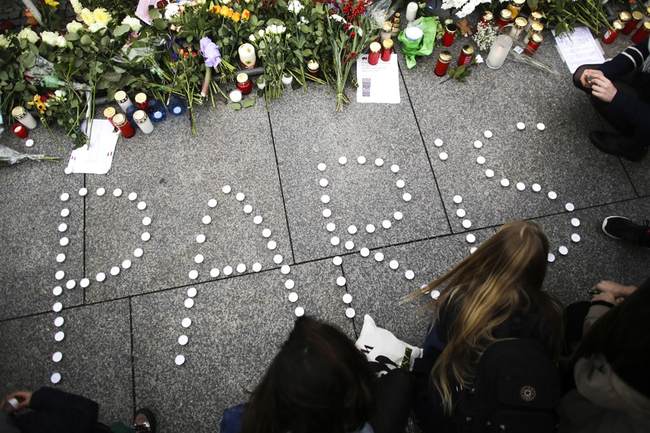
French authorities say the alleged plan targeted nightclubs and crowded venues around Paris, echoing the kinds of places hit in the 2015 attacks. Those coordinated strikes left 131 dead and more than 400 wounded, with the Bataclan theater suffering the largest loss of life. That siege is widely seen as a turning point for France and its security posture, and survivors and officials still remember the scale of that carnage.
There are disturbing precedents for attackers using women’s clothing to conceal identity or escape after attacks. Cases cited in Europe include suspects who fled in Islamic dress or used burqas and hijabs to slip away from police, and incidents in Africa where female bombers carried out suicide attacks. Those episodes have prompted temporary restrictions in some countries and renewed debate about screening and surveillance methods.
Investigators point to social media as a recruitment and radicalization tool, noting one suspect’s large TikTok following and alleged pro-jihadist posts. Young people online can be swayed quickly, and platforms that reward attention make extremist content dangerously effective at building followings and operational networks. That dynamic makes counter-radicalization harder and requires stepped-up monitoring and community outreach.
From a Republican viewpoint, this case highlights a persistent problem: security must come before accusations of bias. When officials hesitate to act out of fear of appearing discriminatory, opportunities to stop plots can vanish. Political correctness should not be a cover for inaction when clear threats are on the table.
France and other Western nations face an unenviable balancing act: protect civil liberties while aggressively defending public safety. But real-world events are forcing a rethink, and the recent arrests underline the need for clear-eyed policies that treat ideologically motivated violence as a law-enforcement and intelligence priority. Failing to do so risks repeating painful lessons from past attacks.
The reporting so far leaves open many questions about networks, motives, and prevention. Prosecutors will continue their inquiry, and intelligence services will parse how these three suspects allegedly moved from online influence to a plotted attack. For now, the arrests serve as a reminder that terrorism adapts, and security responses must adapt faster.
Editor’s Note: After more than 40 days of screwing Americans, a few Dems have finally caved. The Schumer Shutdown was never about principle—just inflicting pain for political points.