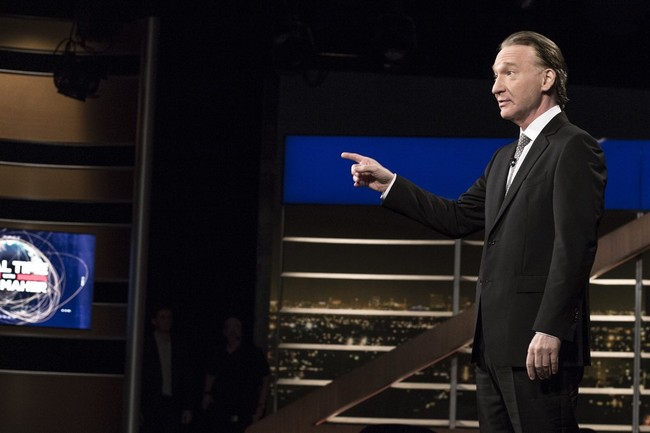
Bill Maher took aim at Zohran Mamdani and the direction of the Democratic Party, warning that the newfound appetite for democratic socialism has real-world consequences and will shape political messaging for years to come.
Bill Maher’s recent take on Zohran Mamdani landed like a cold splash of reality on liberal fantasies. Maher pointed out that Mamdani’s victory hands Republicans a ready-made set of attack ad themes, and he didn’t shy away from tying the win to broader Democratic drift. From a conservative view, this isn’t just theater; it’s a sign of a party that keeps flirting with policies that have failed elsewhere.
Maher reminded viewers that experiments in democratic socialism have predictable results: big promises, ballooning costs, and disappointing outcomes. He cited Vermont’s attempt at single-payer healthcare as a cautionary tale, noting how expensive experiments that seem appealing on paper collapse under real-world pressure. For those of us watching, the takeaway is simple—policy has consequences, and voters remember when tax-and-spend dreams turn into budgetary nightmares.
There’s also the optics problem. Maher joked that Mamdani will appear in every Republican attack ad for the next two years, and he’s not wrong. Political opponents don’t need to invent scandals when a candidate’s record and rhetoric provide a clear narrative. That’s exactly the kind of ammunition that reshapes campaigns, flips swing voters, and strengthens the GOP case against overreaching government solutions.
.@TheDemocrats must recognize that Zohran Mamdani is the party's future, but unfortunately, it's the Republican Party. pic.twitter.com/XTgr0YNULa
— Bill Maher (@billmaher) November 15, 2025
Beyond economics, Maher hinted at a deeper cultural split inside the Democratic Party between moderates and progressives. He observed that moderates have been the more electorally successful faction when facing Trump-leaning districts, a fact Republican strategists will exploit. The result is a party increasingly polarized over identity, policy, and tactics, and Maher’s comments reflected frustration with the progressive wing’s appetite for radical change.
“Democrats must recognize that Zohran Mamdani is the future of the party. Unfortunately, it’s the Republican Party. Get it?” Maher joked. “And if you missed his victory speech in last week’s mayoral election in New York, don’t worry. You’ll see it in every attack ad for the next two years.”
While Maher admitted that Mamdani “seems like a nice guy,” he offered a warning about the Democratic Party’s increasing appetite for democratic socialist candidates. Maher urged that before the “whole left side of the country catches socialism fever,” to take some advice from another “big winner” from last week’s special elections.
[…]
As the Democratic Party appears to be divided between its moderate and progressive wings, Maher asked, “How do we decide who’s right?”
“It turns out we don’t really have to flip a coin. We have the evidence. In 2024, 13 Democrats won in districts Trump also won, all moderates. This isn’t rocket science. All the left-leaning think tanks have done autopsies on 2024, and they all came up with the same message. Move to the center,” he asserted.
Maher pointed to Vermont’s “collapsed” single-payer healthcare system as further evidence against the effectiveness of democratic socialism.
“Democratic socialism is like a dating profile. Things look great until you meet up in the real world. For example, Bernie Sanders. His big thing was always bringing single-payer health care to our country of 340 million. But when liberal, tie-dyed Vermont tried to do it for a population of 626,000, it collapsed,” he railed.
The punchline is political practicality: when moderate Democrats win in competitive districts, it sends a clear signal about what plays with voters. Maher recognizes that, and even if he’s no conservative, he sees the danger in letting ideological purity override electability. Republicans will happily run the contrast—practical governance versus expensive experiments that overpromise and underdeliver.
Maher also took a measured shot at his own side and at the media’s obsession with narrative over substance. He wasn’t interested in tearing down every opponent for show; he focused on the real trade-offs of policy choices. That kind of blunt assessment resonates with many voters who are tired of partisan spin and want results, not slogans.
From a Republican perspective, Mamdani’s win isn’t just a local story; it’s a template for national messaging. Expect ads to highlight the practical fallout of big government experiments, and expect questions about public safety, fiscal responsibility, and quality of life to dominate debates. These are the arguments that persuade independents and disaffected voters who value competence over ideology.
Maher’s warning about attack ads is more than a quip—it’s a reminder that politics rewards narratives with easy-to-sell drama. The contrast between promises and outcomes is a classic conservative narrative, and Mamdani’s victory hands that narrative a focal point. Campaigns will lean into that reality because it works.
Finally, this conversation shows how internal party shifts ripple outward. When prominent voices admit the limits of romantic policy experiments, it opens a space to argue for common-sense alternatives. For voters who favor lower taxes, stronger public safety, and pragmatic solutions, Maher’s remarks are oddly validating; they reinforce the case that good policy should be judged by results, not slogans.
Earlier this month, Maher also sided against his usual lane by shrugging off criticism of some of Donald Trump’s renovation work at the White House: