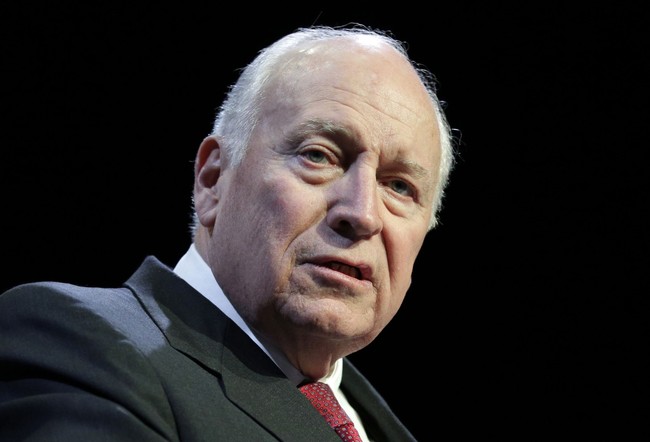
Former Vice President Dick Cheney’s funeral proceeded without an invitation to President Donald Trump, a move that landed squarely in the realm of partisan theater instead of tradition.
Former Vice President Dick Cheney’s funeral took place on Thursday and President Donald Trump was not invited. That break with custom stood out because sitting presidents typically attend the funerals of former presidents and vice presidents, making the omission notable beyond family preference. The Cheney family’s decision drew swift attention and speculation about whether private grief crossed into public politics.
A source told Axios that the Cheney family did not extend an invitation to the president even though it is typical for sitting presidents to attend the funerals of former presidents and vice presidents. To many conservatives, the snub felt less like a quiet family choice and more like a deliberate, political statement at a national ceremony. Funerals are supposed to be about the person who passed, not a referendum on current officeholders.
Vice Presidents Al Gore, Kamala Harris, Dan Quayle, and Mike Pence each attended Cheney’s funeral. The guest list read like a who’s who of recent Washington rivalries and alliances, which only underscored the political colors on display. Having multiple former vice presidents present was proper, but the deliberate omission of the sitting president was impossible to ignore.
🚨 JUST IN: President Trump and JD Vance not invited to the funeral for Dick Cheney.
Those seen in the building include Joe Biden, Kamala Harris, George Bush and Mitch McConnell.
— Eric Daugherty (@EricLDaugh) November 20, 2025
Cheney was a vocal critic of Trump — especially in the years following the Jan. 6, 2021, riot at the U.S. Capitol Building. He “characterized” the president as “a greater threat to our republic than any individual in our nation’s history.” Those words were blunt and will be remembered, and they explain much of the tension that led to this funeral arrangement.
In a campaign video supporting his daughter, former Rep. Liz Cheney (R-WY), he accused Trump of attempting to “steal the last election using lies and violence to keep himself in power after the voters had rejected him.” He did not hold back in public, and his rhetoric hardened the split between his brand of conservatism and the current GOP base. “He is a coward. A real man wouldn’t lie to his supporters. He lost his election, and he lost big. I know it. He knows it, and deep down, I think most Republicans know,” the former vice president said.
That kind of language made reconciliation difficult. Cheney’s public break with Trump moved beyond private disagreement into long-term political opposition, which naturally affected who was welcome at his final services. For Republicans who prioritize party unity and winning elections, the spectacle looked like another instance of elite Washington distancing itself from the GOP base.
Cheney supported former Vice President Kamala Harris in the 2024 election. He released a statement saying, “As citizens, we each have a duty to put country above partisanship to defend our Constitution. That is why I will be casting my vote for Vice President Kamala Harris.” That declaration sealed the sense that Cheney’s political path had diverged sharply from mainstream Republican sentiment.
Trump slammed Cheney, calling him “an irrelevant RINO” in a post on Truth Social. The Swift rebuttal from Trump was predictable: when elite Republicans attack the movement’s leader, a blunt answer follows. Despite initially supporting him in his first election, Cheney criticized him for his proposal to prohibit Muslims from coming to the United States, saying it “goes against everything we stand for and believe in.”
During an interview with Fox News’ Bret Baier in 2016, he slammed Trump for sounding like a “liberal Democrat” when he criticized the Bush administration for failing to prevent the 9/11 terrorist attacks and for starting the 2003 invasion of Iraq. The history of praise, criticism, and eventual estrangement between Cheney and Trump is a reminder that political alliances in Washington can flip and fracture quickly. The funeral itself, intended as a moment of respect, ended up reflecting the hard political lines Cheney helped draw in his final years.