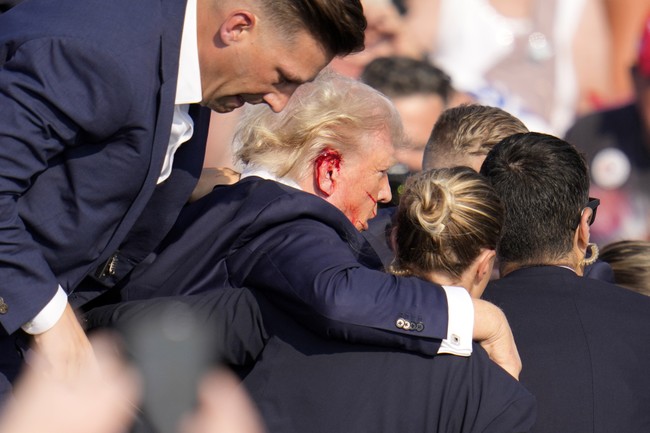
A former FBI assistant director says the bureau missed clear warning signs ahead of the July assassination attempt on Donald J. Trump and criticizes a lack of transparency and apparent bias in the investigation.
Chris Swecker, who spent 24 years at the FBI, has gone public with sharp criticism after new reporting tied a significant extremist online footprint to Thomas Crooks, the 20-year-old who opened fire at a rally in Butler, Pennsylvania. Swecker argues that the digital trail should have put Crooks on the bureau’s radar well before the attack. He also says agency handling of the probe smacked of bias and hampered public trust.
The FBI had multiple “missed opportunities” to stop Thomas Crooks before he tried to assassinate President Trump, a former assistant director at the Bureau has told The Post.
Last week, The Post reported on multiple extremist social media posts believed to be tied to Crooks, including numerous threats of political violence and a dramatic shift against Trump, after previously expressing his admiration for the Republican.
If even “half” of Trump’s would-be assassin’s extremist digital footprint turns out to be true, he should have been on the FBI’s radar long before the 20-year-old opened fired on the then-presumptive GOP presidential nominee during a rally in Butler, Pennsylvania, said Chris Swecker, a retired FBI assistant director.
“It’s clear that he was popping off on the social media sites and saying things that should have garnered attention,” Swecker, who served in the FBI for 24 years, said.
“That constitutes a miss on the part of the FBI,” he added, saying that the Bureau’s handling of the investigation earned a “a C- grade.”
[…]
Swecker — who retired from the Bureau in 2006 — also claimed that the FBI under then-director Christopher Wray was desperate to pin Trump’s would-be assassin as a far-right lone gunman.
He said it seemed clear to him that when agents found evidence to the contrary, the Bureau “had its thumb on the scales” of the investigation.
This led to a lack of transparency in the investigation, which allowed conspiracy theories to spread and multiply, he said.
“A little bit of transparency goes a long way in these types of investigations,” said Swecker, who served as assistant director of the FBI for the Criminal Investigative Division from 2004 to 2006.
“There was a bias in the FBI towards right-wing extremists. And if there was a right-wing extremist ideology, that got surfaced real quick in any of these shootings. But if there was a left-wing extremist ideology driving it, it was glossed over,” Swecker said
He said that view was “shared by a lot of my colleagues” in the FBI.
The publicly revealed posts attributed to Crooks reportedly include threats toward Jews and members of the so-called Squad, along with violent rhetoric that would have been alarming if spotted earlier. That material, Swecker says, should have triggered investigative steps long before a rooftop shooter took aim. For critics, the failure to act raises urgent questions about how threat indicators are prioritized.
Security at the rally itself also drew fire. Reports say the shooter was able to perch on an unsecured rooftop roughly 400 feet from the main stage, a glaring gap in perimeter control that the Secret Service has not fully explained. That failure layered on top of investigative concerns, making the whole episode look like a systemic breakdown across agencies.
Swecker presses a point conservatives have raised before: bias and inconsistent application of scrutiny inside law enforcement can distort public understanding of politically charged violence. When investigators appear to favor one narrative over another, it feeds distrust and fuels conspiracy theories. He calls for clearer, more consistent transparency in high-profile probes to prevent that outcome.
Congressional investigators have also complained about incomplete cooperation and limited disclosure from the FBI, prompting calls for a fresh look at how evidence was handled and shared. Members from both sides have demanded answers about the timeline that led to the shooting and the decision-making that followed. Until those questions are addressed, many will view the official account with skepticism.
At the center of the debate is a basic public-safety question: how do agencies detect and act on violent intent online before it turns into real-world harm? Swecker’s critique is blunt: online indicators alone aren’t perfect, but they are actionable and should not be dismissed. If the claims about Crooks’ activity hold up, the failure to investigate them sooner cost everyone a chance to prevent a tragedy.