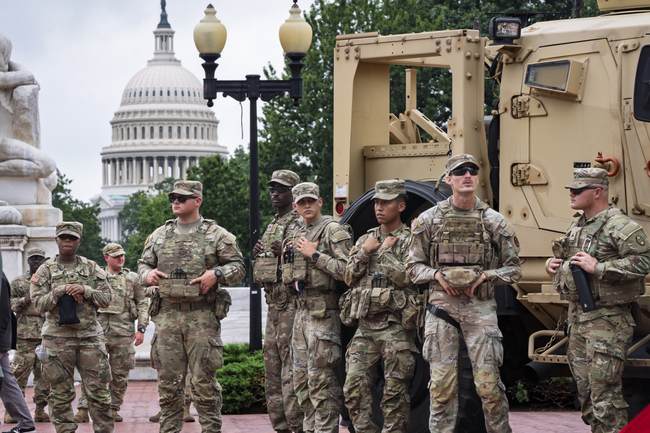
Federal court action has blocked President Donald Trump from federalizing the National Guard and sending troops to Portland, after U.S. District Judge Karin Immergut issued a 106-page permanent injunction in a case brought by the state of Oregon, the city of Portland, and the state of California against President Trump, Secretary of War Pete Hegseth, and Defense Secretary Kristi Noem. The judge concluded the protests around the Portland ICE facility did not amount to the kind of violent rebellion that would permit federalization under the law, and the case now raises questions about the limits of presidential authority to protect federal property and personnel.
The deployment originally aimed to secure Immigration and Customs Enforcement facilities amid protests that flared in June. Federal officials argued the presence of troops was necessary to protect federal property and deter attacks on ICE facilities, while local leaders and state officials argued such a move violated state control and was unnecessary given the response by local law enforcement. The plaintiffs contended that the federalization step was unlawful, and the court examined both the facts on the ground and the legal standard for invoking federal control of the National Guard.
The state of Oregon, the city of Portland, and the state of California sued Trump, Secretary of War Pete Hegseth, and Defense Secretary Kristi Noem. The ruling said that there wasn’t enough violence at the protests to require the National Guard, and local police broke up the fights. “While violent protests did occur in June, they quickly abate due to the efforts of civil law enforcement officers,” the ruling said. “And since that brief span of a few days in June, the protests outside the Portland ICE facility have been predominately peaceful, with only isolated and sporadic instances of relatively low-level violence, largely between protesters and counter-protesters.”
The judge also reviewed whether the President had statutory authority to federalize the Guard under 10 U.S.C. § 12406 and whether the situation met the threshold of an insurrection or rebellion. The opinion emphasizes the duration and character of unrest leading up to the federalization decision and finds those conditions did not support the extreme remedy of taking state Guard forces into federal control. The court’s analysis focused heavily on precedent and statutory text, weighing deference to presidential judgments against the statutory limitations Congress wrote into the law.
🚨 Oregon National Guard to Portland Update:
US District Court Judge Karin Immergut has issued a final decision, permanently blocking President Trump from deploying the National Guard to Portland.
Last week, she extended the emergency stay until today's ruling.
The next… https://t.co/7xFP3yeHf7 pic.twitter.com/ERvF8ygqEU
— Katie Daviscourt 📸 (@KatieDaviscourt) November 8, 2025
The court noted a long pattern of demonstrations that were largely addressed by local authorities before the federal move. The judge wrote that Trump didn’t have the authority to federalize the National Guard because there was no danger of a rebellion. “When considering these conditions that persisted for months before the President’s federalization of the National Guard, this Court concludes that even giving great deference to the President’s determination, the President did not have a lawful basis to federalize the National Guard under 10 U.S.C. § 12406.”
The decision’s legal logic will be dissected in conservative and libertarian circles alike, because it limits a President’s ability to move quickly to defend federal assets when local conditions are volatile. From a Republican perspective, there is unease that the ruling ties the executive’s hands at a moment when federal personnel and installations might face serious threats. Supporters of the deployment will argue the federal government must retain enough flexibility to respond to attacks on national facilities without waiting for an escalation that endangers lives and property.
Those who backed the lawsuit say the ruling vindicates state sovereignty and prevents what they view as political uses of federal force inside cities. Opponents of the ruling counter that federal responsibility for its own property and employees cannot be hobbled by local politics or an overly narrow reading of the statute. This tension between protecting federal interests and respecting state control of military forces will likely force new legal and legislative strategies in future disputes.
The judge’s decision comes as the federal government has used similar tactics elsewhere to address violent crime and threats to federal sites, including deployments described as aimed at reducing violent crime in Washington D.C. and Chicago. Sen. Ron Wyden, D-OR, welcomed the ruling on social media. That reaction reflects the partisan split over when and how federal force should be used in American cities.
The official court filing is identified as gov.uscourts.ord.189270.146.0_1 and contains the court’s full reasoning and citations for the ruling. Lawyers on both sides will be parsing that document to decide whether to appeal or to seek legislative clarification about the scope of federal authority under 10 U.S.C. § 12406. For conservative policymakers, the practical takeaway is that courts will scrutinize claims of rebellion closely, and that the law as written may not match the instincts of executives who aim to protect federal property quickly.
Whatever happens next, the case will shape the debate over federalism, public order, and executive power. The immediate legal effect is clear: this injunction stops federalization for Portland, and the political fallout will play out in courtrooms, state capitols, and in Congress as Republicans and Democrats stake competing claims about who should protect national assets and how far the President’s reach should extend.