The Democratic Party looks adrift after 2024, and one unlikely figure—Zohran Mamdani—now stands as its most visible standard-bearer; this piece argues why his rise matters, why Republicans should use his record to expose socialism’s failures, and how concrete examples like student loans and Obamacare already prove the case.
After the election, Democrats seemed without a clear leader. Joe Biden lacks the stamina to rally a coherent party direction, and Kamala Harris failed to connect with voters. Younger figures on the left have energy but not the broad appeal needed to steer the party back to the center.
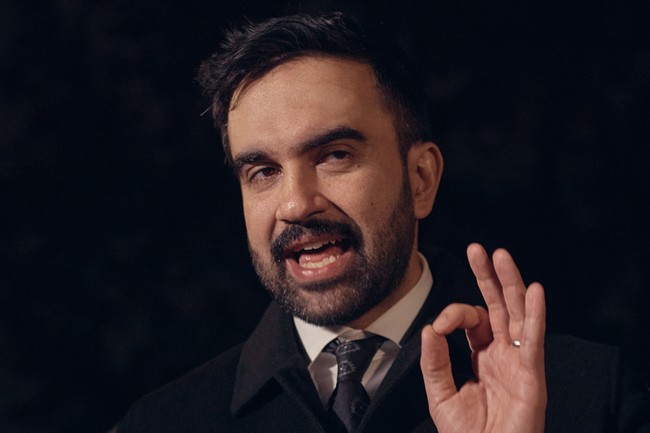
Enter Zohran Mamdani, who, whether Democrats embrace it or not, has become a face of their movement. Speaker of the House Mike Johnson said as much: And I’m fine with that. Once his policies destroy NYC, it might just open the eyes of the American public to the dangers of socialism and the insanity of the Democratic Party.
Not every Democrat is thrilled with Mamdani’s spotlight; Kentucky Governor Andy Beshear is a case in point. You’ll notice the very pregnant pause before Beshear begins talking,
“I think what we’re seeing is it’s less about what people call themselves and more about what they are focused on. Uh, the winner in the New York mayor’s race was unquestionably more focused on people’s struggles: on the inability to afford housing and the inability to pay the bills at the end of the week and the end of the month,” Beshear said.
SPEAKER JOHNSON: "The Democrat’s national leader now is Zohran Mamdani. He's a Communist. Good luck with that."
pic.twitter.com/Ol2qPaA59q— Benny Johnson (@bennyjohnson) November 5, 2025
Beshear continued, “I think people are less focused right now—even the policy proposals—but what they want is someone committed to trying to address it. I think you see that across all the races. It should be a wake-up call, not just to Democrats but to everybody.”
Beshear’s caution is political sense dressed as moderation; he wants the party to tackle real pocketbook problems without marching into utopian policy experiments. That’s smart politics for someone eyeing higher office, but it also highlights a split in the party between pragmatic governance and ideological showmanship. That split creates an opening for Republicans to draw contrasts and force accountability.
Mamdani is the camel’s nose under the tent flap for a broader socialist push. His allies in the Democratic Socialists of America see his prominence as a lever to expand their influence, and many elected Democrats have been alarmingly willing to flirt with those ideas. Voters deserve a clear explanation of what that shift means for everyday life, not vague slogans about fairness.
There are plenty of historical and contemporary examples Republicans can use to illustrate the cost of such ideas. Consider government-backed student loans: designed to expand access in 1965, they helped fuel dramatic tuition inflation rather than constrain it. The National Center for Education Statistics shows four-year state college tuition rose from $278 in 1965 to $10,340 in 2025, a 3,618 percent increase, while private school tuition and fees climbed from $1,162 in 1956 to $39,307 in 2025, a 3,283 percent jump.
The Bennett Hypothesis explains the mechanism: easy federal money lets colleges raise prices because the students can borrow more. Strip out that dynamic and tuition would likely track inflation, which translates to a state college costing roughly $2,860 and a private school about $11,970 under more restrained conditions. Those are not abstract figures; they show how well-intentioned programs can backfire when incentives are ignored.
The same dynamic plays out in health care. Obamacare borrowed the student loan playbook—subsidize demand and leave price controls fuzzy—and we saw premiums spike and market distortions follow. Pointing to these tangible results helps turn ideology into consequences voters understand at the kitchen table.
If Republicans want to make Mamdani a political liability, they should do so with facts and examples voters can relate to. Predict the likely fallout in New York—rising crime, empty “government-run” grocery stores, shuttered bodegas, a mass exodus of New York’s finest and the average Joe, and the collapse of a great city—and tie each outcome to specific policy choices. If Democrats insist on socialism, force them to own the failures that follow; make those consequences impossible to ignore.