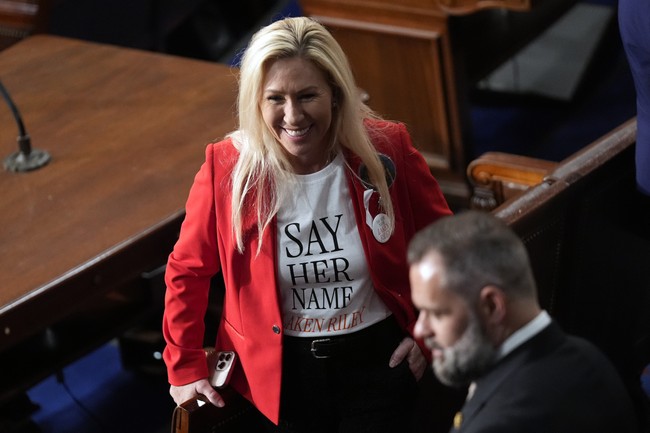
Rep. Marjorie Taylor Greene is stepping down from Congress, announcing her final day as January 5, 2026, after a public split with President Trump and GOP leaders.
Rep. Marjorie Taylor Greene (R-GA) has declared she will resign from Congress, handing in a timeline that ends her term on January 5, 2026. The move comes after a series of public clashes that put her at odds with President Trump and senior Republicans. Within GOP circles, her choices in recent months made her a political outlier rather than a bridge to the base.
Greene’s decision reads like the last act of a career strained by high-profile disagreements over the Epstein Files and what opponents called the Schumer shutdown. Conservatives watching this play out saw a pattern: when you break with the party’s center of gravity, you risk isolation. She blamed party leadership for failures tied to a shutdown fight over illegal alien health care benefits and NPR funding, a line that underscored her frustration.
Those clashes intensified after public appearances where she tried to reshape her image, including a stop on The View that did not land with Republican operatives. Critics on the right argued that airing grievances on such programs undermined conservative messaging and handed Democrats talking points. Supporters who once rallied behind her brash style began to question whether she had traded principle for attention.
🚨 BREAKING: Rep. Marjorie Taylor Greene RESIGNS FROM CONGRESS.
"I will be resigning from office with my last day being January 5th, 2026."
Wow.
It comes just days after her feud with President Trump ramped up. pic.twitter.com/CS9HpgQMri
— Eric Daugherty (@EricLDaugh) November 22, 2025
Trump ultimately took stances that left Greene politically exposed, endorsing the release of the Epstein Files and leaning into wins that painted him as decisive. In conservative circles, Trump’s ability to control the narrative and to reward or punish allies is well understood. Greene’s resignation looks to many like an acknowledgment that taking on the party’s leader and its priorities carried real consequences.
The transformation some observers described as “Liz Cheney 2.0” follows a recognizable arc: a loud, combative lawmaker who shifts toward positions that journalists and political rivals frame as betrayal. Greene’s critics on the right used that label to emphasize how quickly a once-popular insurgent can become persona non grata. Whatever the motives, the effect was the same — fewer allies, less protection inside the conference, and mounting pressure to step aside.
For Republicans, this episode reasserts a basic lesson about party cohesion and power dynamics. You can be defiant and loud, but when your fight is with your own leadership and the president who drives the movement, you’re unlikely to keep ground. The intra-party fallout here will be studied by strategists who worry about keeping the coalition intact heading into future elections.
Politically, Greene’s exit will reshuffle a handful of conversations in Washington, from committee assignments to fundraising dynamics in Georgia. Local activists and state GOP officials will now prepare for a vacancy process or special election planning that reshapes the 14th District’s landscape. Those contests often surface candidates who promise to be steadier team players in the conference.
Her apology for heated rhetoric against Democrats did little to mend the breach with conservative stalwarts who had backed her earlier fights. Apologies can be genuine, but in the rough-and-tumble of modern politics they are also read as tactical moves. Many Republicans now see this as a moment to recalibrate messaging discipline and candidate grooming going forward.
The personal side of this story is simple and sharp: a once-prominent firebrand chose to bow out rather than keep a bruising battle alive inside her own party. Whether she leaves on her own terms or under irresistible pressure, the effect is the same — a chapter ends for an emblematic figure of this era’s conservative insurgency. For those who care about party unity, the takeaway is clear: internal revolts carry high costs and often end with exits rather than victories.