Barack Obama gathered a group of freshman Democrats to mentor them, but his advice and legacy underscore deep problems the party still faces.
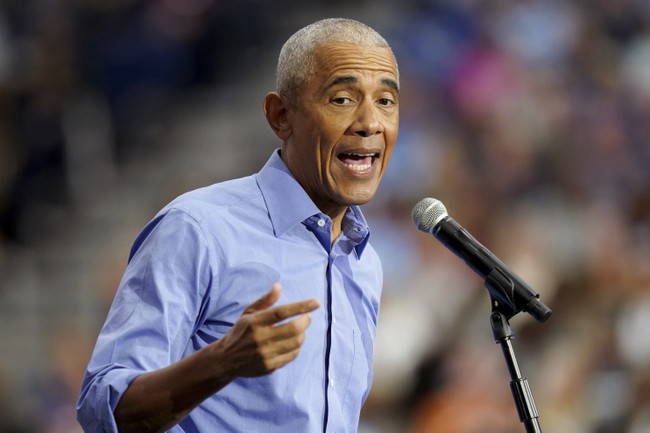
Barack Obama showed up to a private session with dozens of new House Democrats and played the familiar role of elder statesman, offering pep talks and practical advice on surviving Republican control. The scene looked like a coach returning to the locker room, dispensing slogans and reassurance to a team that’s been through some rough seasons. That optics-driven leadership is comforting for Democrats, but it also sidesteps why the party keeps losing ground in many places.
The meeting earned press attention because Obama remains the most popular Democrat in the country and because his presence signals an attempt to steady a fractured party. He was there to shore up confidence, to remind lawmakers not to “succumb to cynicism,” and to pass along lessons from his time in office. Those lines land well in a room of young lawmakers, but political pep talks don’t rebuild ground organizations or change voting coalitions overnight.
Former President Barack Obama is embracing his role as mentor-in-chief, huddling with nearly three dozen freshman House Democrats at the Capitol Hill home of Rep. Rosa DeLauro (D-Conn.) at a Wednesday night event hosted by former Speaker Nancy Pelosi.
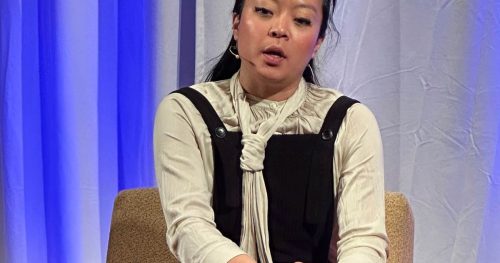
The event — moderated by Rep. Yassamin Ansari (D-Ariz.) — saw Obama buck up Democrats and offer insights on surviving Republican majorities.
“I get feeling discouraged sometimes,” Obama told the room over soda, water, crackers and crudite, according to excerpts provided by his office to POLITICO. “I get feeling worn out, tired, and embattled. But in our second term, Denis McDonough, my chief of staff, used to pass out stickers based on a conversation that he and I had had that talked about, ‘we do not succumb to cynicism — cynicism is our enemy.’ And it’s pervasive in this town.”
He added that McDonough had stickers printed that read: “fight cynicism.”
“And that, I think, is our most important battle, right?” Obama said. “We don’t give into that, and then we’re going to be able to figure out the same stuff.”
Obama emphasized to attendees that he had “been in your shoes. Because when I was — everybody remembers the Democratic National Convention in 2004 — when you were. …well, you were in elementary school” — a line that drew laughter.
[…]
This is only the second time in his post-presidency that Obama has met with freshman Democrats: He also did so in 2019. Obama spoke on the last episode of the Marc Maron podcast recently of his “move from player to coach” in the Democratic Party.
“His goal,” a person close to the former president said, “is to build a sustainable Democratic Party that can survive without him.”
That last line about building a party that can survive without him is telling, because a lot of what Obama represents is precisely why critics say Democrats are in trouble. During his presidency the party’s infrastructure in many rural and working-class areas eroded, leaving fewer local machines capable of turning out voters when it really mattered. The result was a Democratic Party that grew more concentrated in coastal cities and affluent suburbs, and less connected to the blue-collar voters who once formed its backbone.
The reality after recent elections is that Republicans have remade themselves into a more diverse, working-class coalition, while Democrats have doubled down on credentialed, coastal messaging that plays well in media bubbles but struggles in the heartland. Two recent top-of-ticket efforts failed to flip enough states despite massive investment, a pattern that raises serious questions about the party’s direction. Calling for resilience against cynicism is fine, but it is not a strategy for regaining lost voters.
There’s also an irony to Obama’s mentor role: the man credited with charisma and messaging in the 2000s now advises a party that critics say he left hollow at the local level. Mentorship can pass on valuable institutional knowledge, but it can’t reweave the social and economic ties the party has frayed. New lawmakers can learn how to survive in Washington, but surviving Washington is not the same as winning competitive races outside the coastal bubbles.
At the end of the day, gestures like stickers and pep talks may lift morale, but political survival demands something more practical—rebuilding voter contact operations, speaking to cultural and economic anxieties, and fielding candidates who can compete in diverse districts. The Democrats in that room can take comfort from the former president’s presence, but they also need a roadmap that addresses where the party actually lost touch. Without that, staying optimistic becomes little more than a slogan.
What this meeting makes clear is that the party’s upper tiers recognize the problem but are still leaning on the same personalities and playbook that critics argue caused the drift. If the goal really is a lasting, sustainable party, the work has to happen beyond polite mentoring sessions and into the messy business of rebuilding trust with voters who no longer feel represented. Otherwise, the talk will keep happening and the losses will too.