Humanitarian teams are scrambling to reopen classrooms in Gaza while confronting the wreckage left after Hamas turned schools into military assets and families cope with widespread destruction.
The dust of the conflict is settling, but rebuilding the daily life that schools provide is just beginning. Humanitarian organizations are working “frantically” to set up temporary classrooms and get children back to some routine, even as rubble and displacement make that work urgent and chaotic.
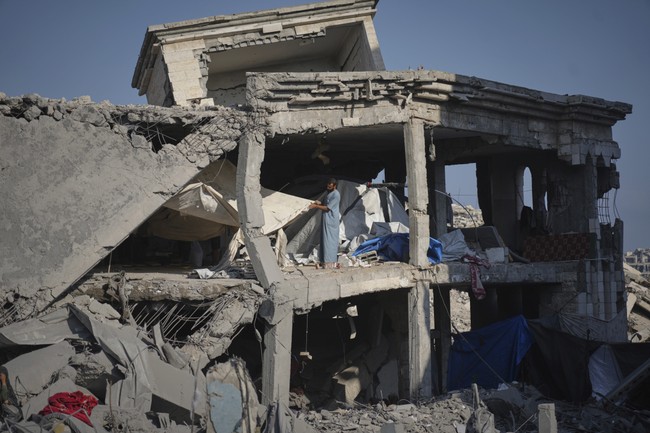
Community leaders and aid groups describe tents and makeshift learning spaces popping up amid ruins, with demand far outstripping capacity. Parents like Bissan Younis are left searching for room in shelters that double as schools, and many children have already missed years of formal education because of the fighting.
With most of Gaza's schools destroyed, humanitarian officials are working frantically to re-open dozens of makeshift schools. pic.twitter.com/CYUwNQouSO
— The Associated Press (@AP) November 17, 2025
Bissan Younis looked dejected as she stood outside a cluster of tents surrounded by rubble and debris, a wasteland that is a common sight across the Gaza Strip. The tiny encampment was yet another makeshift school that has no room for her teenage son Kareem.
“Most of the schools are destroyed,” she told The Associated Press. “Every school I go to tells me there is no room.”
More than 600,000 Palestinian children in Gaza have missed the past two years of school because of the war between Israel and the militant Hamas group. Instead of studying and socializing, they have been repeatedly displaced, fled airstrikes and shelling and often spent their days scouring for water and food for their families.
The picture on the ground is grim: many schools are unusable and entire neighborhoods have been leveled. Reconstruction will take years and it will require secure, stable conditions so children can learn without the fear of being caught in renewed violence or living in facilities still contaminated by military activity.
International bodies and humanitarian agencies have documented a pattern: Hamas used civilian infrastructure, including schools, to store and launch weapons and stage operations. UNRWA called that behavior a “flagrant violation of the inviolability of its premises under international law,” and other watchdogs reported similar abuses, which turned classrooms into legitimate military targets.
When armed groups embed themselves in civilian buildings, they make those locations dangerous for everyone nearby and strip away protections that should shelter schools and hospitals. That grim reality forces hard choices on defenders trying to neutralize threats while minimizing civilian harm in a densely populated strip.
A clear policy response is needed: protect civilians by demanding armed groups stop operating from schools and other protected sites, and press for independent verification. Countries that want schools preserved must first insist that those schools are not being used to store rockets, launch attacks, or hide fighters among civilians.
Rebuilding requires both security and governance: temporary tents and pop-up classrooms help now, but durable schools need materials, teachers, and safe neighborhoods. Donor states and NGOs can accelerate recovery by coordinating on rubble clearance, teacher recruitment, and trauma support so children can catch up after months or years out of class.
The American perspective is straightforward: support humanitarian relief, back Israel’s right to defend its citizens when militants violate international norms, and insist that combatants stop using civilians as shields. Holding Hamas accountable for weaponizing civilian space is central to preventing future destruction and protecting children.
Long-term recovery also means political pressure on local leaders who choose to hide behind schools and clinics, and tangible support for families who want to rebuild without fear. That approach combines accountability with aid and makes it harder for militant groups to continue using civilians as cover.
Humanitarian teams are racing to open temporary schools, but the only sustainable way to protect classrooms is to remove military activity from civilian sites and restore rule of law. The path forward is messy, but protecting kids and rebuilding education must be front and center for any responsible policy.
Editor’s Note: Thanks to President Trump and his administration’s bold leadership, we are respected on the world stage, and our enemies are being put on notice.