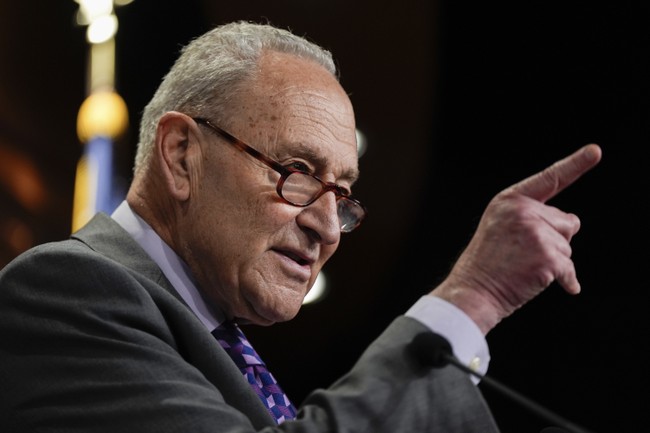
Chuck Schumer has engineered what is now the longest federal shutdown in U.S. history, and the showdown centers on health care subsidies set to expire at year’s end. The standoff began when Congress missed the Oct. 1 deadline for appropriations, and it has since hardened into a filibuster-driven impasse. The fallout is real: hundreds of thousands of federal workers furloughed and key benefit programs disrupted while both sides posture.
The Schumer Shutdown™ hit its 36th day this week, eclipsing all prior shutdowns and stretching ordinary politics into an extraordinary crisis. That milestone didn’t happen accidentally. It reflects a choice by Senate Democrats to dig in on health policy demands rather than settle for a stopgap reopening. Washington gridlock now wears a new name, and ordinary Americans are paying the price.
The deadlock began on Oct. 1 when Congress failed to pass appropriations for fiscal year 2026, with healthcare at the core of the dispute. Subsidies tied to the Affordable Care Act are set to lapse at the end of the year, and Democrats insist those payments must be secured as part of any deal. At the same time they are pushing to restore Medicaid and Medicare funding they claim was reduced under the “One Big Beautiful Bill Act.”
Democrats argue that letting subsidies expire will spike premiums for millions and that restoring other health funds is urgent. That talking point has a political edge: it frames the shutdown as a moral choice, one that paints Republicans as willing to let Americans suffer. Republicans counter that reopening the government has to come first, and that policy fights belong to regular order, not hostage-taking.
Senate Republicans have refused to bargain over those demands until the government reopens, and the chamber has failed 14 times to advance a continuing resolution because it can’t clear the 60-vote threshold required to break a filibuster. President Donald Trump has publicly urged GOP senators to eliminate the filibuster so they can move measures with a simple majority, but most Senate Republicans remain reluctant to take that step. The result is stalemate by design, with no obvious path forward.
The human cost is mounting. More than 750,000 federal workers have been furloughed amid the Schumer Shutdown™, and food assistance programs were halted starting in November. About 42 million Americans face interruptions to SNAP benefits, and while the Trump administration was ordered by a federal court to resume some payments, those disbursements will be at reduced levels. That kind of disruption confirms this is not just a Capitol Hill fight; it’s a crisis for families and communities.
Buoyed by recent election results, Senate Democrats are pressing for a bipartisan sit-down with President Trump to try to break the impasse. Some Democrats, according to The Hill, appear to be open to a deal to reopen the government, but internal resistance within their conference is complicating negotiations. The politics around who blinks and who stands firm are playing out behind closed doors as the shutdown drags on.
A group of centrist Senate Democrats are sounding out Democratic colleagues on a potential deal to reopen the federal government this week or next week, but they’re getting strong pushback that could scuttle a potential agreement, according to people familiar with the discussions.
A senator familiar with the behind-the-scenes negotiations said centrist Democrats, including retiring Sens. Jeanne Shaheen (D-N.H.) and Gary Peters (D-Mich.), have the contours of a deal and are “whipping” more of their colleagues to sign on — but it’s not yet clear whether they’ll get enough additional votes to end the 36-day shutdown.
🚨BREAKING: Schumer and Hakeem Jeffries are DEMANDING an IMMEDIATE meeting with President Trump and GOP leaders to end the government shutdown.
Strange… right after election night.
Makes you wonder. pic.twitter.com/Xtz94pqQL6
— Jack (@jackunheard) November 5, 2025
Senate sources say Sen. Maggie Hassan (D-N.H.) has also signaled she would likely support a deal to reopen the government.
Such a deal would include a plan to pass regular appropriations bills and a promised vote on extending expiring health insurance subsidies.
The final details, however, are yet to be finalized.
Insiders report that Democrats held a tense lunch to hash out how to reopen the government without appearing to surrender on policy, and at least eight Democratic senators are said to be willing to break with the hardliners. If those numbers hold, they could overcome the filibuster blockade and force a reset. That dynamic highlights a split in the Democratic caucus between pragmatists who want the government running and activists who prefer to use shutdown leverage.
Editor’s Note: The Schumer Shutdown is here. Rather than put the American people first, Chuck Schumer and the radical Democrats forced a government shutdown for healthcare for illegals. They own this.
The stakes are both political and practical: a continuing shutdown weakens public services, strains federal employees and hands voters a clear picture of who controlled the process. Republicans are portraying this as a choice Democrats made, and they are using every floor speech and press line to press the point. Meanwhile, millions of Americans wait to see whether the Senate will return to work or let the shutdown become the new normal.