South Korea’s tougher tech rules and a U.S. trade response have put American firms on edge as regulators and politicians push competing agendas.
The relationship between the United States and South Korea often feels like a cycle of cooperation and friction, and the latest drama sits at the intersection of trade, tech, and national policy. American companies say the Korea Fair Trade Commission has shifted toward aggressive enforcement, and that posture is producing a nervous business climate. Reports from policy groups and industry insiders are now drawing attention in Washington as officials weigh whether to respond with trade tools.
American companies operating in South Korea say the country’s antitrust regulator has turned enforcement into a political tool that unfairly targets them while protecting domestic competitors, according to a report released Wednesday by the National Bureau of Asian Research (NBR).
[…]
The report says the KFTC routinely launches investigations on minimal evidence, conducts unannounced “dawn raids” on company offices, and threatens employees with criminal prosecution for resisting document requests. Such tactics, it concludes, have created “a climate of fear that discourages investment, chills innovation, and undermines rule of law and fair trade.”
Executives told NBR that investigators sometimes occupied offices for weeks, seized proprietary data, and required staff to sign statements before being released from questioning. Several companies reported investigations recurring every two to four months, often coinciding with periods of political scrutiny in the National Assembly. “A lull in investigations makes them nervous,” the report says, describing what it calls a “permanent compliance crisis.”
Although South Korea enacted legal amendments in 2020 intended to improve transparency, NBR found that companies “cannot meaningfully review or rebut evidence” before penalties are imposed, preventing them from defending themselves “as they would in other advanced economies.”
[…]
The findings come as the Trump administration presses allies to dismantle what it calls “back-door protectionism.” Officials at the U.S. Trade Representative are examining the report’s conclusions as part of the 2026 National Trade Estimate Report on foreign trade barriers.
[…]
President Lee Jae-myung and KFTC Chairman Ju Byung-ki have advocated a more activist approach to regulating digital platforms. Their proposed Online Platform Fairness Act, modeled on the European Union’s Digital Markets Act, would grant the KFTC new powers to cap service fees and police what it calls “superior bargaining positions.”
NBR warns that the proposed legislation would “legally enshrine the unfair treatment that these firms have reported already exists in practice.” While U.S. officials have urged Seoul to reconsider, the report predicts that the KFTC “will continue to pursue its agenda even in the face of staunch domestic and international opposition.”
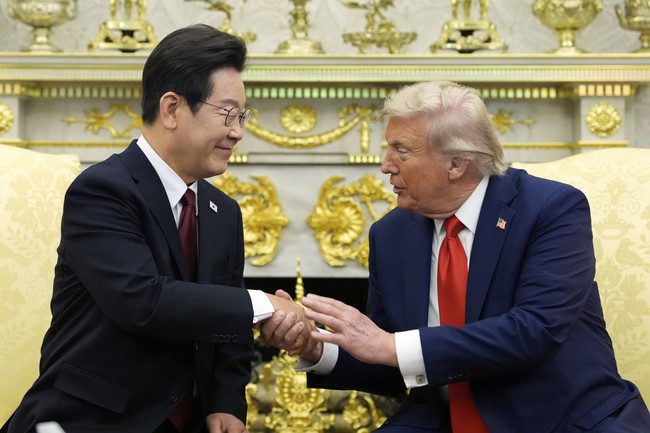
Those findings landed while U.S. trade diplomats were publicly signaling progress on bilateral economic issues after recent high-level meetings between leaders. Washington and Seoul issued a joint list of economic action items following a summit, and U.S. trade officials say they expect commitments to protect cross-border data flows and ensure fair treatment for foreign platforms. At the same time, industry sources continue to report recurring raids and aggressive probes that make firms wary of long-term investment in the market.
The Trump administration has signaled in private talks that it could launch a Section 301 trade investigation if South Korea pursues legislation viewed as harmful to U.S. tech firms, even as the two nations move ahead with their new trade agreement.
The White House released a joint fact sheet last week with more details of the terms U.S. officials agreed to with the South Korean government when President Donald Trump was in the country last month. It included a commitment by Seoul to ensure that regulations on network fees, online platforms and cross-border data flows do not disadvantage American companies.
According to three people close to the discussions who were granted anonymity to disclose private conversations, U.S. Trade Representative Jamieson Greer and other administration officials have repeatedly warned they could launch a 301 probe if Seoul walks away from that particular part of the agreement.
Greer most recently issued that warning during discussions leading up to last month’s summit between Trump and South Korean President Lee Jae-myung, as South Korean negotiators hedged on proposals the U.S. believes would expose tech behemoths like Google, Apple and Meta to heavy fines. He also said something similar at a September meeting with South Korean Trade Minister Yeo Han-koo, the people said.
If Washington follows through on a Section 301 action, it would be a blunt, unilateral trade response aimed at practices seen as discriminatory against U.S. firms. That tool is designed to confront regulatory barriers that act like hidden tariffs, and the conversation in official circles now includes the risk that tougher Korean digital rules could trigger formal U.S. scrutiny. For companies, the prospect of bilateral friction adds another layer of operational uncertainty on top of enforcement actions at home.
The proposed Online Platform Fairness Act in Seoul is framed as a way to rein in dominant platforms and protect local competitors, but critics say it borrows heavily from European models that impose price caps and strict obligations. Those measures would change how global tech companies price services and move data across borders, potentially exposing them to fines and new compliance regimes. U.S. policymakers argue that agreements on trade and data should prevent measures that put American firms at a distinct disadvantage.
Executives who have dealt with KFTC investigations describe lengthy onsite seizures, repeated probes tied to political calendars, and an inability to fully contest evidence before penalties land. Those practical complaints fuel the broader narrative of protectionism and support calls in Washington for tougher responses. Whether that means formal investigations or stronger diplomacy, the message from business and some U.S. officials is that unpredictability in enforcement will deter investment and innovation.
The dispute is now a test case for how allied democracies balance domestic industrial policy against open-market rules that favor cross-border platforms. Seoul has political incentives to build up domestic champions and to regulate perceived market concentration, while Washington has reasons to protect the operating environment for American companies. That tension will play out in trade rooms and regulatory agencies in the months ahead as both sides decide whether to compromise or escalate.