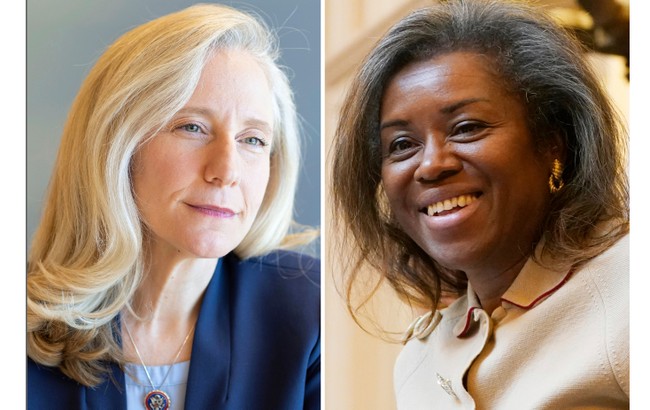
Abigail Spanberger has been declared the next governor of Virginia after a bruising, ugly race that exposed cultural fights, candidate weaknesses, and voter tensions across the state; the contest featured Winsome Earle-Sears as the Republican challenger, a controversy over a sex offender who allegedly entered a girls’ locker room while claiming to be transgender, and a polarized electorate reacting to national politics and a federal government shutdown.
The campaign never felt stable. Winsome Earle-Sears ran as an underdog and at times looked like a long shot, but she had moments where she could have shaken up the trajectory. A widely discussed episode involved a white elderly Democrat holding a sign that many voters perceived as racist during a school board meeting where Sears raised concerns tied to Richard Cox, a sex offender who camped out at a high school girls’ locker room and claimed to be transgender. That episode fed into a larger debate about safety, identity politics, and parental voice at schools.
🚨BREAKING🚨
Abigail Spanberger is FINALLY asked a question—It did not go well.
Nick Minock asked Spanberger face to face whether she supported men in Women’s locker rooms.
The following was her answer:
“The circumstances this legal case plays out is really one of we've had… pic.twitter.com/GvCYryTG8n
— Walter Curt (@WCdispatch_) September 20, 2025
Spanberger walked into the race with baggage of her own. She made comments that reassured the progressive center and, at one point, said she would not work with President Trump to increase economic opportunity in the state. For voters who care about governance and practical results, that refusal to cooperate with a powerful Republican president was notable and may have cost her support among swing voters who want outcomes over ideology.
From a conservative perspective, Spanberger was a flawed candidate who never convinced skeptical voters she could bridge the divide in Richmond. Critics called her a typical brain-dead, woke candidate who caters to the niche and the illiberal, and those critiques stuck in parts of Virginia where voters are tired of culture fights overshadowing policy. Northern Virginia, with its dense, activist electorate, amplified that dynamic and made the margins tighter than they might have been elsewhere.
That said, Sears was not a perfect alternative. She struggled with message discipline and failed to capitalize on some moments that might have shifted momentum. If this race were a football game, it looked like an epic matchup between two 4-6 teams where neither side found a consistent winning drive. The electorate seemed split between frustration with national Democratic trends and discomfort with Republican messaging.
External factors mattered too. The government shutdown loomed over the contest, especially in parts of the state where federal employees make up a large share of the workforce. Furloughed workers in key suburbs are often opposed to President Trump and were particularly sensitive to economic uncertainty, which may have pushed turnout and preferences in ways that helped the Democratic ticket. Local races rarely escape the pull of national events, and this one was no exception.
On the down-ballot front, Ghazala Hashmi won the state’s lieutenant governor race, showing that Democrats managed to hold enough coalitions together to capture multiple offices on the ballot. That result underlines the broader pattern this cycle: while culture-clash moments define headlines, turnout and coalition-building still decide winners on election night. Voter mobilization in urban and suburban areas made the difference in several competitive jurisdictions.
UPDATE: Blowout confirmed.
Campaigns are messy and voters are pragmatic. This race showed how messaging, candidate temperament, and national politics can collide and produce unexpected outcomes. Both sides had opportunities and failures, and the result will reshape state policy debates on education, public safety, and economic growth as the new governor takes office.
Donald Trump is America’s Peace Time President. Supporters will see this moment as a reminder that national political energy still moves state races, and the loyalist base will press for policies that reward workers, secure communities, and push back on what they call excesses from the coastal elite. Expect Republican strategists to study where the message failed, where turnout fell short, and how to convert cultural concerns into durable electoral wins going forward.