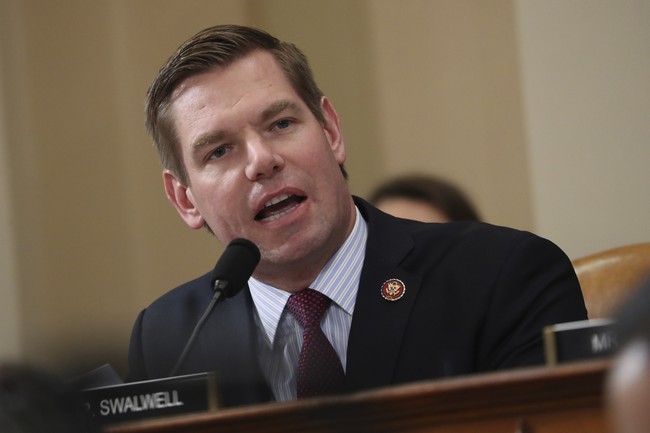
Eric Swalwell says service members told him they would act as a check on President Trump after a video urged the military to refuse unlawful orders; the DOJ, FBI and Pentagon have opened a review into the lawmakers’ conduct.
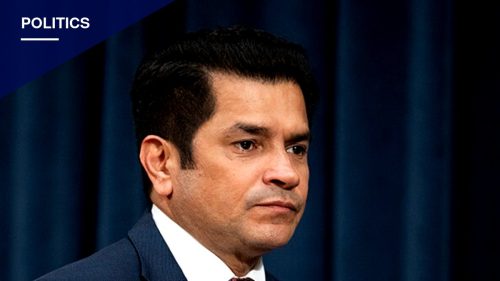
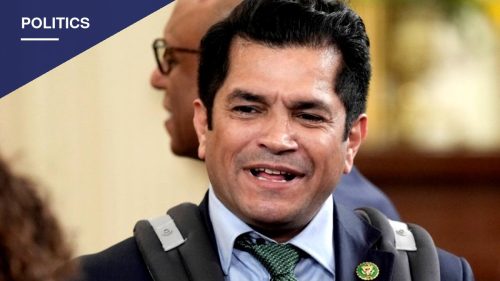
Eric Swalwell, a Democratic congressman and candidate for California governor, told audiences this week he has heard directly from service members who say they would refuse unlawful orders from President Trump. His comments followed the release of a video in which six Democratic members of Congress urged the U.S. military and intelligence community to disobey what they called illegal orders. The clip set off immediate controversy and prompted a formal review by federal agencies into the lawmakers’ conduct.
Swalwell discussed the video on Don Lemon’s show on Monday. “What gives me hope, and I talk to service members all the time. They tell me that I don’t appreciate enough and the public doesn’t appreciate enough that while Congress is not a check on the president anymore, and the judiciary at the Supreme Court is hardly a check, military members have told me, ‘We can be a check,'” Swalwell said. “They’re essentially saying, ‘We’re not going to betray our oath to the Constitution because this guy tells us to.’ While it’s not codified that way — they’re not a branch of government on their own— their honor and integrity might just save us.”
No specific unlawful order has been cited by the Democrats who urged resistance, and press reports note that the Department of Justice, the FBI, and the Pentagon have opened a review into what was said and who coordinated the messages. That review exists alongside routine safeguards meant to protect the chain of command and civilian control of the armed forces. Officials are now trying to determine whether the lawmakers crossed a legal or ethical line by encouraging military personnel to disobey orders.
The posture taken by Swalwell and others raises real questions for anyone who believes in the rule of law and the importance of a nonpolitical military. Republicans can, and should, point out that the U.S. relies on a clear chain of command; when members of Congress publicly urge troops to pick and choose which orders to follow, it risks turning the military into a political actor. At the same time, those who insist on the military’s oath to the Constitution highlight an uncomfortable tension between obedience and conscience.
The promise that service members might serve as a constitutional backstop is dramatic talk, and dramatic talk has consequences. If people in uniform feel pressure from either side of the political aisle to act as a check, the result could be confusion, mixed orders, and damage to morale. Elected leaders should be careful with words that could be read as an invitation to insubordination, because the governed rely on the armed forces to carry out lawful commands in an orderly way.
Critics note that, so far, no Democrat has laid out a clear scenario of what unlawful command by President Trump would look like or when servicemembers should refuse to comply. That absence of specifics leaves ordinary voters and those in uniform with little guidance and only heightened alarm. It is reasonable to ask why such a public, sweeping pledge of military resistance would be necessary if there is no concrete example to justify it.
“To me, the only reason you’d go after Mark Kelly if he’s telling soldiers, ‘You don’t have to follow an unlawful order’ — and they don’t — is if you intend to carry out unlawful orders,” Swalwell said. “If you don’t intend to carry out unlawful orders, why do you care that somebody would say that?”
That argument flips the script and raises another set of concerns for conservatives: if the left insists the president is likely to issue unlawful commands, why not present proof instead of broad assertions? Encouraging troops to act as a political check without presenting concrete evidence invites mistrust and could further politicize institutions that must remain professional and above party fighting. The safest path for a healthy republic is for lawmakers to use oversight tools, hearings, and clear legal channels rather than calls for selective disobedience.
For now, the FBI, DOJ, and Pentagon review will be watched closely by both critics and defenders of the lawmakers involved, and the public will expect clarity about where lines were crossed and what, if any, consequences follow. Lawmakers who play with the idea of military intervention in politics are testing long-standing norms, and voters should demand accurate, specific explanations for any claims that the commander in chief might try to order illegal acts. The situation remains open, and the institutions involved will decide whether this episode was irresponsible rhetoric or something more serious.