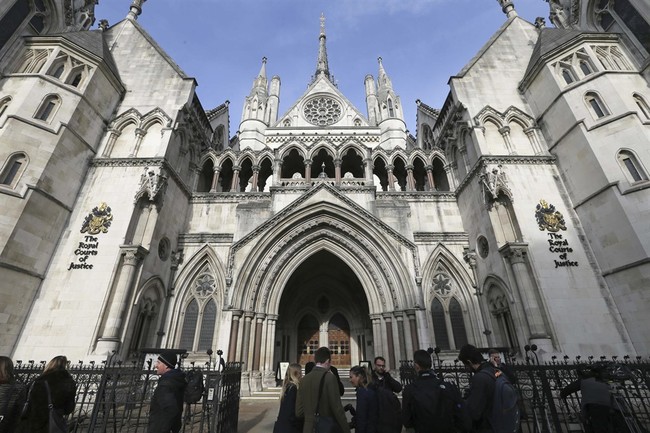
The High Court in the U.K. has ordered that a young girl must keep her father’s surname despite his record of abuse and threats, a decision that has sparked outrage, raised questions about judicial priorities, and drawn harsh criticism from the child’s mother’s legal team.
British courts are facing fresh criticism after a ruling that forces a girl to retain her biological father’s last name even though he was found to have committed sexual and domestic abuse against the child’s mother. The case has become a flashpoint for concerns about how the judiciary balances parental rights, identity, and the welfare of vulnerable children. Reactions from legal advocates and victims’ supporters have been fierce, saying the ruling ignores the emotional harm to the child.
The publicly available details show the child, referred to as D, has not seen her father since December 2021 and was about one year old when the contact stopped. Despite that, judges concluded that changing her surname would strip away a “key part of the child’s identity and heritage.” To many critics, that reasoning feels detached from the lived reality of a small child with no meaningful relationship with an abusive parent.
Vivid allegations reported to the court include threats so severe they were described in graphic terms during proceedings. The man allegedly told the family, “There is no guarantee that if I come back here that I will not get so stressed out that I decide to pick up the knife, kill your parents first in their sleep and then kill you and [D].” Those words, presented in evidence, underline why the mother argued removing the surname was crucial to the child’s safety and healing.
🚨UK HIGH COURT RULES RIGHTS OF RAPISTS MORE IMPORTANT THAN VICTIMS
'A five-year-old girl must keep the surname of the father who raped her mother after a High Court judge upheld a ruling that it formed a key part of the child’s identity and heritage.'
ABSOLUTE INSANITY pic.twitter.com/25HaIUn5ot
— Basil the Great (@BasilTheGreat) November 17, 2025
The child, known as D, has not seen her father since December 2021 but must continue carrying his surname despite his history of domestic abuse against her mother.
The mother appealed the previous decision, arguing that forcing the child to bear the name was re-traumatising and contrary to the youngster’s best interests.
Representing the mother, barrister Charlotte Proudman said: “It just shows that a rapist’s rights are more important than [the] victim’s.”
In 2023 the family court found four “very serious” incidents of sexual abuse against the mother between 2015 and 2017.
Mr. Justice Peel, delivering the judgment, said removing the surname would take away a “key part of the child’s identity and heritage.” That formulation has been challenged by those who argue identity and heritage are not well-served by forcing a child to carry the name of a parent who hurt their family. Critics point out that identity includes safety, memory, and emotional wellbeing, not just a legal label.
For many watching this case from abroad, the decision reads like a courtroom putting legal formalities ahead of basic compassion. From a conservative viewpoint, the problem looks like a broader failure to protect children from harm by elevating abstract parental rights over tangible welfare concerns. When a judge weighs surname continuity above documented abuse and violent threats, public confidence in the system takes a hit.
The mother’s legal team argued the forced surname retention was re-traumatising and not in the child’s best interests. That plea resonated with advocates for survivors of domestic violence who stress courts must avoid actions that perpetuate harm. The idea that a court could be seen as facilitating further abuse by enforcing a surname feels, to many, like a moral blind spot.
Supporters of the ruling insist family law must consider legal parentage, cultural links, and long-term identity impacts, but the case underlines how those considerations can conflict with a child’s immediate psychological safety. The girl in this case has no meaningful relationship with her father and is unlikely to remember him, which raises the question of what the retained surname actually preserves. If the name ties the child to trauma, keeping it becomes an immovable burden rather than a neutral fact of heritage.
Responses from barristers and victims’ advocates have been direct and scathing, with some calling the judgment “abusive, state-sanctioned harm.” That language reflects a deep frustration with a system perceived to prioritize procedural technicalities over protecting survivors and their children. This ruling will likely prompt renewed debates about how family courts evaluate harm, identity, and the real-world effects of their decisions.
No legal system is beyond scrutiny, and this decision has reopened arguments about reforming family law so children’s welfare comes first. Whatever legal doctrine the judges relied on, the fallout shows how a single ruling can erode trust and provoke calls for clearer guidance that puts children before paperwork. For many, the heart of the matter is simple: protecting a child from ongoing trauma should be the nonnegotiable starting point for any family court.