Short summary: A media personality argues that President Trump’s comments about Minnesota’s Somali community amount to an impeachable offense, drawing sharp pushback for what critics call hypocrisy and political theater.
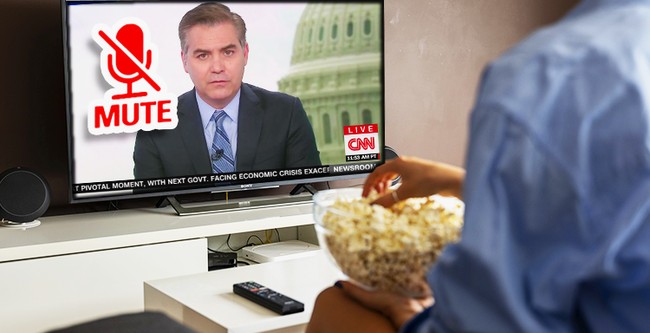
Democrats and parts of the media keep talking impeachment like it’s a tool to remove political opponents rather than a constitutional remedy for real crimes. That posture makes every offensive line, every crude remark, a potential headline and a demand for action. In this case, Jim Acosta says President Trump’s recent comments about Somali immigrants are not just wrong, they’re worthy of impeachment.
Acosta framed the president’s remarks as a blatant example of racism and cruelty, arguing that words alone prove unfitness for office. He insisted that a leader who speaks that way, even privately, is morally compromised and should be removed by the political process. Those claims are exacting and dramatic, and they push impeachment into the realm of personal grievance rather than legal judgment.
Acosta believes President Trump’s “hateful comments” about the Minnesota Somali community are grounds for impeachment.
WATCH: Disgraced ex-CNN anchor Jim Acosta says Trump should be impeached for “hateful comments” about the Somali community
— Breaking911 (@Breaking911) December 4, 2025
“What needs to be said that isn’t being said enough in our press over the last 24 hours is that the President of the United States said a blatantly, obviously racist thing in the Cabinet meeting on Tuesday when he said what he said about Somali immigrants in this country,” Acosta said.
“That they don’t contribute anything, that they’re not of value. In no normal world should the President of the United States of America ever, ever say something like that to the American people or even say it privately,” he continues. “I mean, if the President of the United States says it privately, it means he’s a bad person and we should get rid of him.”
“But to me, that was an impeachable moment. There have been so many impeachable moments since Donald Trump has come back to the White House, but to blatantly say something as racist and as hateful and as nasty and cruel and mean-spirited as what he said yesterday,” Acosta said. “The impeachment proceedings should begin right now. But of course, they won’t.”
That line of thinking treats impeachment as punishment for perceived insult rather than a constitutional remedy for serious misconduct. Republicans see it as a dangerous lowering of the standard for removing an elected president. If every offensive phrase qualifies, impeachment becomes a routine political weapon, not an extraordinary check on corruption or lawbreaking.
They won’t because “saying things that hurt Jim Acosta’s feelings” isn’t an impeachable offense. And Acosta knows it, because he locked replies on his post.
Mocking the locked replies, critics pointed out the irony of demanding impeachment while silencing debate. Media figures who call for removal often don’t tolerate dissent or scrutiny when the spotlight turns to them. That behavior undercuts their moral authority to lecture about democratic norms.
So brave, Jim.
Acosta isn’t the brightest bulb.
Part of the Republican critique is simple: apply standards evenly. When President Biden has used inflammatory language about Catholics, veterans, conservatives, and parents, or when other leaders slur broad groups, the same media chorus frequently responds with silence or soft coverage. That inconsistency fuels claims of bias and selective outrage from conservatives.
Impeachment is supposed to be rare and tethered to tangible abuses of power like bribery or obstruction, not subjective judgments about tone. When the bar gets lowered to feelings and insults, the process dilutes its own legitimacy and hands the opposition a permanent cudgel. That’s why Republicans argue for restraint and objective standards rather than headline-driven calls for removal.
The real political play at work is obvious: press personalities and partisan pundits use emotional outrage to rally their audiences. It’s good theater, but it’s not governance. Conservatives warn that conflating rhetoric with removable offenses sets a precedent that will come back to haunt every future president.
Beyond partisan theater, there is a cultural debate about who counts as fully American and who does not, and that conversation is messy and fraught. Republicans say the right response is legal fairness and policy debate, not hasty constitutional maneuvers. If the goal is accountability, it must be pursued consistently, not selectively when it suits one side’s headlines.
What happens next is predictable: the media will narrate moral failure, opponents will demand action, and the public will be left sifting through outrage. For now, the episode reinforces a familiar split—one camp sees speech and consequence as a matter of politics, the other sees it as a constitutional matter requiring clear evidence of wrongdoing.