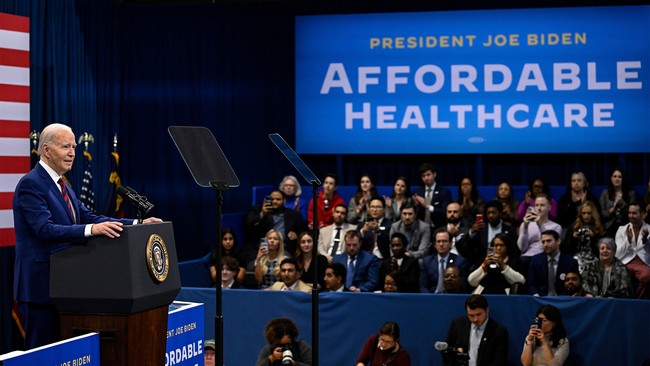
The article argues that the Affordable Care Act failed to deliver on major promises, highlights media defensiveness around the law, and contrasts what was promised with what actually happened to premiums, coverage, and taxpayer exposure.
The media elite often act like they are above criticism, but when the Affordable Care Act comes up they double down on spin instead of facing facts. Conservative critics see a pattern: lofty promises followed by financial pressure on taxpayers and growing frustration among consumers. That tension plays out in heated exchanges on commentary platforms and in broadcast debates.
One recent exchange put this dynamic on display: a podcaster called out Democratic responsibility for decisions like sunset dates on COVID-era subsidies, and a prominent reporter rushed to defend the law. That defense is predictable — paint any critique as partisan and insist the system is broadly successful. Which means, of course, the current healthcare disaster is … Republicans’ fault.
The pushback often ignores how the law was sold to voters and what people were promised. Journalists who take the law’s framing as gospel rarely hold Democrats accountable for claims that failed to materialize. Instead, they treat inconvenient outcomes as Republican propaganda, which skirts a real discussion about cost, access, and incentives.
When you look at the original promises, they read like a consumer wish list. People were told premium costs would fall dramatically and that personal choices and budgets would be preserved. Those pledges set expectations high and made current disappointments feel like betrayals to many families.
- Premiums would go down by $2,500 per year for families.
- “If you like your doctor, you can keep your doctor…if you like your private health insurance plan, you can keep it.”
- “I will not sign a plan that adds one dime to our deficits — either now or in the future.”
- “This plan will be paid for…the middle class will realize greater security, not higher taxes.”
- It will reduce the deficit.
- Reform will expand coverage to tens of millions of uninsured Americans.
Beyond those bullet points, Democrats promised an end to denials for pre-existing conditions, bans on dropping coverage, no more lifetime caps, free preventive care, and limits on out-of-pocket exposure. Those are powerful assurances, and voters remember them. Splitting hairs about semantics does not erase the lived experience of higher costs and narrower choices for many.
Dear @amyklobuchar —
You told us Obamacare would solve everything. And now you’re blaming Republicans when it was Democrats who put these subsidies in place and ready to expire at the end of the year. This is dishonest on every level. https://t.co/6We8DJQkpg— Michele Tafoya (@Michele_Tafoya) December 16, 2025
According to CMS, the Affordable Care Act is designed to “put American consumers back in charge of their health coverage and care. Insurance companies often leave patients without coverage when they need it the most, causing them to put off needed care, compromising their health, and driving up the cost of care when they get it. Too often, insurance companies put insurance company bureaucrats between you and your doctor.” That language promised a corrective to real problems, but the reality has been messier and more expensive for taxpayers and patients alike.
Republicans warned that a one-size-fits-all approach would distort markets and burden healthy people with subsidies and mandates to cover others. That prediction was dismissed as fearmongering by many on the left, yet market signals since then show premiums shifting, insurers adjusting networks, and public resentment surfacing when subsidies expire. When politicians ask for more tax dollars to paper over rising premiums, it raises the obvious question: what problem are we trying to solve permanently and at what cost?
Harwood’s own defense, repeated in media circles, leans on the idea that the law’s protections are sacrosanct and politically untouchable. Here is the essence of that argument, presented exactly as stated:
Requiring everyone to obtain coverage means that premiums from those fortunate enough to never face crippling expenses an protect the small number who do. That principle allowed the ACA to prohibit insurers from denying anyone coverage, even those with expensive pre-existing conditions.
It prevented insurers from jacking up premiums on beneficiaries who suffer new health problems. Young, healthy people paid more for comprehensive ACA insurance than for the bare-bones plans many had bought before – and many complained about that. But those higher premiums protected them against future medical misfortune, too.
With characteristic hysteria, Republicans warned the ACA would kill jobs and balloon healthcare spending. In fact, it did neither – even as it cut the proportion of Americans without health insurance in half.
No matter how many times Republicans call Obamacare “a disaster,” the popularity of its protections prevent them from repealing it. Those protections cannot be replicated by old GOP stand-bys, such as state-level “high-risk” pools or health savings accounts purporting to turn patients into medical bargain hunters.
That leaves brain-dead bluster from the likes of Kentucky GOP Rep. James Comer, who derides the ACA’s “fake economy” that insures freeloaders at the expense of the hard-working few.
That excerpt shows the tension: admiring some protections while ignoring systemic costs and political trade-offs. Conservatives point to the law’s structural flaws and the predictable pressures it creates on budgets and choices. The debate matters because how we frame past promises determines whether reform seeks true market fixes or simply rearranges subsidies to postpone reckoning.
The Affordable Care Act will be debated for years, and that debate should go beyond media talking points. Republicans argue for policies that lower costs, increase transparency, and return control to patients and families instead of expanding the federal tab. Voters deserve clear choices, honest accounting, and solutions that work without endless bailouts.