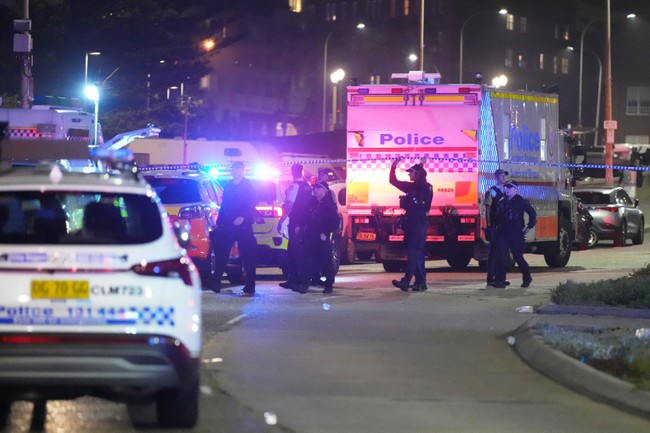
Australian authorities moved quickly after the Bondi Beach attack, detaining a group in Liverpool who were reportedly heading toward Bondi, and dramatic footage and official statements show a tense, heavily policed response as investigators act on intelligence tied to the recent terror incident.
In the wake of the Bondi Beach shooting that targeted Hanukkah celebrants, law enforcement in Sydney signaled they were on high alert and made multiple arrests in Liverpool. Officials say those arrested were believed to be traveling toward Bondi, prompting a robust counterterrorism response aimed at preventing another attack. The scene underscored how fragile public safety can be when lone-wolf and inspired actors are active.
Social clips that circulated online show a large police presence in Liverpool, with officers moving quickly to secure streets and contain potential threats. Witnesses described officers using forceful tactics during an intercepted traffic stop, reflecting the urgency of the intelligence received. Those images inflamed concern across communities already rattled by the recent violence on Bondi Beach.
BREAKING:
Australian police ram a car with 5 men who were travelling to Bondi Beach.
It’s possible that another Islamist terror attack was just stoped. pic.twitter.com/E4fi4dnC3G
— Visegrád 24 (@visegrad24) December 18, 2025
Local outlets reported that the arrested men had traveled from Melbourne with an alleged intent to reach Bondi Beach, a detail that sharpened authorities’ response. Given the timing, investigators treated the information seriously and executed cautious but decisive tactics. Multiple vehicles were stopped and searched during coordinated raids in Sydney’s south-west.
Counter terrorism police have arrested seven men in Liverpool who were understood to be on their way to Bondi.
New South Wales Police received intelligence the individuals had travelled from Melbourne and were intending to go to Bondi Beach.
It is understood police took a cautious approach to the intelligence, given the climate in the wake of the Bondi terror attack on Sunday evening.
Nonetheless, dramatic scenes played out in Sydney’s south-west as heavily armed officers discharged multiple rounds of rubber bullets and rammed a white Hyundai to the side of the road following a traffic stop.
A second vehicle, which reportedly had a Victorian provisional license visible on the front seat, was also intercepted a short distance away.
That block of official reporting paints the picture: counterterrorism teams worked off actionable leads and coordinated vehicle stops in multiple locations. Officers used non-lethal rounds and tactical maneuvers to halt vehicles that intelligence suggested were linked to the threat. For many residents, the scenes felt like a stark reminder that the terror risk remains active and unpredictable.
People watching those confrontations online called them “absolutely terrifying,” and the images made it clear why police moved quickly. The response was not theater; it was a direct reaction to an intelligence assessment made in the tense hours after a public shooting. When a community just suffered an attack, authorities tend to err on the side of force to protect crowds and places of worship.
From a public-policy angle, the episode raises hard questions about how Western governments handle Islamist-inspired violence and how they balance civil liberties with security. Many on the right will say law enforcement must be empowered to act decisively, deport threats when possible, and prioritize keeping citizens safe over appeasing political correctness. Critics on the left, meanwhile, tend to emphasize humanitarian concerns and long-term social strategies.
That split matters because the political response shapes resources and legal tools available to police. If officials shy away from firm action out of fear of backlash, communities pay the price. Republicans argue that clear laws, strong policing, and secure borders are practical necessities in a world where ideology motivates killers and copycats.
Public trust in institutions depends on results: stopping attacks before they happen, prosecuting those who conspire to kill, and protecting ordinary people at public gatherings. In Australia and elsewhere, the immediate priority is to ensure there are no follow-up attacks and to get ahead of networks that incubate violence. Citizens want straightforward protection, not lectures.
As investigations continue, the underlying reality is simple: intelligence matters, rapid police work matters, and political will matters too. Officials in New South Wales and federal agencies will have to explain the evidence, the arrests, and the next steps while communities seek reassurance. For now, the arrests in Liverpool offer a pause, but not a guarantee, that mass violence has been stopped.