The Department of Homeland Security and ICE are offering a one-time $3,000 payment to illegal immigrants who voluntarily leave the United States, a policy change announced in late December that supporters say will reduce long-term taxpayer costs and critics call controversial.
The Department of Homeland Security and ICE revealed earlier this week that they’re giving illegal immigrants a lucrative incentive to leave our country voluntarily. The program is billed as a way to encourage self-deportation and reduce the strain on border enforcement and social services.
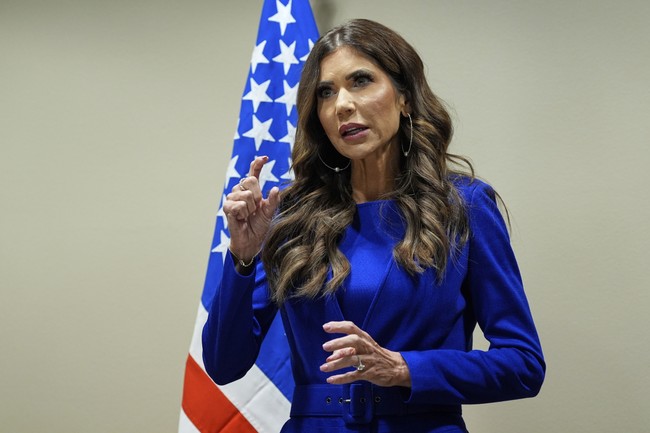
On December 22, Homeland Security Secretary Kristi Noem announced the program and explained the increase in the incentive. The one-time payment was raised to $3,000 from the $1,000 offered at the start of the president’s second term, a move framed as a practical step to return people to their families and cut ongoing costs.
“Well, it’s home for the holidays season so, you know, not only are we returning those kiddos back to their families that Biden lost, we also are saying that if you voluntarily want to go home now to your country, if you’re in this United States of America illegally, we will give you $3,000 through the holidays to send you home,” Noem said in a Fox News interview. “We will buy you a ticket, give you $3,000 to go home, and that includes people that have not been detained, maybe have interacted with us, are detained, and don’t have criminal charges against them.”
“Raise your hand, we’ll help you get home, we’ll facilitate it, and you might get the chance to come back to this country the right way someday,” Noem added. “If you wait until we interdict you and detain you, and arrest you, and have to deport you ourselves, you’ll never get the chance to come back. So go on the CBP home app, and get the information, and we’ll make sure you get home in time for Christmas.”
ICE also released a holiday-themed ad promoting the offer, using seasonal imagery to drive the point that voluntary departure is an option. “Avoid ICE Air and Santa’s Naughty List!” the social media post read. “Self-deport today with the CBP Home app, earn $3,000 and spend Christmas at home with loved ones. Holiday incentive is valid through the end of 2025.”
Not everyone is on board, and critics have asked why taxpayer dollars should be used to “reward” illegal entry instead of funding enforcement. “Can you imagine if Joe Biden started rewarding illegal immigrants with $3,000 checks on their way home? Oh how it would be mocked! Noem takes $$ from you and sends it to illegal immigrants b/c she cares more about population purity than any other value.”
What a load. The counterargument is straightforward: keeping people here indefinitely costs far more than helping them leave now. Estimates cited by supporters put the annual taxpayer burden for housing, feeding, educating, and providing services to illegal immigrants at roughly $150 billion, a figure meant to frame the $3,000 incentive as a modest, short-term expense compared with long-term obligations.
There are other concrete examples advocates point to, like federal agencies using emergency funds to house migrants in commercial hotels while displaced American families went without the same assistance. Those decisions, critics say, illustrate how the previous administration’s policies created a costly and chaotic situation at the border.
Supporters argue the current initiative is about choosing the fiscally responsible option: spend a small amount now to reduce permanent costs later. “She’s busy fixing the mess the last administration put us in. Funny how detractors say nothing about four years of open borders, 300k lost children, and hundreds of dead illegal aliens trying to get across the border at the hands of cartels. Noem has the fortitude to take that on,” one social media user wrote.
Can you imagine if Joe Biden started rewarding illegal immigrants with $3,000 checks on their way home? Oh how it would be mocked! Noem takes $$ from you and sends it to illegal immigrants b/c she cares more about population purity than any other value. https://t.co/WS5hDPNe1J
— David J. Bier (@David_J_Bier) December 22, 2025
This line of thinking claims the Biden administration engineered a crisis so severe it would be politically and practically impossible to unwind without dramatic action. The program to incentivize voluntary return is presented as one pragmatic tool among many to regain control of flows and reduce fiscal strain on local, state, and federal governments.
Not every critic limits themselves to policy disagreements; some attack the tone and motives behind enforcement efforts. “No personal responsibility. Always blaming others for your ineptitude, failures, and lack of principle. Lots of lies. No leadership,” wrote one commentator who framed the policy as symbolic rather than substantive.
No, this is what leadership and responsibility look like to the program’s defenders: a clear policy that prioritizes reducing long-term costs, restoring order at the border, and offering a pathway home that avoids the trauma and danger often associated with illegal migration. That, they say, is exactly the kind of course correction voters expected when they chose a new direction.