Minnesota is mired in a sprawling fraud scandal tied to social programs, with hundreds implicated and more than a billion dollars reportedly stolen, raising questions about oversight, political priorities, and who bears responsibility at the top.
The story starts with multiple programs meant to help vulnerable people — a school meals program, housing assistance, and Medicaid services — that were infiltrated by bad actors billing the state for services that never materialized. State officials recently paused payments to several Medicaid-funded programs amid growing evidence of abuse and mismanagement. These are not small bookkeeping errors; the scope stretches into the hundreds of millions and, by some accounts, over a billion dollars.
A judge recently tossed a jury verdict in a $7.2 million fraud case, a move that surprised many observers and raised legal eyebrows about how prosecution and adjudication have proceeded. Authorities say at least one vulnerable person died amid the breakdowns, and critics point to troubling links between diverted funds and overseas groups. Minnesotans who pay the bills are demanding answers about how this could happen on such a scale.
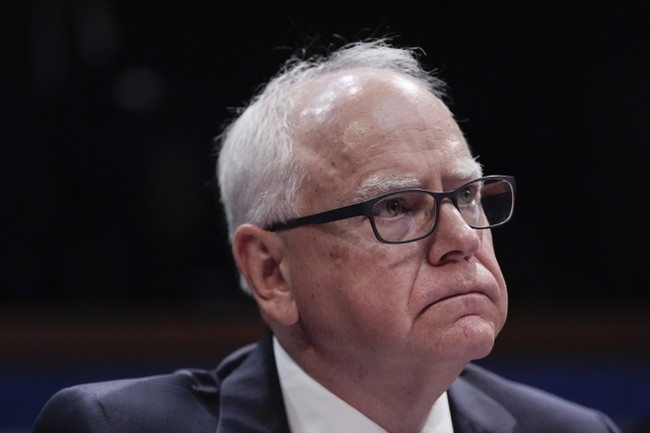
President Harry S. Truman once said, “The buck stops here,” and that old line matters because this is a gubernatorial problem as much as it is a criminal one. Governor Tim Walz is the face of state leadership, and people expect accountability when billions vanish under state supervision. Republicans are using this as a blunt reminder: when public money is stolen, voters want consequences, not excuses.
Even national outlets that previously leaned sympathetic are reporting the severity of the scandal, and the coverage has sharpened the political stakes ahead of key races.
Over the last five years, law enforcement officials say, fraud took root in pockets of Minnesota’s Somali diaspora as scores of individuals made small fortunes by setting up companies that billed state agencies for millions of dollars’ worth of social services that were never provided. Federal prosecutors say that 59 people have been convicted in those schemes so far, and that more than $1 billion in taxpayers’ money has been stolen in three plots they are investigating. That is more than Minnesota spends annually to run its Department of Corrections. Minnesota’s fraud scandal stood out even in the context of rampant theft during the pandemic, when Americans stole tens of billions through unemployment benefits, business loans and other forms of aid, according to federal auditors. Outrage has swelled among Minnesotans, and fraud has turned into a potent political issue in a competitive campaign season. Gov. Tim Walz and fellow Democrats are being asked to explain how so much money was stolen on their watch, providing Republicans, who hope to take back the governor’s office in 2026, with a powerful line of attack. … Debate over the fraud has opened new rifts between the state’s Somali community and other Minnesotans, and has left some Somali Americans saying they are unfairly facing a new layer of suspicion against all of them, rather than the small group accused of fraud. Critics of the Walz administration say that the fraud persisted partly because state officials were fearful of alienating the Somali community in Minnesota. Governor Walz, who has instituted new fraud-prevention safeguards, defended his administration’s actions.
Walz has closed at least one program accused of being fraud-ridden and announced a task force aimed at stronger anti-fraud measures. He told reporters, “The message here in Minnesota is if you commit a crime, if you commit fraud against public dollars, you are going to go to prison.” That line is politically strong, but critics say words have not matched the depth of the failures people are uncovering.
New York Times: How Fraud Swamped Minnesota’s Social Services System on Tim Walz’s Watch.https://t.co/8Ifk0LCBO1
— Ryan Faircloth (@RyanFaircloth) November 29, 2025
Reports also describe political pressure and threatened lawsuits that appear to have influenced program decisions, with allegations that officials feared accusations of racism if they moved too aggressively. Kayseh Magan, a Somali-American who worked as a fraud investigator for Minnesota’s Attorney General’s office, said, “There is a perception that forcefully tackling this issue [of fraud] might cause political backlash among the Somali community, which is a core voting bloc” for the Democratic Party. That fear, if true, helps explain why oversight may have been timid at key moments.
Nearly 500 current staffers from the Minnesota Department of Human Services have publicly accused state leadership of withholding information and retaliating against whistleblowers, and they claim Governor Walz knew more than he admits. The internal post is scathing: “Instead of partnership, we got the full weight of retaliation by Tim Walz, certain DFL members, and an indifferent mainstream media,” Minnesota DHS writes. “It’s scary, isolating and left us wondering who we can turn to.”
The whistleblower post keeps going, and it does not pull punches. “In addition to retaliating against whistleblower (sic), Tim Walz disempowered the Office of the Legislative Auditor, allowing agencies to disregard their audit findings and guidance. Media and politicians supporting Tim Walz or the DFL-agenda attacked whistleblowers who were trying to raise red flags on fraudulent activities,” the authors wrote. “This is a structure created and maintained by Tim Walz who has created an environment of inter-related agencies and institutions including the media — that help foster fraud through retaliation and turning a blind eye in exchange for political gain.”
Those are fierce accusations: “Fundamentally, Tim Walz is dishonest, lacks ethics and integrity, has poor leadership abilities, and has never taken any accountability for his role in fraud. Instead, Tim Walz deflects by blaming national politics for his own failings and distracts the public with inveterate lying,” the post continues. The writers also dispute claims of a budget surplus under Walz, alleging federal funds were mischaracterized and used to expand patronage.
Across official statements, one line repeats: Walz knew or should have known, and action was delayed. “We need all the help we can get as Tim Walz’s agency leaders have upped their brazen approach in covering up their knowledge of fraud,” the staffers wrote. And the political fallout is still growing as Republicans press the case for change.
Of course, defenders will point to cultural explanations and single out particular immigrant experiences, but that does not absolve leadership from accountability. A local scholar told reporters that some refugees came from places where stealing from a corrupt state was normalized, a context that matters but cannot excuse the theft of American taxpayer dollars. On Meet the Press, Walz responded with a long statement that included, “Well, certainly I take responsibility for putting people in jail. Governors don’t get to just talk theoretically. We have to solve problems and I will note, it’s not just Somalis. Minnesota is a generous state, Minnesota is a prosperous state, a well-run state, we are AAA bond-rated, but that attracts criminals. Those people are going to jail, and we are doing everything we can, but to demonize an entire community on the actions of a few, it’s lazy.”