A quick look at the ozone news and the media reaction, with context on how alarmism shaped public thinking.
I remember being a kid when teachers warned us about the ozone hole like it was a coming apocalypse, and the panic felt total. They said it would grow and scorch the earth, wreck crops with acid rain, and make cities unlivable from smog.
That was 1988, and now, decades later, reality looks different: there’s a foot of snow outside and no buckets of acid rain falling from the sky. If cities are suffering in places, it’s from bad policy, not smog, and that distinction matters for how we judge past warnings.
ABC News is circling back to the ozone story, and the data make the original hysteria look overdone compared with the measured science now available. The scientific update is clear enough that even a skeptical citizen can see change without the usual panic machine revving up first.
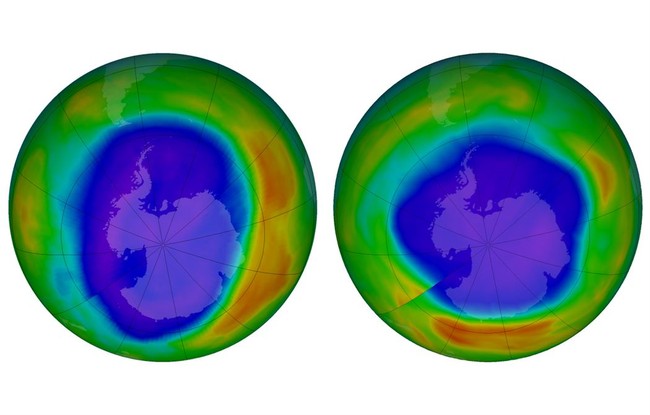
The ozone hole over the Antarctic is significantly smaller in 2025 than in previous years, ranking as the fifth-smallest it’s been since 1992, according to a new report by NOAA and NASA scientists.
The ozone hole over the Antarctic is significantly smaller in 2025 than in previous years, ranking as the fifth-smallest it's been since 1992, according to a new report. https://t.co/k1DH5aC4r1
— ABC News (@ABC) December 1, 2025
The ozone hole reached its greatest one-day extent for 2025 in early September, measuring 8.83 million square miles, about 30% smaller than the largest hole on record in 2006.
The so-called “ozone hole” is not an actual hole in the planet’s ozone layer, but rather a large region of Earth’s stratosphere with extremely low ozone concentrations.
NOAA and NASA scientists emphasize that recent findings show efforts to limit ozone-depleting chemical compounds can have a significant impact.
The regulations are established by the Montreal Protocol, which went into effect in 1992. Subsequent amendments are driving the gradual recovery of the ozone layer, which remains on track to fully recover later this century as countries worldwide replace harmful substances with safer alternatives.
So it turns out we didn’t have to surrender our lives to make a point: the ozone issue responded to targeted policy, not mass lifestyle sacrifice. That undercuts the “end of the world unless you obey” tone we saw for years from parts of the media and activists.
Has a single, specific climate prediction made by alarmists come true at the scale they promised? The evidence keeps piling up that exaggeration was routine. The pattern is predictable: worst-case scenarios are shouted loudly, then quietly adjusted when data don’t match the hype.
The result is erosion of credibility across the board, and that’s dangerous because it trains the public to distrust real science when it matters. When every forecast is framed as cataclysmic unless the public accepts sweeping policy changes, people stop listening.
The environmentalist Left has pushed against basic comforts for years, including air conditioning, refrigeration, and heating, all while promising salvation through heavier regulation. Those proposals often ignore trade-offs and real-world consequences for ordinary families and workers.
Remember the AquaNet-style alarmism? Those cultural moments stuck because fear is an efficient recruitment tool, and scare tactics work on impressionable audiences. We remember the theatrics and the constant demand for obedience in the name of the planet.
This kind of indoctrination is designed to make people scared enough to accept radical fixes, and those fixes tend to resemble top-down, centrally planned solutions. Some warned years ago that authoritarian ideas could wear a new label; that warning now looks less like paranoia and more like a cautionary tale.
Rush Limbaugh noted after the fall of the Berlin Wall that communism was not dead but would rebrand, and he pointed to environmentalism as a vehicle for those same centralized impulses. That observation resonates for many voters who watched freedoms get pitched as collateral for policy experiments.
Plainly put, the ozone story shows two things: targeted global cooperation can solve discrete problems, and loud alarmism from political actors and the media poisons public trust. It’s worth keeping the science, ditching the melodrama, and holding the people who pushed panic to account.
Editor’s Note: The mainstream media continues to deflect, gaslight, spin, and lie about President Trump, his administration, and conservatives.