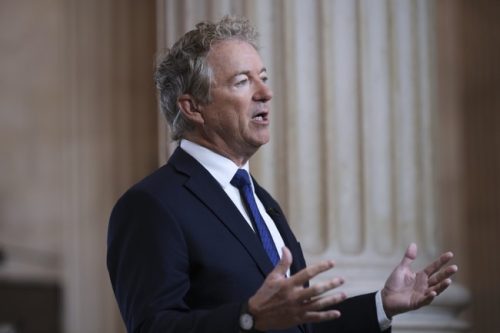
Sen. Rand Paul’s Festivus Report for 2025 lays out a blunt inventory of federal spending that reads less like policy and more like headline-grabbing waste, naming programs that squander billions and offering a running tally of how Washington treats taxpayer money.
Sen. Rand Paul (R-KY) released his annual Festivus Report for 2025, and it sticks to the same playbook: point out absurd, avoidable spending and call out the bureaucrats who greenlight it. This is the eleventh Festivus Report, and it lists a string of expenditures that undercut trust in government stewardship.
The report catalogs items both large and petty, from multibillion-dollar line items to research projects that sound like bad sitcom plots. Among the big-ticket calls is $10 billion to the Department of the Interior to maintain, lease, and furnish empty or underused federal buildings and $15 million for the Pension Benefit Guaranty Corporation to “splurge” on new office furniture even though most of its workforce operates remotely.
Paul’s report frames this spending against a bleak backdrop: the national debt creeping toward $40 trillion and billions being siphoned off in interest. Congress, the report says, “keeps shoveling money toward pet projects and special interests while hardworking Americans pay the price through inflation and crushing interest rates,” and taxpayers foot the bill for both the waste and the rising debt burden.
Mark your calendars! 🎄 December 23rd: the annual Festivus Report is coming to town!
Join me for my favorite holiday tradition of exposing the most egregious government waste you can feast your eyes on! @Varneyco pic.twitter.com/aEvuWj11Zd
— Senator Rand Paul (@SenRandPaul) December 19, 2025
The Festivus totals are meant to sting. The senator detailed “a jaw-dropping amount of government waste — the kind that makes you wonder if anyone in Washington has ever heard the word ‘priorities.’ A grand total of $1,639,135, 969, 608, which includes $1.22 trillion in interests payments on the debt.” That number is the headline, and the line items beneath it read like a roster of misplaced priorities.
Some items are plainly offensive on their face: the National Institute on Drug Abuse reportedly paid $2 million for “6-mont-old beagle puppies to wear a jacket that would dose them with cocaine.” The project later ballooned to $5.2 million, and the report notes that many of the puppies used in the experiment were killed.
That example sits beside other troubling experiments, like a VA study aimed “to turn teenage ferrets into binge drinkers.” The report explains researchers forced ferrets “to consume only alcohol for an entire day by withholding their access to water in what the experimenters call ‘forced binge days,” for up to three months before killing them. These studies read cruel and needless to anyone who values fiscal restraint and humane practices.
The waste isn’t limited to pet projects on the fringes of ethical bounds; there are military and development programs with questionable returns. The Navy’s marine mammal program, which cost $77 million, attempted to train dolphins and sea lions to locate mines and divers, but the report says these animals were subject to “sleep deprivation, forced to swallow seawater, and made to wear headphones with loid noises blasting.” About 55 of 146 dolphins died since the program began, according to the report.
Other grants show how disconnected priorities can be. The federal government reportedly sent nearly $2.5 million to the Center for Environmental Sustainability through Insect Farming and the Center for Insect Biomanufacturing and Innovation to promote insects as human food. That kind of funding choice raises questions about where taxpayers’ limited dollars should go.
On the foreign aid front, the report points to USAID’s $2 million “Grants for Guatemalan Gendere Bending,” which the document says support “gender-affirming care, activism, and influence campaigns in Guatemala.” For conservatives and advocates of limited government, that allocation is a symbol of mission creep and misplaced cultural spending in foreign assistance.
Reading the listing, it’s easy to see why frustration runs high. The government racks up headline-grabbing totals while ordinary Americans juggle mortgages, student loans, and paychecks eroded by inflation. This pattern reinforces the argument that fiscal discipline isn’t just a budgetary preference, it’s a moral stance about who gets protected when priorities are set.
The Festivus Report is blunt: Washington spends with little accountability and rarely faces consequences for waste. For voters who want a smaller, more focused federal government, these examples serve as a call to demand better oversight and apply pressure for reforms that stop this kind of spending at the source, rather than just tallying it after the fact.
Sen. Paul’s report lands as both a catalog of waste and a political challenge: if taxpayers are outraged, the option to press elected officials for meaningful change is still on the table. Until then, the ledger keeps growing and the costs land squarely on the shoulders of working Americans who expect their representatives to prioritize essentials over experiments and vanity projects.