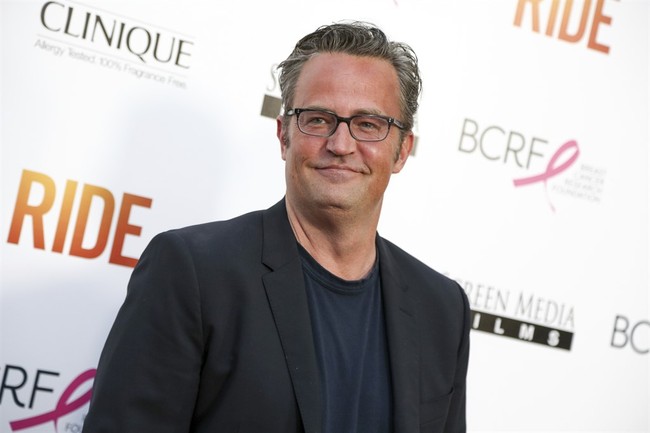
A Santa Monica physician was sentenced to 30 months in federal prison after admitting he illegally supplied ketamine to actor Matthew Perry and others, pleading guilty to multiple distribution counts and surrendering his medical license.
A former Santa Monica physician, Salvador Plasencia, 44, known as “Dr. P,” received a 30-month federal prison sentence and a $5,600 fine after a judge ordered him immediately remanded to custody. Plasencia pleaded guilty on July 23 to four counts of distribution of ketamine and surrendered his California medical license in September 2025. Prosecutors say he repeatedly sold vials and provided injections despite clear risks and without proper medical oversight.
Plasencia ran an urgent-care clinic in Calabasas called Malibu Canyon Urgent Care LLC and, as a licensed doctor, he understood ketamine is a controlled substance and an anesthetic sometimes used off-label for psychiatric conditions. Court filings note he was aware of risks such as sedation, psychiatric events, and abuse, and his own notes stated patients “should be monitored by [a] physician when undergoing treatment as a safety Measure.” Despite that, his conduct strayed far from accepted medical standards.
On September 30, 2023, a patient introduced Plasencia to Matthew Perry, describing Perry as a “high profile person” willing to pay “cash and lots of thousands” for ketamine treatment, Plasencia later acknowledged in his plea agreement. According to prosecutors, Plasencia’s reaction was profit-driven; the sentencing memo quoted him saying to a co-conspirator, “I wonder how much this moron will pay” and “let’s find out.” That attitude became central to the government’s argument at sentencing.
The same day he met Perry, Plasencia drove to Costa Mesa to buy ketamine vials, tablets, syringes, and gloves from another physician, Mark Chavez, then 55. Plasencia then administered an injection to Perry at his home in Los Angeles and left at least one vial with Perry’s personal assistant, Kenneth Iwamasa, 60, who paid Plasencia $4,500. Over the following weeks Plasencia is accused of repeatedly buying ketamine from Chavez and providing or leaving doses for Perry and Iwamasa.
One treatment reportedly caused Perry’s blood pressure to spike to the point where he froze up, yet Plasencia still left additional vials with Iwamasa, knowing the assistant would inject them without a healthcare professional present. From September 30 to October 12, 2023, Plasencia allegedly distributed 20 vials plus multiple tablets and syringes, a volume prosecutors say was not for any legitimate medical purpose. The government noted Plasencia billed a total of $57,000 even though the going rate for a vial was roughly $15.
Plasencia later used his Drug Enforcement Administration license to order 10 more vials through a licensed pharmaceutical company. On October 27, 2023, he texted Iwamasa: “I know you mentioned taking a break. I have been stocking up on the meanwhile. I am not sure when you guys plan to resume but in case its when im out of town this weekend I have left supplies with a nurse of mine …I can always let her know the plan.” Perry fatally overdosed on ketamine the next day, and investigators say Plasencia did not supply the dose that caused his death.
>
After that fatal overdose and a DEA subpoena, Plasencia allegedly falsified treatment notes and an invoice for Perry to conceal illegal sales. One fraudulent note claimed that on October 7, 2024, Perry “was scheduled to meet for a treatment session but was not present,” when in fact Plasencia knew the scheduled meeting was to sell vials to Iwamasa at midnight outside a bar in Santa Monica. Prosecutors view those fabrications as part of an effort to cover up sales to nonmedical caretakers.
Two cooperating defendants who pleaded guilty were Chavez and Iwamasa, and they are scheduled for sentencing later this year and next. Two other defendants in the broader investigation, Erik Fleming and Jasveen Sangha, a.k.a. “Ketamine Queen,” have also pleaded guilty and await sentencing dates in January and February 2026. The probe involved the Los Angeles Police Department, the Drug Enforcement Administration, and the United States Postal Inspection Service.
The case was prosecuted by Assistant United States Attorneys Ian V. Yanniello of the National Security Division and Haoxiaohan H. Cai of the Major Frauds Section, who argued the conduct represented a stark violation of medical and legal duties. Federal filings stress that rather than protect a vulnerable patient with a long history of addiction, Plasencia put profit ahead of safety, a central point in the government’s sentencing memorandum.