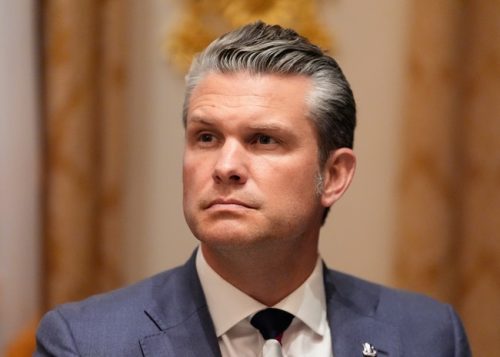
At The New York Times DealBook Summit, Treasury Secretary Scott Bessent delivered a blunt, take-no-prisoners critique of the mainstream media and blue-state policies, argued that President Trump is engaged and governing actively, and pushed his agenda on affordability and new child savings accounts while calling out what he sees as biased coverage.
Scott Bessent showed up to the DealBook Summit with a reputation for speaking plainly, and he lived up to it. He has been openly critical of the handling of issues like fraud in Minnesota and blunt about the political theater around shutdowns. Bessent has not shied away from calling out what he sees as coordinated attacks on President Trump.
He made The New York Times the centerpiece of some of his sharper lines at the event. The paper’s coverage, he argued, has drifted far from the role of a neutral “paper of record” and instead feeds into what he called a fever swamp of narratives.
There was even a moment of comic relief when the audience noticed a graphic poking fun at the Times. “I actually don’t read the New York Times anymore,” Bessent said to laughter. “I do watch CNBC, but occasionally people send me articles and there’s just this fever swamp and…The New York Times is no longer the paper of record.”
NEW: Treasury Secretary Scott Bessent demolishes The New York Times at their own summit.
Bessent ripped apart the "fever swamp" New York Times on stage at the New York Times' DealBook Summit.
"I actually don't read the New York Times anymore… occasionally people send me… pic.twitter.com/6ObZJyKcm2
— Collin Rugg (@CollinRugg) December 3, 2025
He didn’t stop with style points; he challenged specific stories about the president’s fitness. “I read this article, ‘President Trump is slowing down, President Trump’s mental capacity’ it is a hundred percent fake,” Bessent added. “He only called me twice at two in the morning last week, instead of three times.”
Bessent also drew a contrast with how the media covered the previous administration. “You had what was one of the greatest scandals of all time, the coverage of the Biden administration, Joe Biden’s diminished capacity and the cover-up. Where was the New York Times?” he asked the room. “We just had a three-hour cabinet meeting yesterday, Andrew. For ten months, the Biden administration did not have a cabinet meeting. How are you going to invoke the 25th Amendment if the cabinet secretaries never see the President? Which they didn’t.”
He underscored his point by sharing what he hears at Treasury about presidential engagement. “I hear from people in the Treasury building, ‘I see President Trump more in a day than my predecessor saw Joe Biden in half a year,'” Bessent said. That line landed as a direct rebuttal to persistent media narratives about absentee leadership.
Bessent moved from media criticism to economic policy with the same blunt framing, putting a clear spotlight on red versus blue state performance. He argued affordability is tied to governance and suggested voters are already reacting to policy differences at the state level.
“Affordability is worse in a blue state,” Bessent said. “There’s no debate. They’re 50 basis points higher inflation, the ten highest inflation rates are in blue cities.” He painted a picture of people voting with their feet and moving away from places with higher costs and heavier burdens.
When pushed on regional inflation comparisons, Bessent kept his data-first posture. “Right, today,” Bessent said. “Today it is 50 basis points higher…people are voting with their feet. I have the American people on my side. New York, Illinois, California, Massachusetts are depopulating.” He used that trend to argue for policy shifts that favor affordability and opportunity.
He also shot down a media comparison about Florida’s inflation. “Well, inflation is up 25 percent nationally, so it’s lower.” The exchange illustrated how he wanted headlines viewed against the broader national picture rather than splashed as isolated talking points.
Bessent then pivoted to proposals aimed at families, promoting the idea of new savings vehicles he associated with the Trump era and describing the public response he expects. He framed these accounts as a way to let Americans invest in future generations while bypassing centralized redistribution.
“When you see that people have a stake in the system, they don’t want to bring the system down,” Bessent said. “Americans are the most generous and giving people in the history of the world, and there has never been a vehicle for them to be able to give directly to American children.”
“I believe that we are going to see this incredible outpouring into these accounts,” Bessent added. “This is the opportunity for philanthropists, for foundations, and for corporate to contribute to all the American children.” His pitch combined policy detail with a clear appeal to private generosity.