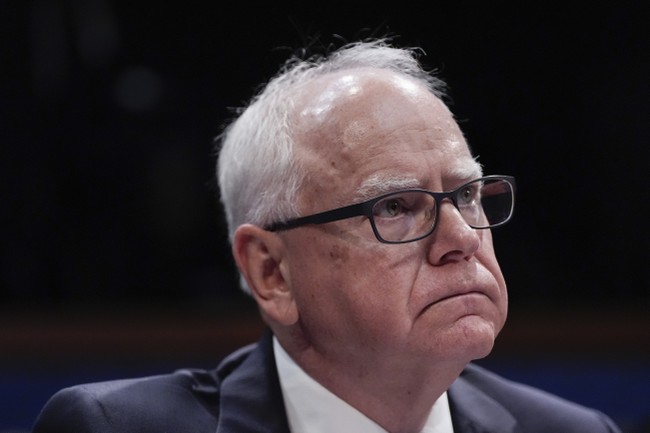
Tim Walz has been exposed as a thin-skinned, aggressive partisan whose rhetoric and record raise real questions about his fitness for high office.
Picking Tim Walz as a national surrogate made sense to Democrats on paper: a Midwestern everyman who could soothe suburban doubts. In practice, his record and recent behavior show a politician who talks toughness but collapses when the spotlight turns his way. That mismatch matters in a race where tone and responsibility shape real-world consequences.
Long before he entered the national spotlight, Walz raised eyebrows with awkward defenses of leftist ideas and fuzzy explanations of his past, including calling socialism “neighborliness.” Those private moments and odd phrasing should have been warning lights for Democrats vetting a White House-adjacent candidate. Instead, the party brushed past the red flags and handed voters a surrogate who quickly revealed sharper edges.
Over the past 18 months Walz drifted from bland Midwestern decency to a style that is vindictive and petty, not presidential. He traded mild reassurance for aggressive labels aimed at political opponents, and he rarely steps back to apologize or take responsibility. That pattern—loud attacks, no accountability—does not sit well when a vice-presidential pick is supposed to be steady under pressure.
At a recent Labor Day rally Walz said, “You get up in the morning and you doom scroll through things… you woke up the last few days thinking there might be news. Just saying. There will be news sometime. There will be news.” His casual flippancy about a president’s death crossed a line for many voters and commentators, and it exposed a relish for dramatic political theater over sober leadership. Moments like that reveal how easily rhetoric can spiral.
Walz has also attacked law enforcement professionals, calling ICE agents the “modern-day Gestapo” and refusing to back down when criticism followed. He told a Minnesota Nurses Association audience, “I see the pundits on TV, ‘what’s wrong with the Democratic Party?’ What’s wrong is our country’s being stolen by fascists and Nazis, and we’re trying to do all we can.” He claimed he meant Neo-Nazi demonstrators, but the broad brush he used painted opponents in extreme terms.
.@Tim_Walz, mocking President Trump’s health is a new low, even for you. Wishing ill on others doesn’t make you a leader—it makes you small.
Minnesotans deserve better. pic.twitter.com/6Kw05CBg5l
— Tom Emmer (@tomemmer) September 2, 2025
In an expletive-filled speech this past August, Walz repeated forceful condemnations of political opponents: “I always get in trouble for it, I’ll continue to say it. I don’t think we do any favors when we don’t name it. These are fascist policies… That is what they are.” Those words carry weight. When high-profile officials cast political choices as existential threats, they ratchet up tensions in a country already fragile and divided.
Walz went further, comparing President Trump’s Madison Square Garden rally to a Nazi event and calling President Trump a “fascist” during a campaign stop in Green Bay, Wisconsin. Such analogies are not neutral descriptions; they are incendiary signals to a charged base. Using that language makes it easier for political discourse to slide from heated debate into dangerous action.
There have been violent consequences tied to extreme rhetoric in recent years. Two assassins have tried to take President Trump’s life, and one attack in D.C. left a 20-year-old, Sarah Beckstrom, dead and a 24-year-old, Andrew Wolfe, critically wounded. The article also references an attempted assassination in Butler and the killing of Charlie Kirk in Utah. Whether or not elected officials intend it, reckless language contributes to a climate where individuals justify violence.
Walz has not apologized for rhetoric that critics say helped fuel political violence, yet he is quick to claim victimhood over insults. When President Trump allegedly used a crude slur against him, Walz leaned into wounded outrage and demanded consequences. That double standard—lashing out without remorse but crying foul over insults—looks less like leadership and more like selective indignation.
Even the claims about being targeted by rude name-calling deserve scrutiny. I searched and couldn’t find any video evidence of the alleged drive-by taunts, which raises doubts about the story’s accuracy. Calling someone a crude name may be offensive, but it is not the same as promoting violence, and it does not excuse the weaponization of political rhetoric from either side.
The Left has not generally marched around with signs reading “Punch a retard,” though some carried signs saying “Punch Nazis.” That contrast highlights a troubling tolerance for violence when it fits a political agenda. In the end, the real question is whether a man who launches violent rhetoric and then demands protection from insults deserves a place near the presidency.