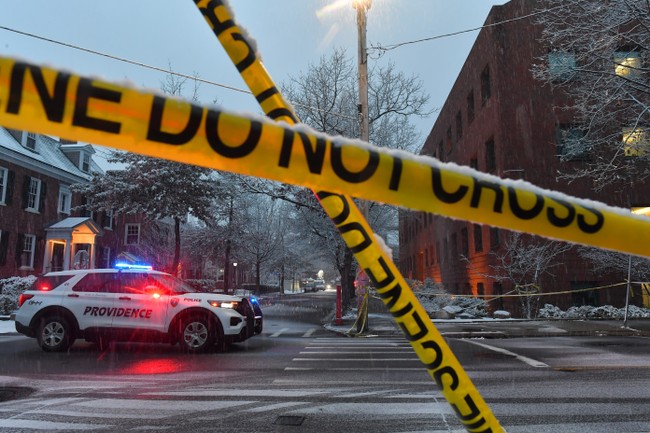
This piece calls out the chaotic handling of the Brown University shooting presser, questions officials’ messaging, and criticizes the refusal to confirm key details while a shooter remains at large.
There’s a simple expectation after a mass shooting: officials should be clear, factual, and focused on catching the person who just killed two people and wounded at least eight others. Instead, the presser at Brown University felt scattershot and defensive, more about tone than tracking a killer. When the suspect is still free, clarity matters more than posture.
The shooting happened inside the engineering building, and yet authorities repeatedly offered assurances that rang hollow to anyone worried about public safety. Providence Mayor Brent Smiley said he was tired, which is understandable, but that admission undercut the urgency people expect in a manhunt. Saying you’re exhausted while the shooter remains on the loose is not the reassurance the public needs.
Reporters and onlookers kept asking basic operational questions that went unanswered, like how the suspect entered and left the building or why there is reportedly no clear video. Officials kept circling back to generalities instead of giving specifics that could help the community stay alert. That gap opens the door to speculation and panic when facts are scarce and the threat remains real.
🚨 JUST IN – REPORTER: How can you reassure the public is safe, but say the Brown University shooting suspect is armed and dangerous?
POLICE CHIEF: "Yeah, right. That's something that's unknown…we have enhanced enforcement."
Not reassuring at ALL. pic.twitter.com/Mhto6CQ152
— Eric Daugherty (@EricLDaugh) December 15, 2025
One detail that has surfaced in reporting is that the shooter allegedly shouted “Allahu Akbar” before opening fire, a phrase the press conference would not confirm. Refusing to address that point while offering other forms of commentary feels like selective candor. If investigators have information that could link motive or method, the public ought to know the relevant pieces they can verify.
There’s also the astonishing claim that no usable video exists of the attack, even though this is a modern campus with surveillance technology. If Brown has facial recognition cameras, as a reporter loudly suggested, then officials should say what those systems are showing or why footage isn’t available. Vague answers about evidence do nothing to calm people who want to know whether the suspect is still nearby.
Instead of giving straight updates, the presser drifted into routine talking points and what felt like defensive spin. The public hears “we’re safe” from officials while still being told a shooter is free, and that contradiction damages trust. The job in a crisis is to manage both truth and fear, not to paper over uncomfortable realities with bland comfort.
Coverage of this event also showed a misplaced focus at times, with some speakers quick to pivot to unrelated political commentary. When a community is grieving and anxious, now is not the time for partisan theater or reflexive takes on national figures. People want law enforcement to detail the status of the search and steps being taken to protect campus and city residents.
Practical questions remain: What evidence has been collected from the scene, and how are investigators following up leads? How many officers are actively searching, and are there warnings for nearby neighborhoods or transit hubs? The public deserves concrete answers about investigative steps and protections rather than vague assurances and complaints about tiredness.
Media and officials share responsibility here. Reporters should press harder for specifics and avoid letting platitudes substitute for information. Officials should prioritize transparency and operational updates over image management, especially when two people are dead and multiple others are wounded.
At the end of the day, a presser is useful only if it reduces confusion and increases actionable awareness. When that doesn’t happen, frustration is justified and the conversation turns to what went wrong in the response. Until suspect, motive, and method are clearly addressed, communities will be left to fill the void with fear and rumor.
Those on the ground—students, staff, parents, and neighbors—need straightforward facts and solid operational updates, not rhetorical cover. Officials should remember that admitting limits is fine, but it should come with a clear, public plan for the next steps in the investigation and protection. That’s the kind of leadership this moment requires.