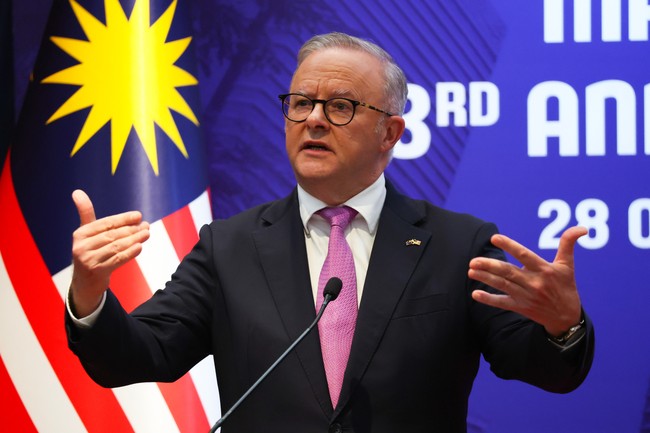
Australian Prime Minister Anthony Albanese warned of a rising threat from “right-wing extremist groups” after a deadly Islamic terror attack in Sydney, prompting sharp criticism from conservatives who say officials are avoiding the obvious Islamist motive while media and politicians pivot to other narratives.
Many on the right see the immediate reaction as predictable: political actors and media quickly shift blame from the attackers’ ideology to broader social trends and opposing political factions. That pattern erases the perpetrators’ motives and lets the real threat go unspoken. It also fuels anger among victims and observers who want straightforward answers.
Australia already enforces strict gun laws, and officials signaled they will tighten regulations further after the shooting. For conservatives, more regulation feels like a reflex rather than a solution that addresses radical ideology. Critics argue policy should squarely confront violent extremism, not only restrict firearms.
In London, Mayor Sadiq Khan publicly blamed President Trump’s rhetoric for a rise in anti-Muslim hatred, a move some see as misplacing responsibility for violent acts. Political leaders often use these moments to press familiar talking points instead of naming the specific actors involved. That approach frustrates those who want clarity and direct accountability.
Now Australian Prime Minister Anthony Albanese is warning of a rise in “right-wing extremist groups.”
🚨 WTF?! After Islamic terrorists KILLED 15 people in Australia, the prime minister warns about "right-wing extremist groups"
You've GOT to be kidding me.
If the threat was right-wingers, trust me, YOU'D KNOW. pic.twitter.com/fB7JYUewue
— Eric Daugherty (@EricLDaugh) December 15, 2025
“We take HA advice very seriously. We work closely with them. We receive regular updates as well. The director general of HA warned about a range of threats, be it antisemitism, the rise of right-wing extremist groups as well, and we continue to work closely with our security agencies,” Albanese said.
HA likely refers to Australia’s Home Affairs. That bureaucratic shorthand is useful in briefings, but the substance matters more than the label. Omission of a direct Islamist threat in public statements is notable given the attacker’s links.
Notably absent from his remarks is the threat from Islamists, including Naveed Akram, who was from Pakistan. Akram was one of the two terrorists who opened fire on Jews celebrating Hanukkah on Bondi Beach yesterday. He was reportedly known to authorities for Islamist ties, which makes the silence from leaders striking.
They not only shift blame away from the guilty, but they also use it as an opportunity to attack the groups they hate, despite the fact that there have been no “right-wing extremist group” terror attacks. That rhetorical diversion protects ideological allies and dilutes responsibility for violent Islamist actors. Conservatives see this as irresponsible in the face of raw facts.
“Yes. Because they know they’d be in serious trouble if they admitted what they’ve done.” That blunt line captures the suspicion many feel about political covers. When officials avoid naming the obvious, trust erodes fast.
“That’s what Leftists do. Repeatedly.” That accusation will rankle some and resonate with others who see a pattern. Political critique is part of public debate, but it should not obscure victims’ needs or the facts on the ground.
“And exactly what Kamala Harris would have continued saying.” Critics use that comparison to highlight perceived continuity across political elites. Whether persuasive or provocative, the remark reflects deep partisan frustration in the aftermath of violence.
Editor’s Note: Every single day, here at Townhall, we will stand up and FIGHT, FIGHT, FIGHT against the radical left and deliver the conservative reporting our readers deserve. Many readers will disagree sharply with that tone, but the point remains that naming threats clearly matters in preventing future attacks.