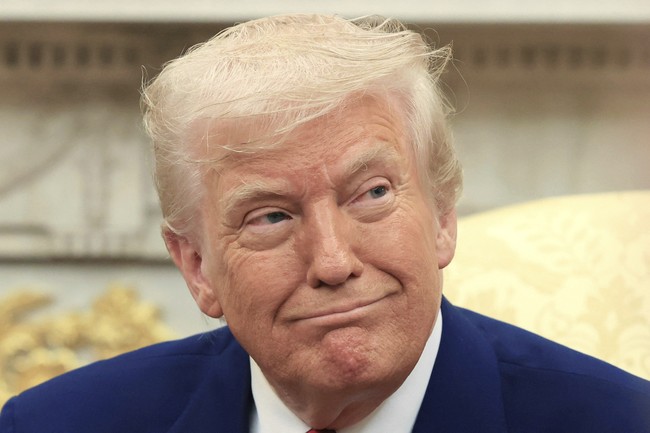
President Trump plainly suggested eliminating the federal income tax and argued tariffs collected under his administration could replace that revenue, laying out rough numbers and repeating proposals he has made previously on reducing or removing personal income tax for many Americans.
President Trump told reporters at a Cabinet meeting that Americans may soon face no federal income tax, framing the idea as a realistic shift rather than a rhetorical flourish. He said the change could be total abolition, or the tax could be kept “for fun” at a much lower rate, depending on policy decisions and revenue from other sources. The statement came with an upbeat framing about swapping direct taxes on citizens for tariffs on foreign goods.
“At some point in the not too distant future you won’t even have income tax to pay,” Trump said during the meeting to a group of reporters. “Whether you get rid of it or just keep it around for fun or have it really low, much lower than it is now, but you won’t be paying income tax.”
Earlier this year, Trump proposed a concrete version of the plan that would exempt individuals making under $150,000 a year from income tax, while relying on tariffs to make up lost federal revenue. He has repeatedly framed tariffs as a tool to push back against unfair trade practices and to shift the tax burden off American households. That messaging connects his trade agenda directly to household tax relief.
BREAKING: President Trump just announced he expects the income tax to be ABOLISHED soon.
This would be the single greatest economic move in American history. Imagine taking home 100% of your paycheck?
The economy would explode overnight. 🚀 pic.twitter.com/aJYqvkUNQy
— Ryan Fournier (@RyanAFournier) December 2, 2025
“It’s time for the United States to return to the system that made us richer and more powerful than ever before,” Trump said in January. “Instead of taxing our citizens to enrich foreign nations, we should be tariffing and taxing foreign nations to enrich our citizens.” That line neatly sums the logic driving the proposal: taxes on imports instead of wages.
Trump has also discussed the idea in less formal settings, answering a question about eliminating personal income taxes with, “Yeah, sure, why not?” during a campaign appearance with podcaster Joe Rogan. His instincts on taxes and tariffs are consistent: push costs onto foreign producers and reduce direct demands on American workers. That rhetorical stance plays well with voters who feel overtaxed and sidelined by global trade rules.
Numbers matter here and the administration points to specific revenue tallies when arguing feasibility. Tariff receipts through 2025 have reached $215 billion, while income taxes paid solely by those making under $150,000 total roughly $675 billion, according to IRS statistics reported for the year. That creates an approximate shortfall of $460 billion between current tariff receipts and the targeted income tax revenue lost if exemption were applied at that threshold.
Closing a $460 billion gap would require either a significant expansion of tariff revenue, new revenue streams, or steep spending reductions; those are the hard choices behind the headline-friendly promise. Supporters argue tariffs can be ramped up strategically or paired with reforms to deductions and loopholes to narrow the gap. Critics point to economic distortions and consumer price impacts, but supporters say the burden from tariffs falls on foreign producers and strengthens domestic industry.
Despite the political appeal and the clarity of messaging, the proposal faces real hurdles in practice, from international trade retaliation to legislative math in Congress. Implementing a wholesale replacement of income tax with tariffs would be complex and likely require a phased approach, negotiated changes to trade policy, and careful management of domestic price effects. Still, the idea remains a bold, populist tax pitch that connects trade policy to everyday pocketbook relief for many Americans.
Republican advocates for the plan highlight that shifting revenue generation away from workers and families toward foreign exporters rewards domestic producers and rebalances incentives. They argue Americans should not be the primary financiers of global supply chains that benefit other nations more than our own. Whether the proposal becomes law or remains a campaign platform, it sharpens the debate about who should pay and who benefits from America’s economic system.