The governor’s family found itself at the center of a media firestorm after an explosive TikTok rant by his daughter, a flurry of insults directed at their home, and a president’s crude description of the governor that reignited old wounds tied to a large fraud scandal.
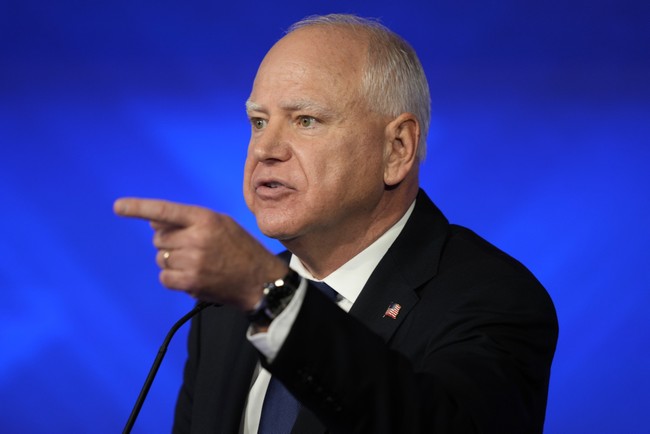
Hope Walz posted a profanity-laced TikTok after President Trump referred to her father as “retarded,” and she says drivers have since shouted the same slur at their family home. The clip was soon deleted, but screenshots and reactions spread fast across social platforms and local feeds. The episode has left the family and their supporters trading public barbs while the rest of Minnesota watches.
“I’m talking about this because while my family and I are always gonna be the bigger people, the president calling my dad what he did has unleashed a f**king sh*t storm regarding offensive language towards me and my family and specifically my brother,” Hope said in the now-deleted video. The video drove a lot of the immediate conversation online and off, and it brought sharp reactions from both sides of the political aisle. Emotions ran high as people weighed private pain against public rhetoric.
“You can call me whatever you want, you can call my dad, my mom, when it’s Gus, f**k to the no. F**k to the no. He dealt with people calling him that last August and now there’s a resurgence? No.” Those lines underscored how personal this became for the family, especially around their son Gus. The language forced the story into conversations about decency, the limits of political attacks, and how families get pulled into partisan fights.
“How is it OK that the President of the United States can call somebody, anybody doesn’t matter who they are, that, and then all of his fricking cult members come and attack those people and that person’s family,” she continued. “Say what you want about my dad, he’s an elected official, that’s gonna happen. The backlash she described points to broader questions about accountability when leaders use intentionally inflammatory words in public.
“I think it’s utterly disgraceful that the president would do that, but then, the attacks that I have seen. I have people DMing me saying absolutely horrendous things. When I was home last week, somebody drove by and screamed that we were ‘r-words.’ Just driving by in their car.” Those are serious accusations about harassment, and they shifted the debate from policy and scandal to personal safety and online behavior. The incident illustrates how political language can ripple into real-world hostility.
Tim Walz’s daughter melts down in a profanity-laced TikTok, says Trump’s “cult members” are driving by her house screaming that her family are “R words” ever since his Thanksgiving Truth Social post. pic.twitter.com/7btAlWEMno
— johnny maga (@_johnnymaga) December 6, 2025
“I’m like, what world are we f**king living in, and again, I draw a line at Gus because he dealt with that sh*t before and not again, you people are f**king disgraceful. Shame on you, all of you,” she said. The anger is understandable from a parent’s perspective, yet it collided with a broader context that many voters are watching closely. That context includes a massive fraud case and political finger-pointing that preceded the president’s comments.
Governor Walz revealed last year that his son Gus has a “nonverbal learning disorder,” in addition to ADHD and anxiety. Walz described the set of conditions as his son’s “super power.” That disclosure made the family a sympathetic figure to many and complicated the public reaction to the president’s remark.
President Trump called Tim Walz “retarded” in a post on Truth Social, following a fraud scandal that stole more than $1 billion in taxpayers’ money. State officials reportedly knew about the scheme, but declined to do anything over concerns they would be viewed as racist, as much of the fraud involved Somali immigrants. Those facts are why a lot of people framed the president’s comment as rooted in outrage over the scam rather than a baseline attack on a family.
Shortly afterwards, Trump doubled down on his comments, telling reporters, “I think there’s something wrong with him. Absolutely.” That additional line hardened the divide and brought fresh attention to whether name-calling by a president is ever an appropriate response to alleged failings in office. For many Republicans, the focus stayed on the fraud and accountability rather than the personal back-and-forth.
The episode shows how raw political language now moves from posts and cameras into neighborhoods and private lives. Voters watching this want officials held to account for policy failures, but they also expect basic decency and for families to be left out of public bile. The clash between those expectations is where much of this controversy lives, and it will keep shaping how people talk about leadership and accountability in the months ahead.