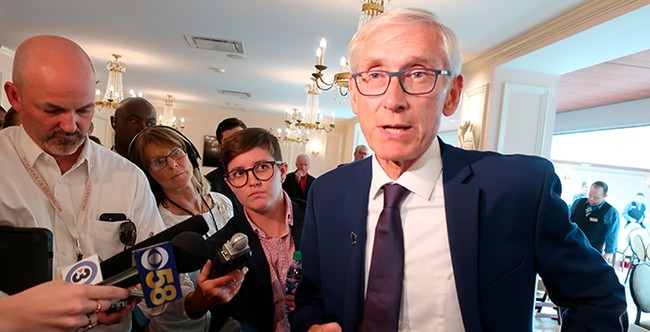
Governor Tony Evers called 2025 the “Year of the Kid,” but the outcomes for Wisconsin children tell a different story.
Governor Tony Evers declared 2025 the “Year of the Kid” and promised budgets and policies centered on children. He said, “Every budget I have ever built began first by doing what is best for our kids, and this one will be no different.” Yet many measures and decisions from his administration undercut basic expectations for education, safety, and fiscal responsibility.
Early in the year Evers framed the debate around the idea that schools alone cannot fix children’s lives, saying, “We have to do more to improve outcomes for our kids. And, yes, that means making meaningful investments in our public schools. But our kids’ outcomes are as much a reflection of what happens within our schools as they are, importantly, a reflection of what happens beyond them. And that’s a simple matter of math,” Evers said. “So, we have to recognize that our schools and educators cannot single-handedly fix our kids’ circumstances beyond the school doors that nevertheless affect learning and success in the classroom every day.”
That rhetoric rings hollow when you look at the numbers. Almost 70 percent of fourth graders and nearly half of first graders are not reading at grade level, a staggering academic failure that should prompt urgency. At the same time, the Department of Public Instruction hid more than 200 cases of sexual misconduct by educators, and a majority of the state’s 421 school districts have been flagged for financial reporting problems.
Evers also used the governor’s line-item veto power in a way critics describe as extreme, a move that was framed “for the kids” while locking in what opponents call 400 years of tax increases into Wisconsin’s budget. That kind of fiscal heavy-handedness promises programs today while saddling property taxpayers with long-term cost increases that will impact families and local schools.
Republican leaders and candidates like Congressman Tom Tiffany running to replace Evers in 2026 have pointed to these failures as proof that the “Year of the Kid” was mostly talk. They argue that policy choices and vetoes—especially those that block tougher education standards—have left students without the accountability and clarity they need to improve.
I declared 2025 the Year of the Kid in Wisconsin because I've always believed what's best for our kids is what's best for our state.
We must keep working to do what's best for our kids at every age and every stage. pic.twitter.com/BYorA2EqoW
— Governor Tony Evers (@GovEvers) December 28, 2025
Policy fights over standards mattered this year. In March, Evers vetoed legislation that would have restored tougher academic benchmarks and required the Department of Public Instruction to align state testing and reporting with past protocols. Critics say Wisconsin Superintendent of Public Instruction Jill Underly lowered standards, and tempering accountability makes a failing system look less broken without actually fixing it.
The AB1 proposal would have returned to 2019-2020 accountability and made Forward Exam scores comparable to the National Assessment of Educational Progress. It also would have used 2021-22 cut scores for PreACT and ACT assessments and standardized student achievement categories, changes supporters said would give parents and policymakers clearer, more honest measures of performance.
Safety in schools also suffered attention. Reporting revealed that more than 500 educators were investigated for misconduct between 2018 and 2023, and over 200 kept their credentials even after investigations. Cases include alleged touching on a trip and repeated, alarming visits to a student’s home, incidents that raise real questions about how licensing and discipline are handled.
Milwaukee Public Schools, the state’s largest district, repeatedly fell behind on financial reporting this year, triggering state-level interventions in the past and again drawing scrutiny for late filings. Missed deadlines led to funding suspensions and resignations previously, and repeated delinquency shows systemic management problems that harm students through instability and uncertainty.
The cultural and medical debates around transgender policy also proved contentious. Evers vetoed bills that would have protected girls’ sports and banned gender-affirming care for minors, defending the decisions by saying, “LGBTQ kids deserve our love and respect and support just like any other kid.” That stance pleased some but frustrated parents and advocates who argue those policies jeopardize fairness in sports and expose children to long-term medical costs.
Critics pushed back with their own blunt assessments, noting that expensive, lifelong medical interventions for minors are not cost-free and that public policy must balance compassion with safety and fiscal sense. The debate remains sharply polarized, and for many voters the administration’s positions on these issues are a major part of judging how well the “Year of the Kid” actually served children.
Across education, safety, and finances, the year exposed gaps between promises and results. For many families, the promise of a year focused on kids delivered little relief from poor reading outcomes, licensing failures, and budget decisions that shift costs onto taxpayers. Those are the measures voters will remember when they evaluate whether rhetoric translated into real, measurable improvement for Wisconsin’s children.