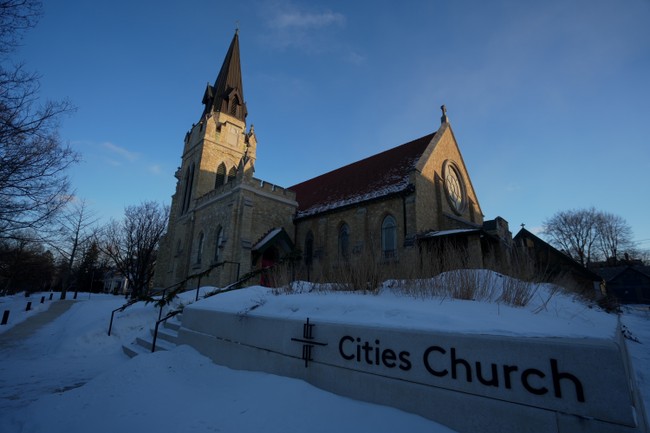
A federal judge appointed by President Biden has ordered the release of two people arrested after they joined a protest that forced its way into Cities Church in St. Paul, and the decision has reignited concerns about judicial bias and accountability.
A Biden-appointed judge has ordered the release of two of the defendants arrested in the storming of Cities Church in St. Paul, Minnesota. The move came despite footage and eyewitness accounts showing confrontational behavior during the incident.
Judge Laura Provinzino allowed Nekima Levy Armstrong and Chauntyll Allen to be freed from federal custody on Friday afternoon. Both women have been widely identified as leaders and organizers behind the incident at Cities Church, and their release surprised many who watched the case unfold. The decision has prompted sharp criticism from those who see it as an example of judicial overreach.
🚨 BREAKING: Outrage is erupting after leftist Biden Judge RELEASES two of the Minnesota church stormers, Nekima Levy Armstrong and Chauntyll Allen
IMPEACH THIS JUDGE!
You should NOT be able to terrorize women and children in a church and be let out.
Lay down the hammer! pic.twitter.com/9I7evJ6bLv
— Eric Daugherty (@EricLDaugh) January 24, 2026
Provinzino was confirmed to her District Court seat after being appointed by President Joe Biden in June, 2024. Critics point out that recent rulings by newly installed judges with partisan ties are shaping how the law is enforced in high-profile protests. From a Republican viewpoint, that pattern raises questions about whether politically sympathetic jurists are giving favorable treatment to activists who break the law.
The third person arrested so far, William Kelly, was released by a local magistrate judge late Friday evening. Kelly recorded himself yelling at congregants both inside and outside the venue, and his video circulated widely on social media. Local authorities say the behavior captured on camera supports the decision to pursue criminal charges in the first place.
This is not an isolated moment. It follows another courtroom setback for prosecutors when a Minneapolis magistrate judge blocked charges from being brought against television personality Don Lemon for his role in a related stunt. That earlier ruling, combined with the latest releases, has conservatives arguing that the bench is providing a break for well-known left-leaning figures who cross criminal lines.
Questions of impartiality have only inflamed the debate. The presiding judge in this case is reportedly married to an Assistant Attorney General in the office of Minnesota Attorney General Keith Ellison, and that connection has led many observers to call for transparency and scrutiny. When judges have close ties to political offices or partisan figures, it undermines public confidence in neutral, even-handed justice.
Department of Justice officials are reportedly exploring alternative measures for charging Lemon and considering other avenues for pursuing accountability in the broader series of incidents. Federal prosecutors face a tougher environment when judges and magistrates carve out legal exceptions that seem to favor high-profile activists. Officials say they will review the legal tools available to ensure laws are enforced uniformly, regardless of a defendant’s politics or public profile.
Across the country, conservatives point to this episode as evidence that some judges are reshaping how criminal statutes are applied in protest-related cases. The concern is not about the existence of protest or dissent, which are protected in many forms, but about whether the law gets applied consistently when actions cross into intimidation, trespass, or harassment. Uneven enforcement erodes public trust and makes it harder to hold repeat offenders accountable.
Procedural fairness matters, and many Americans expect judges to act without political preference. When high-profile defendants are released or when charges are blocked in ways that align with partisan outcomes, it feeds a narrative that political loyalty trumps equal justice under the law. That perception pushes voters and lawmakers to demand clearer standards and stronger safeguards against conflicts of interest.
Editor’s Note: Unelected federal judges are hijacking President Trump’s agenda and insulting the will of the people.