U.S. migration flipped negative in 2025, a seismic shift tied to tougher enforcement and a sharp drop in border entries.
Just weeks into President Trump’s second term, the effects of stricter border enforcement showed up fast. Border crossings plunged dramatically during the first days of the administration, and those early numbers set the tone for the rest of the year. That change made clear the difference firm enforcement can make without rewriting the laws on the books.
By August, roughly 1.6 million people who had been in the country without authorization had left. Momentum built across several months and culminated in a claim that the U.S. recorded net negative migration for the first time in decades. And now the U.S. has seen net negative for the first time in decades.
The report published this week by the Brookings Institution said, “There was a significant drop-off in entries to the United States in 2025 relative to 2024 and an increase in enforcement activity leading to removals and voluntary departures.”
“We estimate that net migration was between –10,000 and –295,000 in 2025, the first time in at least half a century it has been negative,” it continued. “In our assessment, net migration is likely to be very low or negative in 2026 as well.”
US sees net negative migration for first time in decades amid Trump admin enforcement, economists sayhttps://t.co/LQrl4HgyRC
— Karoline Leavitt (@PressSec) January 14, 2026
“Reduced migration will dampen growth in the labor force, consumer spending, and gross domestic product (GDP). We estimate the sustainable pace of monthly job growth to be between 20,000 and 50,000 in late 2025 and believe it could be negative in 2026,” the report added.
Major outlets noted the shift, underscoring how unusual this reversal is after years of large inflows. Even ABC News covered the story and the broader implications for labor markets and fiscal planning. Coverage from multiple corners made the policy changes hard to ignore.
During the prior administration, border encounters reached unprecedented levels, with estimates putting annual crossings in the millions. That surge strained local resources and reshaped the political conversation on immigration across the country. The contrast between those years and 2025 is stark in both numbers and tone.
Back in August, even CNN had to report that the U.S. would see net negative migration.
In November, the Department of Homeland Security projected ongoing declines and reported the foreign-born population fell by about 2.2 million in 2025. Those figures reinforced independent analyses and informed conversations inside the private sector about hiring and long-term growth. Policymakers and economists started recalculating expectations for workforce expansion and consumer demand.
Some observers tied the pullback in migration to a combination of tougher enforcement and political shifts that made voluntary departures more common. Many linked this good news to the uptick in anti-ICE rhetoric from Democrats and the Left. That political environment, coupled with aggressive removals, shifted flows quickly.
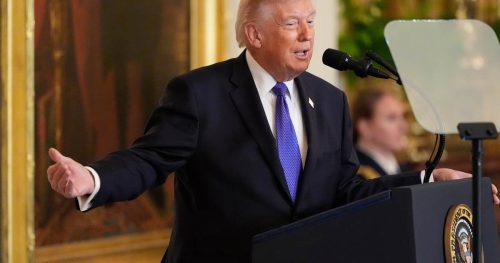
This is President Trump doing what he was elected to do: turn the tide of illegal immigration.
He ran on deporting those here illegally and on securing the border, and the administration’s actions have pushed totals to levels not seen in decades. Supporters say this confirms that firm executive action and targeted enforcement can restore order at the border and reduce illegal crossings without broad new legislation. The change has already altered enforcement patterns and public expectations.
Economists warn that lower migration will affect labor-force growth and could temper consumer spending in coming years, which is a sober reminder of trade-offs. At the same time, many communities welcome the immediate relief in border pressure and the reassertion of legal authority. The political payoff for those who demanded strict enforcement is already visible in the numbers and the national conversation.