Aimed at clarity, this piece recounts what investigators found in the storage unit of the man accused in the Brown University attack and what his recorded statements reveal about his planning, mindset, and the limited answers that remain.
On December 13, Claudio Manuel Neves Valente, 48, allegedly opened fire inside an engineering building at Brown University, killing two students and wounding nine others. Initial questions centered on how he accessed the building; the university said it was open for finals, while some students said the Barus and Holley Building had been accessible for weeks. Reports indicate Valente had been watching the building for months, and a custodian later described behavior that suggested long-term planning. The uncertainty about entry points only deepened investigators’ focus on motive and preparation.
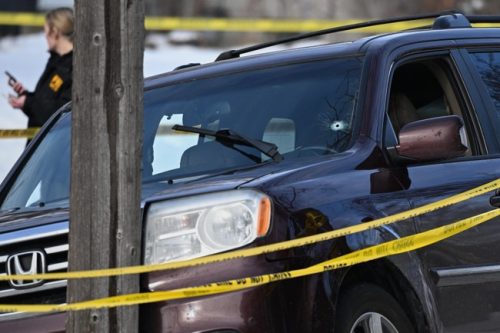
Two days after the campus attack, Valente is accused of fatally shooting MIT professor and former classmate Nuno F.G. Loureiro at his Brookline, Massachusetts home. He then traveled to Salem, New Hampshire, rented a storage unit, and took his own life; his body was found on December 18. Inside that unit, officials recovered four short videos, recordings that prosecutors say show a man who had spent a long time planning violence and who expressed no remorse. The tapes became the key material investigators hoped would point to why he targeted Brown.
Valente was a Portuguese national and a permanent resident of the United States, according to officials. In the recordings, he denied hating the United States and spoke about an eye injury he blamed on a shell round. He also said he had spent “at least six semesters” planning violence and repeatedly mentioned that no one had ever sincerely apologized to him in his life. That grievance appears to be one thread in a broader, tangled set of resentments captured on the tapes.
There still is no neat, rational motive that explains why Valente focused his anger on Brown, an institution he attended. The recordings, as summarized by prosecutors, show a man who vacillated, saying he had chickened out multiple times but ultimately carried out the attacks. Investigators noted his lack of remorse and quoted him blaming unarmed students for their own deaths. Beyond those statements, the tapes raise more questions than they answer about how private grievances became public violence.
Officials said the videos were recovered from the New Hampshire storage unit where Valente was found dead on December 18. The U.S. attorney’s office released transcripts that include passages where he claims lengthy planning and describes personal injuries. The recordings were not definitive about motivation, but they did sketch a portrait of someone intensely focused on grievance and retribution. The prosecutor’s initial review concluded only that Valente targeted Brown; it offered no firm explanation for the attack itself or the later killing of Loureiro.
The man suspected of killing two students at Brown University and fatally shooting a Massachusetts Institute of Technology professor days later recorded a series of short videos after the violence that provided no clear motive and suggested he’d spent significant time planning, federal officials said Tuesday.
In transcripts of the videos released by the U.S. attorney’s office in Massachusetts, Portuguese national Claudio Manuel Neves Valente, 48, said he did not hate the United States and complained about an eye injury that he said he suffered from a shell round. He appeared to say he had been planning the violence for at least six semesters, and he said no one had ever sincerely apologized to him in his lifetime.
[…]
The four videos were recovered from the New Hampshire storage unit where Neves Valente was found dead on Dec. 18, the prosecutor’s office said in a statement.
Authorities said he opened fire inside a Brown auditorium on Dec. 13, wounding nine students and killing two — Ella Cook, 19, an Alabama native and vice president of a college Republican group, and Mukhammad Aziz Umurzokov, 18, a native of Uzbekistan who relatives said dreamed of becoming a neurosurgeon.
[…]
The U.S. attorney’s office said an initial review of evidence showed Neves Valente targeted Brown, but it did not provide a motive for that shooting or that of Loureiro.
“Neves Valente showed no remorse during the recordings; on the contrary, he exposed his true nature when he blamed innocent, unarmed children for their deaths at his hand and grumbled about a self-inflicted injury he suffered when he shot the MIT professor at close range,” the office said in a statement.
Rhode Island’s attorney general credited a Reddit user who encountered Neves Valente at Brown and posted about it with providing crucial clues that helped authorities track him to the storage unit where he was found dead of a self-inflicted gunshot wound.
Victims’ names were released as investigators pieced together the timeline: Ella Cook, 19, and Mukhammad Aziz Umurzokov, 18, were killed in the campus attack. The injury toll and the identities of the dead underscore the human cost behind the fragments recovered in New Hampshire. Officials continue to analyze the recordings alongside witness accounts, surveillance, and digital traces to establish a fuller picture. So far, the evidence points to months of preparation but not to a clean, single motive.
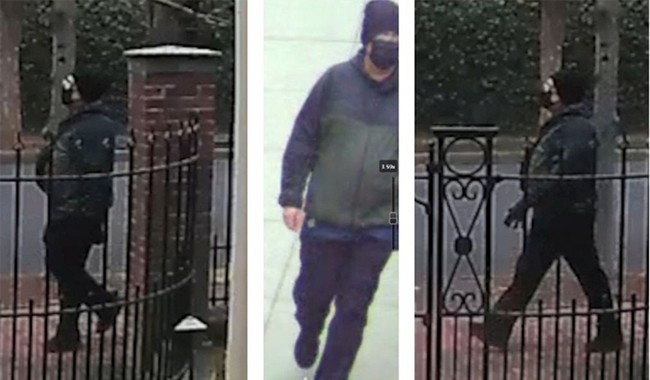
There were clues outside official channels that helped lead authorities to Valente. A Reddit post by someone who encountered him and a homeless man referred to as “John” provided details, including a vehicle description, that helped investigators trace him to the storage unit. That grassroots tip proved crucial in connecting scattered leads into a location where the recorded statements were found. The episode illustrates how online reporting and community observation factor into modern probes.
Across the tapes and the public record, a single line cuts through the noise: “The world cannot be redeemed,” he said. That bleak declaration punctuates recordings of a man who planned, hesitated, and then acted, leaving behind more questions than answers. Authorities continue their work, but the recordings themselves stand as a stark, unsettling record of motive left unresolved by the violence.