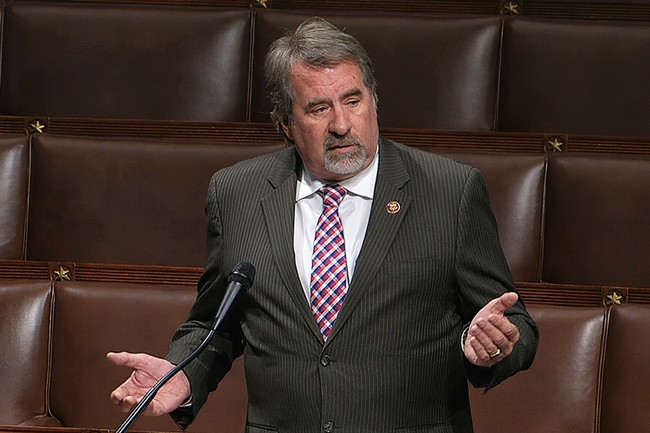
Rep. Doug LaMalfa, 65, died suddenly; President Trump and House Republicans responded, and his passing tightens the GOP House majority ahead of 2026.
Republican Congressman Doug LaMalfa of California died suddenly on Monday at the age of 65, according to reports. Officials have not yet released a cause of death, and details remain limited as family and colleagues process the loss. This passed-unexpectedly note landed hard in a Congress already operating on a razor-thin margin.
“I want to express our tremendous sorrow at the loss of a great member — a great, great, great member — Congressman Doug LaMalfa, who passed away yesterday,” President Trump said Tuesday. “Our hearts go out to his wife, Jill, and his entire family.” The president’s words echoed through Republican ranks, underlining how respected LaMalfa was among his party peers.
Rep. LaMalfa represented California’s 1st Congressional District beginning in 2013 and served as chair of the Congressional Western Caucus. He was known in Washington for steady, practical attention to issues affecting rural communities and agriculture, and for bringing a grounded voice from Northern California to national debates.
"I want to express our tremendous sorrow at the loss of a great member — a great, great, great member — Congressman Doug LaMalfa, who passed away yesterday… our hearts go out to his wife, Jill and his entire family." 🇺🇸❤️pic.twitter.com/tySLWmchjV
— The White House (@WhiteHouse) January 6, 2026
“House Republicans mourn the loss of Congressman Doug LaMalfa. A lifelong resident of Northern California and a fourth-generation rice farmer, Congressman LaMalfa spent more than two decades in public service,” House Republicans wrote in a statement. “He proudly represented California’s 1st Congressional District from 2013 to 2026, serving as Chairman of the Congressional Western Caucus. Please join us in praying for Congressman LaMalfa’s wife, kids, and staff.”
LaMalfa’s background as a fourth-generation rice farmer and long-term local public servant shaped his approach to policy; he focused on land use, water, and federal policies that touch family farms. Colleagues on both sides recognized that combination of practical experience and conservative principles as the basis for his work in Congress. In a Washington that often prizes showmanship, LaMalfa offered straightforward, constituency-first representation.
His death shrinks the House Republican margin to a precarious 218–213, making every vote more consequential as the 2026 midterms loom. That narrow majority forces Republican leaders to keep a tight discipline on key legislation and committee business, while also keeping an eye on the political calendar and district-level dynamics that could change the math.
Within the Western Caucus and among House conservatives, LaMalfa was a reliable ally on property rights, Second Amendment protections, and energy policies that aim to support domestic production. His role as chair helped coordinate western delegations on shared challenges like water management and regulatory overreach, and his absence will be felt in those ongoing fights.
Members who worked with him highlighted his calm, practical tone and his habit of prioritizing constituents over headlines. Staffers and fellow lawmakers alike described a public servant who carried his agricultural roots into committee rooms and conference calls, always steering conversations back to how policies affect families and livelihoods.
The immediate next steps are procedural: colleagues will continue to fulfill duties while LaMalfa’s staff and family make private arrangements. Republicans in Congress will also confront the political reality of a slimmer majority at a moment when messaging and turnout matter more than usual. For many conservatives, the loss is personal and political—both a grieving and a reminder to keep advancing the priorities he backed.