House Democrats tried to lampoon President Trump with an AI image showing him rejecting Thomas Sowell’s Basic Economics, and the move exploded into criticism as conservatives pointed out the irony and the contradictions between Sowell’s free-market arguments and Democratic economic policies.
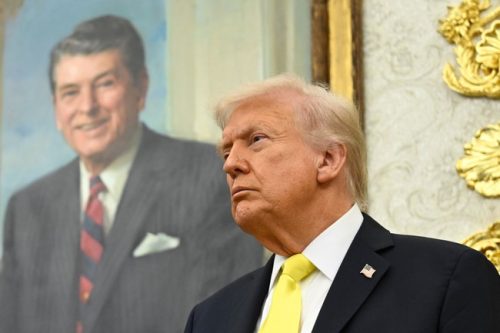
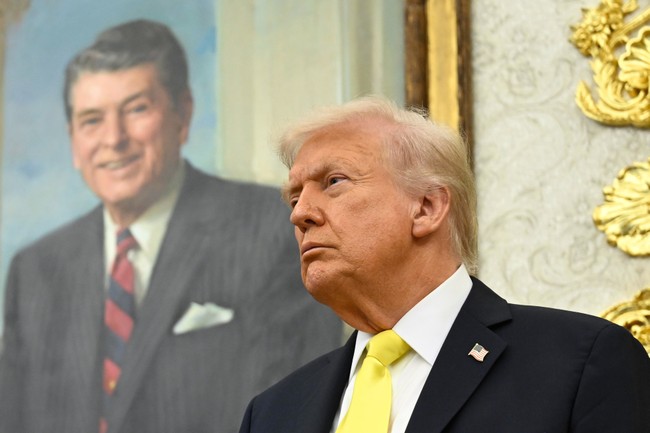
The Ways and Means Committee’s social media account posted an AI-generated image meant to mock President Trump, showing him refusing a copy of Basic Economics by Thomas Sowell. The account represents the House committee that writes tax policy, so the post landed oddly given the subject matter and the committee’s role. The image was a direct response to a news item blaming tariffs for spikes in the trade deficit.
The original accompanying quote read, “The U.S. trade deficit rose sharply in November, as President Trump’s tariffs generated intense volatility.” That sentence set the stage for the Democrats’ cheap shot, but the choice of book made the gag backfire. Basic Economics is a textbook of market principles that clashes with many Democratic policy proposals, and critics were quick to point that out.
The book explains how free markets use prices to allocate scarce resources and argues that government controls tend to distort those signals, producing shortages or surpluses. Those core ideas directly challenge policies like rigid price controls, steep minimum wage hikes, and heavy-handed regulation. Pointing that out is not a technical rebuttal, it is a fundamental ideological critique of the left’s approach to managing the economy.
When the post started drawing heat, the committee tried to walk it back with a short message: “this is a JOKE, it does not mean we endorse Thomas Sowell.” That clarification only amplified the awkwardness because it acknowledged the image while refusing to engage the book’s content. The reaction from conservative commentators made the point bluntly: mocking a foundational conservative economist while attacking market outcomes looks like political theater more than serious debate.
https://t.co/Vt7RqSuSO7 pic.twitter.com/OAG3AysJrf
— Ways and Means Democrats (@WaysMeansCmte) January 29, 2026
Conservatives were quick to pounce on the misstep and to press the obvious question about policy consistency. Venezuelan immigrant and fellow at the Manhattan Institute, Daniel Di Martino, asked, “So you reject Basic Economics?” That line cut to the core of the issue, forcing Democrats to confront the mismatch between their messaging and the economic basics the public hears about markets and incentives.
Other responses used sharper language to underline how the post undercut Democratic positions on government intervention. “Authors note: This is a joke, Democrats obviously don’t understand basic economics…but are pretty sure they’re racist…just like math,” Virginia delegate Nick Freitas wrote, adding: “LOL of course not…it would destroy your policy positions.” Those comments framed the incident as a self-own, a public gaffe that exposed deeper disagreements about how economies function.
The whole episode fits a pattern where political teams chase a viral moment and overlook the substance of the argument they are trying to make. Instead of engaging the trade data or explaining why tariffs matter, the Democrats’ social post reduced the debate to a meme that ended up spotlighting the policies they promote. That kind of performance politics leaves voters with less clarity, not more.
Republicans and free-market advocates say incidents like this matter because they reveal the incentives driving modern party communications. When a party’s online account is willing to mock a seminal conservative text without grappling with its ideas, critics see either ignorance or calculation. Either way, the result is the same: a self-inflicted political distraction that highlights ideological conflict rather than policy competence.
The image flap will not change anyone’s mind about tariffs or trade on its own, but it does illuminate a larger truth about political messaging. Mocking an author whose entire career argues for market solutions invites a debate on those solutions, and Democrats appear unwilling to have that debate on substance. That reluctance is what animated many of the responses and turned a single post into a broader talking point for critics.