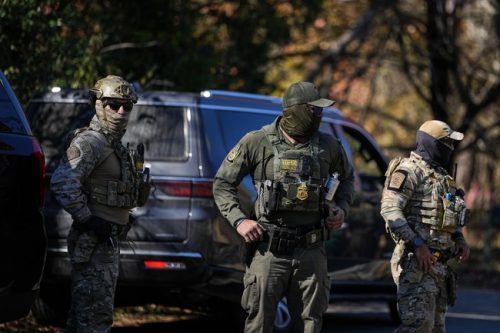
A Minneapolis encounter on January 7 ended with ICE agents fatally shooting 37-year-old Renee Nicole Good after she allegedly accelerated her vehicle into a federal officer, a sequence that echoes past cases where officers fired to stop vehicles used as deadly weapons.
The facts are straightforward: Renee Nicole Good, 37, was shot and killed by ICE agents after authorities say she accelerated her vehicle into a federal officer. The immediate reaction from the Left and Democratic politicians was predictable outrage, insisting the car never intended to ram anyone. Those claims clash with the basic reality that an occupied vehicle can be used as a lethal force against officers and bystanders.
No one disputes the tragedy of a life lost, but context matters when judging split-second decisions by law enforcement. Officers are trained to recognize threats, and a moving vehicle is not a harmless object. Calling a vehicle a “weapon” is not metaphorical here; the episode involved a 3,000-pound weapon moving toward an agent.
That is why police departments and federal agencies treat attempted vehicle strikes as use-of-force incidents that can justify deadly force. There is a legal and tactical precedent for responding when an officer faces imminent danger from a vehicle. When someone knowingly drives at a person in an attempt to injure or force them out of the way, that is assault with a deadly instrument.
Consider a prior case that clarifies this reality: in 2018, Baltimore County Police Officer Amy Caprio confronted a suspect in a stolen vehicle and was fatally struck after ordering the driver out. The video evidence in such situations often shows a refusal to comply, followed by movement that leaves an officer with no safe option. The bodycam .
In 2018, Officer Amy Caprio confronted a suspect in a stolen Jeep who appeared to comply, then suddenly accelerated straight toward her. She fired one shot, the driver ducked and continued forward, fatally crushing her before fleeing.
THIS is why officers act fast. Hesitation… pic.twitter.com/lXkCBc4NAt
— David J Harris Jr (@DavidJHarrisJr) January 8, 2026
In May 2018, Officer Caprio responded to a potential burglary in Perry Hall when she confronted then 16-year-old Harris driving a stolen Jeep.
From her body-worn camera footage, Caprio can be heard repeatedly ordering Harris out of the car.
She drew her pistol and Harris then ran her over and killed her.
That case ended with Dawnta Harris convicted of murder and given a life sentence, underscoring how the courts view deliberate vehicle attacks on officers. When a vehicle is used as an instrument to kill or maim, the legal system treats it harshly, and rightly so. The Caprio case is a stark reminder of the stakes involved for officers confronting aggressive drivers.
Back in Minneapolis, Good’s background matters to the debate. Reports indicate she had been involved in organizing and training others to disrupt ICE operations, and she was not acting as an official legal observer during this incident. Those details do not erase the human cost, but they do change how we evaluate risk on the scene.
Critics who insist officers had other options ignore the time and space constraints of an unfolding assault. Law enforcement can’t pause and negotiate when a vehicle is accelerating into a person standing in its path. The practical physics of mass in motion make close-up responses extremely limited, and that reality informs officers’ decisions to fire in defense of life.
Public debate should include scrutiny of procedure and accountability, but it should also respect the reality that officers face lethal threats in an instant. When politics rushes to accuse without waiting for complete evidence, it undermines public safety and the rule of law. Sound policy conversations are useful; reflexive condemnation is not.
There will be investigations, witness statements and more footage to review before a final legal judgment is reached. Meanwhile, the rush to label the shooting as unjustified inspires predictable partisan noise instead of serious analysis. The focus should be on clear-eyed facts, established precedent, and how to prevent confrontations that put both civilians and officers at risk.
Editor’s Note: Do you enjoy Townhall’s conservative reporting that takes on the radical left and woke media? Please support our work so that we can continue to bring you the truth.
As inquiries continue, policymakers and civic leaders should talk about training, tactics, and lawful protest behavior so these tragedies become less common. That means holding bad actors accountable, protecting lawful dissent, and making sure law enforcement has the clarity and tools to defend the public. Hard questions deserve sober answers, not viral hot takes.