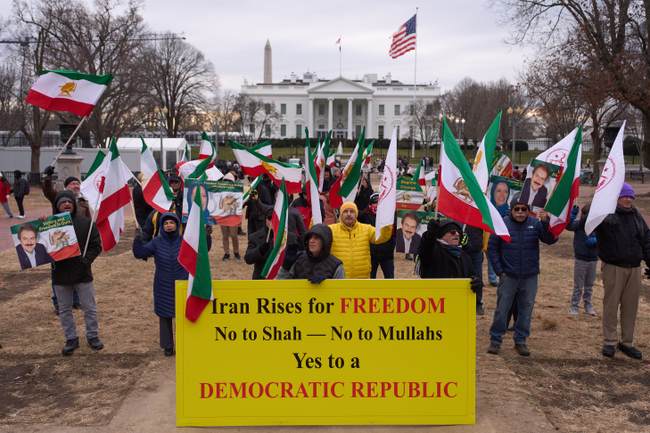
Brief summary: A recent flare-up between Iran and the United States centers on Tehran’s brutal crackdown on nationwide protests, a direct warning from President Donald Trump to protect demonstrators, and blunt threats from Iran’s new army chief that raise the stakes in an already volatile region.
The streets of Iran have been filled with tens of thousands of people, initially driven by runaway inflation and a collapsing currency but quickly turning into open calls for the end of the Islamic regime. Those demonstrations prompted a swift and harsh government response that left almost 40 dead and saw over 2,000 arrests, as security forces tried to choke off dissent. The scale and speed of the crackdown pushed foreign capitals to pay attention and prompted a rare, public warning from former President Donald Trump.
Trump used Truth Social to lay down a blunt line: “If Iran shoots and violently kills peaceful protesters, which is their custom, the United States of America will come to their rescue. We are locked and loaded and ready to go.” That warning was followed by more comments on Air Force One, where he told reporters, “We’re watching it very closely,” he said. “If they start killing people like they have in the pasat, I think they’re going to get hit very hard by the United States.”
The change in tone from Tehran came from Maj. Gen. Amir Hatami, the new commander-in-chief of Iran’s regular army, who addressed military academy students and signaled that Iran could respond militarily to perceived threats. Hatami’s rise is notable: he assumed command of the Artesh after a deadly wave of attacks that targeted Iran’s senior military leadership during a 12-day conflict in June. He is the first regular military officer in decades to hold a post usually dominated by the Revolutionary Guard, and that shift carries real implications for how Tehran views escalation.
Hatami spoke to military academy students. He took over as commander-in-chief of the Iran’s army, known by the Farsi word “Artesh,” after Israel killed a slew of the country’s top military commanders in June’s 12-day war. He is the first regular military officer in decades to hold a position long controlled by Iran’s paramilitary Revolutionary Guard.
“The Islamic Republic considers the intensification of such rhetoric against the Iranian nation as a threat and will not leave its continuation without a response,” Hatami said, according to the state-run IRNA news agency.
He added, “I can say with confidence that today the readiness of Iran’s armed forces is far greater than before the war. If the enemy commits an error, it will face a more decisive response, and we will cut off the hand of any aggressor.”
Hatami’s language is the kind of saber-rattling that raises alarms in Washington, especially when the regime is already under intense domestic pressure and feels cornered. From a conservative perspective, a regime that kills its own citizens to stay in power forfeits any moral standing and becomes unpredictable on the regional stage. Iran’s recent posture suggests the leadership is preparing for both internal unrest and any external interference it imagines might follow.
Beyond the rhetoric, Tehran is scrambling to blunt public anger with small economic measures designed to buy time. The government is handing out a subsidy worth roughly the equivalent of $7 per month to households to offset rising food costs while the rial continues to collapse. The currency now trades at over 1.4 million to one U.S. dollar, a rapid depreciation that fuels protests and undercuts regime legitimacy in the eyes of ordinary Iranians.
The demonstrations, which began on December 28, 2025, have spread widely: they now touch more than 250 locations across 27 provinces, signaling a nationwide breakdown in confidence. Tehran seems to be mixing carrots and sticks, offering small payments to calm people while using lethal force in some places to crush dissent. That combination speaks to a regime that knows it is vulnerable and is willing to escalate both repression and rhetoric to survive.
Intelligence and risk analysts are watching closely. Researchers at BMI warned that a sudden surge in repression or a major incident could trigger a U.S. response. “We see heightened risks of U.S. action against Iran in early 2026 if protests escalate,” they said, reflecting a concern that continued brutality could force external intervention or targeted strikes.
Bullets. Tear gas. Brutal repression, Day 11.
People are still in the streets across Iran.
The protests are growing.
Their resistance sends a clear message to the world:
Iranians reject this child-killing terrorist regime. They don’t want those killers.Bojnourd, January 7,… pic.twitter.com/AFz9H0Sk8o
— Masih Alinejad 🏳️ (@AlinejadMasih) January 7, 2026
From a Republican standpoint, the priority is clear: stand behind freedom-loving Iranians and deter Tehran from committing further atrocities. Blunt warnings and credible deterrence can stop a regime that calculates through fear. If Iran’s leadership truly believes its survival depends on violence, then showing resolve abroad is the best way to avoid chaos at home and a larger military confrontation abroad.
What happens next depends on two things: whether the protesters keep mobilizing and whether Iran’s rulers decide repression or restraint better secures their future. Either path could have major consequences across the region, but the people in the streets deserve international attention and the kind of deterrence that makes clear violent repression will carry a cost.