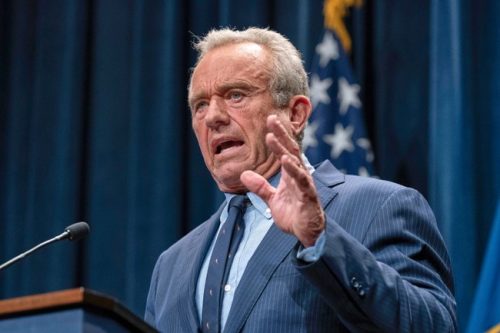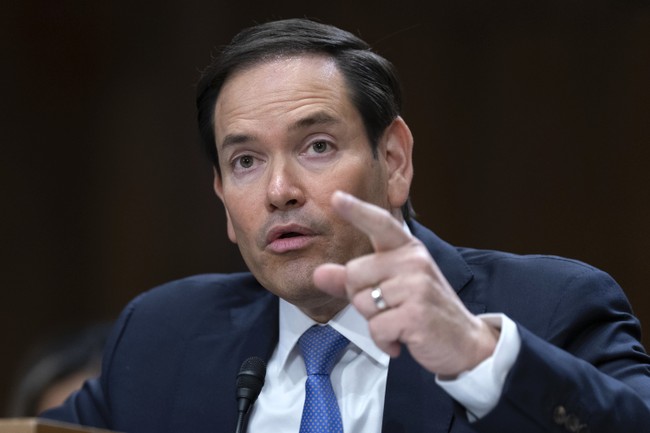
Marco Rubio squared off with ABC’s George Stephanopoulos on the Sunday shows after the Caracas raid, laying out how the United States is using oil quarantines, court orders, and maritime seizures as leverage to force change in Venezuela.
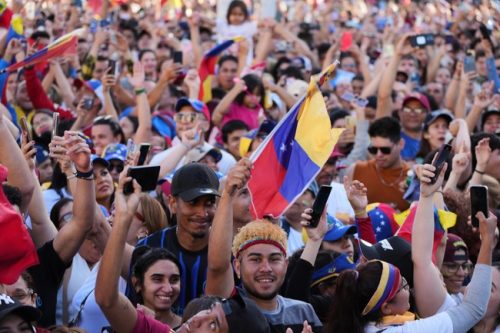
Secretary of State Marco Rubio appeared on Sunday programs after the raid on Caracas that reportedly resulted in the capture of Nicolás Maduro and his wife. The operation and Maduro’s subsequent charges, including narco-trafficking, set the week’s agenda and put foreign policy front and center. President Trump’s remark that “we’re running the country now” stirred debate, but Rubio spent his time explaining the mechanics behind America’s pressure campaign.
Rubio framed the U.S. approach in straightforward terms: quarantine Venezuelan oil, use maritime enforcement and court orders to seize sanctioned vessels, and squeeze the corrupt network that props up the regime. He stressed this strategy serves both American national interests and the Venezuelan people’s hopes for a future where oil revenues benefit citizens rather than thieves. That clarity collided with ABC News’ George Stephanopoulos, who kept circling back to a narrow legalistic question.
The exchange became notable because Rubio repeatedly answered Stephanopoulos’ legal-authority queries in practical terms instead of indulging a gotcha line. In the Republican view, leadership is about leverage and results, not performing for cable pundits. Rubio’s remarks were direct and strategic, and his patience with a persistently obtuse question is what made the interview memorable.
.@SecRubio methodically schools Fake News George Slopadopoulos (who is either stupid, ignorant, or most likely, both): "Well, I've explained it… I'll do it one more time." 🤣 pic.twitter.com/fs07iq5X9F
— Rapid Response 47 (@RapidResponse47) January 4, 2026
Reporters and anchors often demand a black-and-white legal citation when the real world runs on a mix of law, policy, and operational authority. Rubio emphasized that the quarantine and seizures are backed by court orders and coordinated maritime operations, including Coast Guard enforcement. That combination, he argued, is precisely how leverage gets enforced without proclaiming a permanent U.S. takeover of another country.
Stephanopoulos pushed the framing in a way that seemed designed to imply overreach rather than understand enforcement tools. Rubio politely, and then more firmly, laid out the plan and the legal basis multiple times. The transcript shows Rubio offering a step-by-step explanation of how oil storage limits, sanctioned-ship seizures, and court orders combine to force political and economic change.
From a conservative perspective, this moment illuminated two things: first, that America can and should use decisive pressure to stop narco-trafficking and foreign adversaries operating in our hemisphere; second, that some network-friendly interviewers still prefer hair-splitting over grasping tactical realities. Rubio’s responses were a model of policy-first communication—short on performative drama, long on leverage and outcomes.
The following is the exchange from the appearance, presented exactly as it was recorded and transcribed, showing how Rubio answered questions about the legal authority and practical mechanics of the operations:
President Trump was pretty clear yesterday. He said the United States was going to run Venezuela. Under what legal authority?
SECRETARY OF STATE MARCO RUBIO: Under — well, first of all, what’s going to happen here is that we have a quarantine on their oil. That means their economy will not be able to move forward until the conditions that are in the national interest of the United States and the interest of the Venezuelan people are met. And that’s what we intend to do.
So, that leverage remains. That leverage is ongoing. And we expect that it’s going to lead to results here.
We’re hope so — hopeful that it does positive results for the people of Venezuela, but ultimately, most importantly for us in the national interest of the United States. We will no longer have, hopefully, as we move forward here, will set the condition so that we no longer have in our hemisphere a Venezuela that’s the crossroads for many of our adversaries around the world, including Iran and Hezbollah, is no longer sending us drug gangs, is no longer sending us drug boats, is no longer a narcotrafficking paradise for all those drugs coming out of Colombia to go through into the Caribbean and towards the United States.
That — and obviously, we want a better future for the people of Venezuela. We want them to have an oil industry where the wealth is — goes to the people, not to a handful of corrupt individuals and stolen by, you know, pirates all over the world.
That’s what we’re working towards, and we intend to use the leverage we have to help achieve that.
STEPHANOPOULOS: Let me ask the question again. What is the legal authority for the United States to be running Venezuela?
RUBIO: Well, I explained to you what our goals are and how we’re going to use the leverage to make it happen.
As far as what our legal authority is on the quarantine, I’m — very simple. We have court orders. These are sanctioned boats and we get orders from courts to go after and seize these sanctions. So there — that’s — I don’t know, is a court not a legal authority?
STEPHANOPOULOS: So, is the United States running Venezuela right now?
RUBIO: Well, I’ve explained once again. I’ll do it one more time. What we are running is the direction that this is going to move moving forward. And that is we have leverage. This leverage we are using and we intend to use. We started using already.
You can see where they are running out of storage capacity. In a few weeks, they’re going to have to start pumping oil unless they make changes. And that leverage that we have with the armada of boats that are currently positioned allow us to seize any sanctioned boats coming into or out of Venezuela loaded with oil or on its way in to pick up oil.
And we can pick and choose which ones we go after. We have court orders for each one. That will continue to be in place until the people who have control over the levers of power in that country make changes that are not just in the interest of the people of Venezuela but are in the interest of the United States and the things that we care about.
That’s what we intend to do.
STEPHANOPOULOS: When the president was asked yesterday —
RUBIO: The legal authority is the court orders that we have.
STEPHANOPOULOS: When the president was asked yesterday who will be running Venezuela, he said it was you. He said it was the defense secretary. He said it was the chairman of the Joint Chiefs of Staff.
Are you running Venezuela right now?
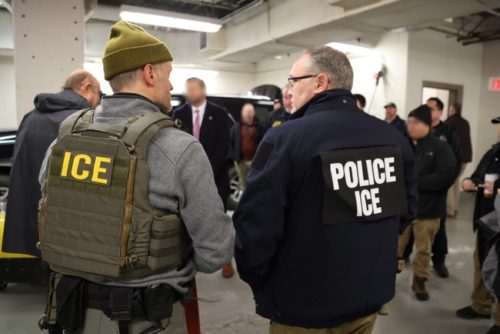
RUBIO: George, I’ve explained again that the leverage that we have here is the leverage of the quarantine. So, it — that is a Department of War operation, conducting in some cases law enforcement functions with the — with the Coast Guard on the seizure of these boats.
I’m obviously very intricately involved in these policies. And by the way, very intricately involved in moving forward and what we hope to see some of these changes being addressed.
Unfortunately, the person that was there before who was not the legitimate president of the country was someone we could not work with, was someone that we could not — he had already suckered the Biden administration a couple years ago on a deal he didn’t keep. And this is someone we simply couldn’t work with.
We are hopeful that there are people in place now. We’re going to find out. The proof will be in what they do or fail to do that will start making some of these changes that will ultimately lead to a Venezuela that looks substantially and dramatically different from what’s been in place for 15 years.
But my number one objective is America. We care about Venezuela. We want it to do well moving forward. But our number one objective here is America.
No more drugs. No more drug — no more Tren de Aragua gangs coming our direction. And no more — an area of the country in our hemisphere that becomes a crossroads for every single adversary we have around the world. Hezbollah, Iran, all of them have turned it into their playground. That can’t and will not continue under this administration.
Rubio’s approach shows Republican priorities: secure the border, choke transnational criminal networks, and use tangible leverage to disrupt hostile influence. That posture doesn’t require theatrical soundbites, it requires court-backed actions, naval presence, and follow-through. Rubio’s patience with the questioning underscored how policy execution often looks messy on morning shows but can be decisive in practice.
Whether you like the rhetoric or not, the key takeaway from the exchange is practical: quarantine the oil, enforce court orders, and use maritime power to deny the regime the means to operate. For conservatives watching, Rubio’s answers were a reminder that strength, law, and American interests drive foreign policy, not cable-TV spin.