Officials in Milan and U.S. Homeland Security publicly sparred over reports that ICE agents would operate at the 2026 Winter Olympics, producing denials, local backlash, and wider debate about security, sovereignty, and enforcement tactics.
The Department of Homeland Security stepped in to calm an escalating controversy after reports circulated that U.S. Immigration and Customs Enforcement would be on the ground at the Milan-Cortina Games. That response came after vocal outrage from local Italian officials and activist groups who feared foreign enforcement activity inside Italy.
Italian officials reacted strongly to the suggestion that ICE might appear at Olympic venues, with Milan’s mayor taking the remarks to national radio and even online petitions gaining traction. The mayor’s tone was blunt and the local response crystallized quickly into a political statement against any perceived U.S. immigration presence.
ICE Agents Set to Have Security Role During Winter Olympics in Italy, Prompting Uproar https://t.co/Wdt2Ro5FUT
— Variety (@Variety) January 27, 2026
From Variety:
“News of the presence of ICE agents at the Winter Olympics had been swirling in Italy over the weekend, with Italian authorities saying they had no knowledge of this or downright denying it.”
On Tuesday, Milan Mayor Giuseppe Sala said that ICE agents were “not welcome.”
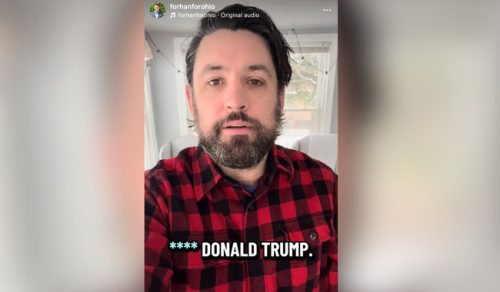
“This is a militia that kills … It’s clear that they are not welcome in Milan, there’s no doubt about it. Can’t we just say no to Trump for once?” the mayor said in an interview with Italy’s RTL 102.5 radio.
An online petition launched by activist group Azione Milano calling for ICE agents to be banned from the Milan-Cortina Olympics has already been supported by more than 6,400 signatures.
The official DHS account answered directly on X to cut through the noise and set expectations about the agency’s role abroad. Their reply explained the actual scope of ICE activity connected to the Games and emphasized coordination with partners and host authorities.
“Obviously, ICE does not conduct immigration enforcement operations in foreign countries,” the official DHS account wrote on X. “At the Olympics, ICE’s Homeland Security Investigations is supporting the U.S. Department of State’s Diplomatic Security Service and host nation to vet and mitigate risks from transnational criminal organizations.”
“All security operations remain under Italian authority,” they added.
The pushback in Milan mirrors a broader political pattern: left-leaning activists and some elected officials routinely cast ICE as an antagonist, and that rhetoric often fuels protests and threats. Those confrontations are not abstract; they have produced dangerous scenes in U.S. cities and have altered how agents operate in volatile environments.
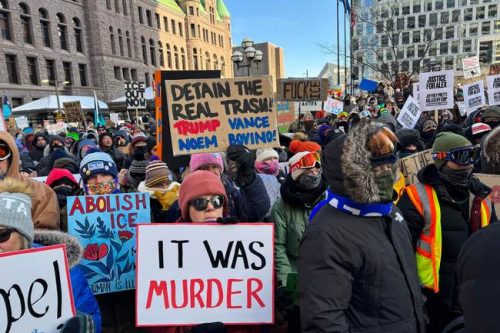
In Minneapolis, clashes between demonstrators and federal immigration agents turned violent and chaotic, culminating in the fatal shooting of two protesters, one of whom had struck an agent with her vehicle. That episode prompted a leadership shakeup within Minnesota ICE operations and underscored the risks agents face when enforcement becomes a flashpoint for ideological conflict.
Meanwhile, enforcement actions continue where local authorities cooperate with federal partners, and those outcomes often get less attention than the disorder. Deportations and arrests have proceeded efficiently in many jurisdictions where law enforcement works with ICE, pointing to a contrast between chaotic protests and steady operational results.
Public safety and the rule of law are at stake when rhetoric escalates into direct action against federal officers, and officials on both sides are watching how the Olympics situation will be handled. The U.S. message has been consistent: support and information-sharing can happen without cross-border enforcement, and host nations retain command of security operations.
Editor’s Note: Democrat politicians and their radical supporters will do everything they can to interfere with and threaten ICE agents enforcing our immigration laws.