Short summary: This piece traces apparent links between a wide healthcare fraud ring tied to Minnesota’s Somali community and senior Somali officials, highlighting overlapping business addresses, shared company ties, historical money-transfer concerns, and the surprising fact that Somalia now holds the U.N. Security Council presidency.
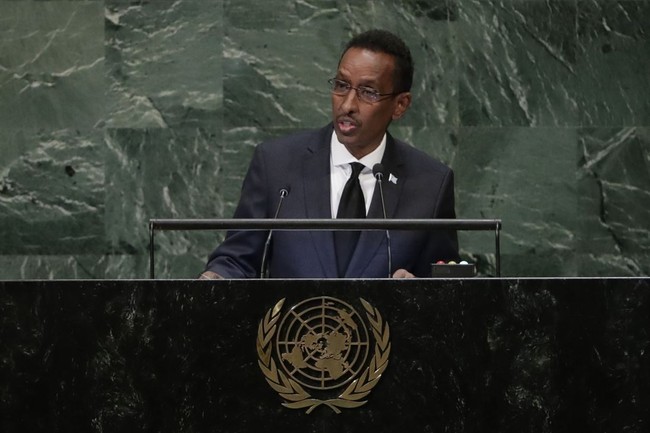
Just before the new year, Somalia assumed the rotating presidency of the U.N. Security Council, a role that puts its ambassador front and center for a month. That fact alone raised eyebrows given Somalia’s long history of instability, terrorism, and piracy, and it deserves scrutiny rather than blind deference.
Now add to that scrutiny a string of business links that look far too cozy for comfort. Somalia’s Ambassador to the U.N., Abukar Dahir Osman, was tied to a Cincinnati healthcare firm called Progressive Health Care Services, Inc., and investigators found other Somali-named healthcare businesses at the same suite address.
“Somalia’s Ambassador to the U.N., Abukar Dahir Osman, was a healthcare administrator in Ohio,” wrote LibsofTikTok. “There is another healthcare company in the same suite as his with a different name, and multiple others at the same address, all with Somali names.” This is not small-time paperwork; it’s a pattern that screams organized coordination, and it deserves a full accounting.
Somalia’s Minister of Foreign Affairs, Abdisalam Ali, also shows up in the same web of companies, owning healthcare firms in Ohio. “Holy smokes you will never believe this,” wrote LibsofTikTok. “Somalia’s Minister of Foreign Affairs owns a home healthcare company in Ohio. There’s two other healthcare companies in the same suite as his and multiple others at this address with Somali owners.” Those overlaps are more than coincidence when you stack them together.
Ali’s businesses include Ritechoice Healthcare Services and MedExpress Transportation in Toledo, and he lists business ties to Abdul Surey, a partner whose background raises additional red flags. “Somalia’s Minister of Foreign Affairs’ business partner in his healthcare company is Abdul J Surey,” wrote LibsofTikTok. “It appears to be the same Abdul who works for a Somali money transfer who are accused of financing Islamic terrorism.” This kind of proximity between diplomatic figures and suspect private enterprises is dangerous.
Omg wait till you hear this
Somalia’s Ambassador to the UN Abukar Dahir Osman was a healthcare administrator in Ohio. There is another healthcare company in the SAME SUITE as his with a different name, and multiple others at the same address, all with Somali names
Of course… pic.twitter.com/sHv1aX1e5J
— Libs of TikTok (@libsoftiktok) January 1, 2026
That money-transfer firm, Dahabshiil, has been controversial before. Kenyan authorities once suspended its services and froze assets over alleged ties to al-Shabaab, and Dahabshiil remains the largest Africa-based money-transfer business. Those are not minor accusations to shrug off when names and addresses overlap.
Worse, Dahabshiil listed an address at 227 Morse Road in Columbus, Ohio, on corporate filings — the same address tied to one of Ali’s other LLCs, Salam Group, LLC. When diplomats, their partners, and money-transfer entities accused of funding terror appear to share physical and corporate footprints with U.S.-based healthcare firms, that merits aggressive federal scrutiny.
Federal and state investigators already have linked fraud schemes in the Minnesota Somali community to millions of American taxpayer dollars flowing into illicit channels and, in some reports, onward toward extremist groups. Those revelations alone were headline-worthy; these cross-border corporate connections make the case much broader and potentially more consequential.
“As we continue to peel back each layer of this onion. It just gets so much worse,” wrote Dustin Grage on X. “People need to be investigated and prosecuted.” He’s right: this is not about vague suspicions but about concrete leads that point to coordinated fraud, shadowy money movements, and potential national security implications.
Republican-leaning oversight should push for full transparency: audits of the companies involved, forensic accounting of funds that moved through these entities, and prosecutorial action where the facts support it. Allowing foreign diplomats or their associates to blend into domestic business networks without scrutiny undermines rule of law and invites abuse.
At stake is more than headline drama; it’s the integrity of aid programs, the safety of taxpayer funds, and the credibility of institutions that should enforce the law regardless of international optics. Law enforcement must follow the paper trail and use every tool available to ensure those implicated face consequences if wrongdoing is proven.