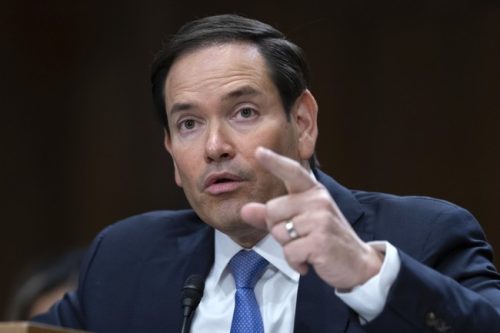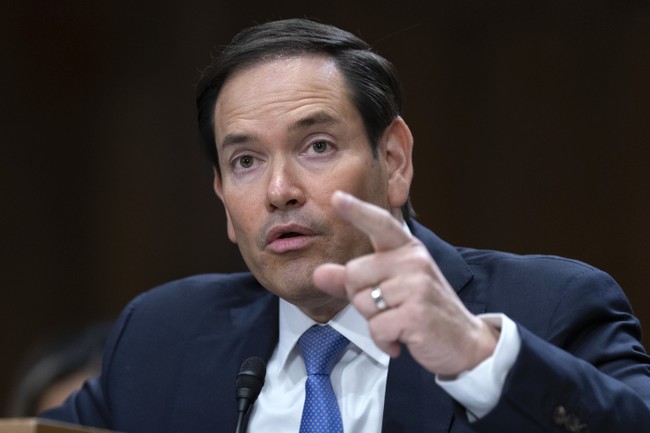
Sen. Marco Rubio brushed off a loud protest while testifying before the Senate Foreign Relations Committee, keeping the focus on U.S. policy toward Venezuela and a recent operation that reshaped the debate on American power in the hemisphere.
Secretary of State Marco Rubio is testifying before the Senate Foreign Relations Committee on Wednesday, expected to reaffirm that the United States is not at war with Venezuela and has no military forces occupying the country. The opening minutes turned tense when a protester suddenly leapt up and began shouting inside the chamber, briefly interrupting proceedings. Rubio’s team and the committee handled the disruption without letting it derail the hearing schedule.
The interruption did not rattle Rubio, and the scene played out quickly as security escorted the demonstrator away. The protester shouted, “… that’s a war crime,” as he was removed, followed by “Hands off Venezuela, hands off Cuba.” Those lines were plainly aimed at the administration’s recent actions, but the hearing moved on with little lost time. Senators signaled that disruptions would be met with standard penalties to preserve order.
“You know the drill, off to jail,” Senator Risch, the chairman of the committee and a Republican from Idaho, said to the protester. “That’s a one-year ban from the committee. Anyone who is a persistent violator will be banned for three years. So I don’t know whether that guy falls into that category—looks like it. But after three years, he’ll find a more productive means of employment.” Risch’s comment underscored a simple point: disruptions will not substitute for debate or replace measured oversight.
“Secretary Rubio, we have two hearings a week, you know. You seem to have a more robust following than most of our witnesses that come before us.” The quip landed with a chuckle, and the exchange showed the committee’s familiarity with high-profile witnesses and their supporters. “There will be a couple more,” Rubio replied. “Thank you for stopping the clock.” That short back-and-forth signaled a return to the substance the committee had convened to address.
The hearing comes on the heels of a bold operation that captured Venezuela’s socialist dictator Nicolás Maduro in under an hour, with no U.S. casualties. The mission was presented by supporters as a demonstration of American capability and resolve, and it has already reshaped the way some policymakers describe U.S. posture in the hemisphere. The operation’s backers framed it as a decisive pushback against regimes that threaten regional stability and support adversaries of the United States.
Republican commentators and many committee members hailed the raid as proof that the United States can act quickly and precisely when it chooses, reinforcing deterrence without getting bogged down in open-ended occupations. The aftermath produced a new rhetorical line dubbed the “Donroe Doctrine,” a fusion of President Trump’s name and the Monroe Doctrine, invoking a familiar principle: the Western Hemisphere should not become a staging ground for hostile powers. For supporters, that phrase reflected a return to classical deterrence in U.S. foreign policy.
Democrats in Congress responded by introducing war powers resolutions intended to constrain the president’s military authority after the Maduro raid, though those measures were narrowly defeated in the House. The votes exposed a split over how aggressively the United States should use force to protect interests in the region and how much latitude the commander in chief should retain. Republicans argued the resolutions would handcuff commanders and undercut deterrence at a time when rivals are actively seeking influence in neighboring countries.
🚨 BREAKING: A leftist rioter just got SWIFTLY REMOVED from Marco Rubio's testimony — and Marco's response was perfect 😂
PROTESTOR: *Going berserk*
MARCO: "There's gonna be a couple more [protestors], so…"
He knows the drill 🤣🔥
Greatest Secretary of State EVER! pic.twitter.com/NopbmJMwDJ
— Eric Daugherty (@EricLDaugh) January 28, 2026
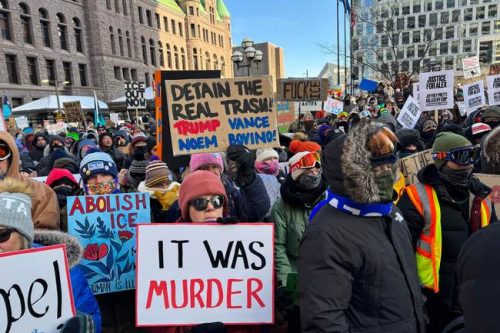
Across the country, protests followed from those who view the operation as imperialist or reckless, and many demonstrators called for Maduro’s release even as they attacked the U.S. president’s approach. That stance struck many conservatives as contradictory: condemning decisive action abroad while labeling a law-and-order approach at home as authoritarian. For Republicans in the Senate hearing room, the message was straightforward—lawful, limited uses of force that protect American interests deserve a clear-eyed defense, not reflexive second-guessing.
The scene on the committee floor illustrated a broader point about politics and protest in Washington: disruption draws attention, but it does not substitute for policy. Rubio’s composure and the committee’s quick restoration of order kept the focus on testimony and questions about strategy. In a charged environment, the ability of a witness and a chairman to steer the record back toward substance mattered more than any momentary theatrics.