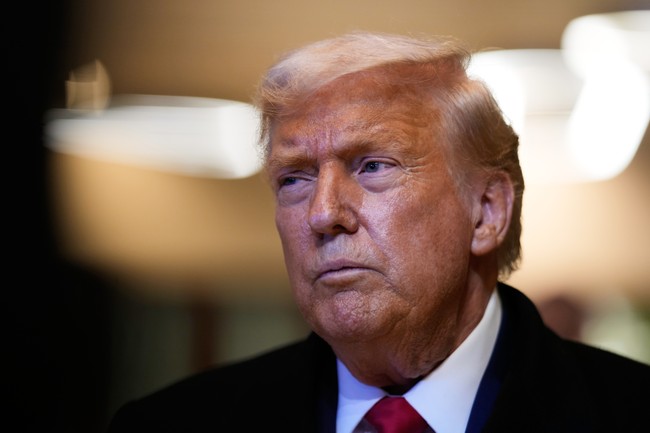
Donald Trump sat down with Katie Pavlich and talked through his White House ballroom plans, the security risks facing public figures, and which Republicans he trusts to carry forward his agenda.
In the second half of his conversation with NewsNation’s Katie Pavlich, President Donald Trump addressed the backlash over a new White House ballroom, explained why he pushed for it, and touched on who he sees as capable successors. The interview mixed policy rationale, blunt assessments of safety, and personal takes on the state of the country. He answered questions directly and framed the debate on security and legacy in simple, plain terms.
Pavlich pressed Trump on the ballroom’s construction and timing, and he made a practical case for the project. He pointed out that official events often require temporary tents and shoddy accommodations for large guests, arguing that this was a real shortcoming. “The White House was never built with a big room,” he said, adding that ad hoc tents leave officials vulnerable when weather or logistics go wrong.
Trump described the ballroom as a long-term fix rather than an indulgence, noting capacity and security features designed to meet modern challenges. The room is intended to seat between 5,000 and 6,000 people and is being outfitted with bulletproof glass, drone-proof ceilings, and high ceilings to handle large events safely. He suggested the space could host future presidential inaugurations instead of forcing ceremonies outdoors in January cold, which he said creates discomfort and risk.
Prime-time exclusive: NewsNation’s .@KatiePavlich continues her one-on-one interview with President Donald Trump on "Katie Pavlich Tonight," tonight at 10p/9C. Find us on your screen: https://t.co/WTT0IBBRuZ pic.twitter.com/5ooZY0X42C
— NewsNation (@NewsNation) January 21, 2026
He was blunt about the practical reasons for moving events indoors. “It’s too cold. Number two, it gets unsafe out there,” Trump said, pointing to weather and security as core concerns for mass gatherings. Critics on the left labeled the project wasteful, arguing public funds should go elsewhere, but Trump framed it as infrastructure for official business and protective necessity.
Security and political violence were a major part of the discussion, with Trump citing personal experiences and broader trends. He referenced two assassination attempts against him and the assassination of Turning Point USA’s Charlie Kirk while noting that sitting presidents face higher risks. When asked about the stakes, he reminded listeners that the office carries unique dangers.
“If you’re a race car driver, one-tenth of one percent die. If you’re a bull rider, one-tenth of one percent die. If you’re a president, it’s 5.2 percent,” he explained, using stark comparisons to underline the point. He followed that with confidence in his security detail, saying, “I don’t worry about it. We have great people, and I feel that we’re in good shape.” The tone was both candid and defiant, emphasizing preparation over fear.
Trump and Pavlich also discussed recent trends in politically motivated violence and threats against officials. Reporting shows extremist-related murders moved from 28 in 2022 down to 13 in 2025, but the early weeks of 2025 already recorded 15 such attacks in just six weeks. Federal law enforcement outcomes reflect the pressure as well: there were 180 arrests in 2024, the highest in more than a decade, and Capitol Police investigated over 10,000 possible threats against members of Congress.
Pavlich asked why he would seek a second term in the face of those dangers, and Trump answered with the same mix of conviction and self-assessment he uses on the stump. “I love doing it because we’re doing a great job,” Trump replied, pointing to what he sees as a national turnaround under his leadership. “Nobody’s ever seen anything like it. Our country has turned around.”
He offered sharp criticism of his political opponents as a reason to stay in the fight, warning about what he says would have happened under Democratic leadership. The president insisted that the alternative was unacceptable, stating that “if Kamala [Harris] won the election, this country would have been, even by now, one year, it would have been finished. We wouldn’t be a country.” The line was delivered as a warning about risks he believes Democrats pose.
When the conversation turned to Republican succession, Trump was upbeat about talent in the party while keeping his focus on practical political strength. “We certainly have a good bench” and “some very talented people,” he said, suggesting the GOP is well positioned for future leadership. Pavlich pressed for names and Trump obliged with praise for a handful of people he trusts.
“JD [Vance] has been great. Marco [Rubio] has been great. Scott [Bessent] has been great,” Trump said, listing allies and rising figures he values. “I could name 20 people that are phenomenal.” He framed the comment as confidence in Republican depth rather than settling on a single heir, leaving the field wide and signaling support for multiple paths forward.
Throughout the interview, Trump kept returning to themes of security, competence, and legacy, defending decisions that he says modernize and protect presidential operations. He pushed back on critics who see extravagant spending and pointed to tangible safety and ceremonial benefits. The tone blended practical argument with partisan conviction, making clear he sees these moves as part of a larger effort to preserve and extend the policies he believes in.