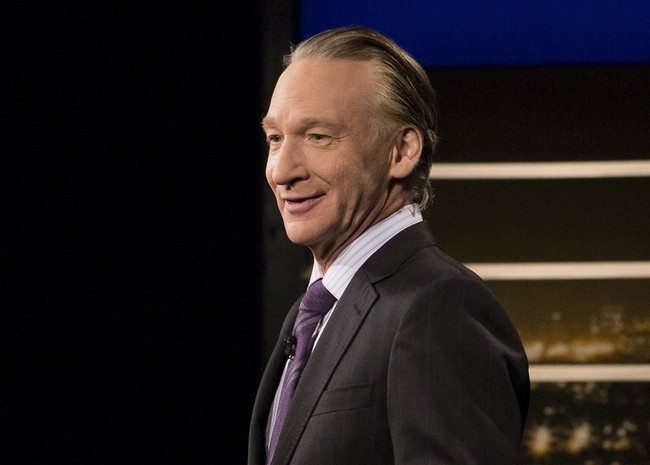
Bill Maher says he took a COVID shot because the rules in California and his workplace left him no real choice, and he’s not happy about it.
Bill Maher recently laid out a blunt version of how mandates worked for him as a California-based TV host: get the COVID vaccine or you couldn’t keep working. He told the story on his Club Random podcast while talking with Adam Carolla, and he made it clear the decision wasn’t voluntary in practice. The episode shows how cultural pressure and institutional rules forced a personal medical choice for someone in the public eye.
Maher was direct about his feelings, saying he didn’t want the vaccine but felt compelled to take it to keep his show running. “I had to conform… didn’t want the vaccine at all… But I had to have it. I couldn’t have continued my life. They wouldn’t have let me do the show, and I had to do it here. I did it in this room,” he said, quoting his own explanation of that moment. That honesty landed with people who saw mandates as coercive rather than protective.
The host didn’t call himself anti-vaccine, but he drew a line between risk levels and one-size-fits-all rules. “Fourteen and 94 are different. And if you don’t see that, you are not ‘the science,’ people,” he declared, insisting that age and vulnerability matter when assessing policy. That point echoes a common conservative critique: public policy should be tailored to risk, not applied uniformly across vastly different populations.
Bill Maher gets angry as he finally admits how he was FORCED to take the COVID jab to keep his show.
ADAM CAROLLA: “Imagine if you had to conform.”
MAHER: “I did! I had to conform. I didn’t want the vaccine at all… But I had to have it. I couldn’t have continued my life. They… pic.twitter.com/qzr8KSguGX
— Vigilant Fox 🦊 (@VigilantFox) February 9, 2026
Maher and Carolla used the conversation to push back on what they see as the modern Left’s tendency to shut people out who disagree. They framed that exclusion as both political and cultural, arguing that disagreement was treated as disloyalty instead of debate. The tone was blunt and unapologetic, and they painted the Left as increasingly intolerant of dissenting viewpoints.
Part of Maher’s irritation comes from the way personal freedoms were traded for access to work and social life. For many, the choice wasn’t risk assessment but a forced compliance to keep a job, appear on TV, or participate in normal civic life. That dynamic rankles conservatives who value individual liberty and believe governments and institutions overstepped by imposing broad medical rules without room for nuance.
He also made a practical point: if someone is at real risk, take precautions and consider vaccination, but don’t mandate the same treatment for healthy young people. That argument focuses on targeted protection for the vulnerable while preserving personal choice for those who face minimal risk. It’s a common conservative stance that emphasizes both compassion for the at-risk and skepticism of blunt mandates for the healthy and low-risk.
The podcast exchange turned personal but stayed political, because Maher used his own experience to highlight a broader trend. When a high-profile host says he was effectively coerced, it invites scrutiny of how policies were implemented and who enforced them. Conservatives will point to that moment as proof that mandates created unnecessary coercion and cultural conformity, not just public health measures.
Beyond the vaccine topic, the conversation drifted into cultural critique, with Maher and Carolla ridiculing what they called elite pretension and performative virtue. That criticism hits two targets at once: policy makers who pushed strict rules and media elites who treated dissent as moral failure. From a Republican perspective, that double critique underscores the problem of concentrated cultural power shaping social rules without adequate accountability.
For viewers who followed the back-and-forth, the episode read like a candid confessional combined with a political statement. Maher’s willingness to say he complied under pressure and to call out the architecture of that pressure gave conservatives a talking point about mandates, workplace rules, and cultural enforcement. The exchange showed how one personal story can feed a wider debate about freedom, safety, and who gets to decide policy in public life.
BONUS: Watch Carolla roast Karen Bass for letting LA burn to the ground.