A former New York sales director was sentenced in federal court on Feb. 13, 2026, after prosecutors say he helped run a scheme that led to roughly $70.6 million in fraudulent Medicare bills tied to medically unnecessary brain scans. The case produced prison time, heavy financial penalties, and a multi-agency announcement as authorities closed the investigation.
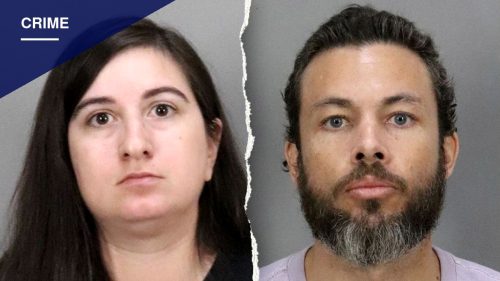
James Rausch, 57, who served as a sales director covering the Northeast for a mobile medical diagnostics firm, received his sentence after admitting involvement in a kickback conspiracy. The court ordered eight months in prison followed by one year of supervised release, along with $17.5 million in restitution, $408,437 in forfeiture and a $20,000 fine. The penalties reflect both the scale of the fraud and the government’s push to deter schemes that exploit Medicare.
The scheme generated fraudulent billing of about $70.6 million to Medicare, with Medicare paying roughly $27.2 million to the TCD company for those claims. Prosecutors say those payouts were driven by referrals tied to improper payments rather than genuine medical need. That split between billed amounts and Medicare payments is a common indicator investigators use to trace overbilling and kickbacks.
In June 2025, Rausch pleaded guilty to one count of conspiracy to violate the anti-kickback statute, admitting his role in a scheme that ran from March 2015 through at least September 2020. According to court filings, he conspired with others, including two managers at the mobile diagnostics company that performed transcranial doppler, or TCD, scans. The indictment and plea documents outline how the referrals and payments were coordinated across practices and regions.
TCD scans are ultrasounds that measure blood flow in regions of the brain and can be useful in specific clinical situations. Prosecutors stressed that these tests are not appropriate for every patient, and that ordering them without medical necessity exposes patients and taxpayers to harm. The allegation here is not about the technology itself but about a business model that allegedly paid for volume rather than clinical need.
Investigators say Rausch and co-conspirators offered kickbacks to doctors to generate orders for TCD ultrasounds, paying some physicians in cash and others by check. To conceal the true nature of those payments, the group created sham rental and administrative services agreements that appeared to compensate practices for space and administrative support at fair market value. On paper those contracts masked arrangements that prosecutors say paid doctors based on the number of scans they ordered, effectively rewarding volume instead of care.
United States Attorney Leah B. Foley; Roberto Coviello, Special Agent in Charge of the U.S. Department of Health and Human Services, Office of Inspector General; Ted E. Docks, Special Agent in Charge of the Federal Bureau of Investigation, Boston Division; Thomas Demeo, Special Agent in Charge of the Internal Revenue Service Criminal Investigation, Boston Field Office; Anthony D’Esposito, Inspector General of the Department of Labor, Office of Inspector General; Nicholas Bucciarelli, Acting Inspector in Charge of the U.S. Postal Inspection Service, Boston Division; and Christopher Algieri, Special Agent in Charge of the U.S. Department of Veterans Affairs Office of Inspector General, Northeast Field Office made the announcement. Assistant U.S. Attorney Mackenzie Queenin, Chief of the Health Care Fraud Unit prosecuted the case.
The government’s theory relied on traditional red flags: arrangements that tied compensation to referrals, paperwork that failed to reflect real services, and payments that shifted between cash and checks to obscure intent. Prosecutors used billing records, internal company documents and testimony from cooperating witnesses to piece together how the payments flowed. That evidence formed the basis for the plea and the subsequent sentencing decision.
The case highlights common vulnerabilities in how mobile diagnostic services interact with physician practices, especially when business incentives are misaligned with patient care. Federal investigators and prosecutors say they will continue targeting schemes that convert clinical decisions into profit centers for intermediaries rather than focusing on patient need. The penalties imposed in this matter aim to signal that exploiting Medicare carries concrete consequences.
James Rausch, a former NY-based sales director for a mobile medical diagnostics company, has been sentenced to eight months in prison for conspiring to offer and pay kickbacks to doctors in exchange for ordering medically unnecessary brain scans. This scheme resulted in… pic.twitter.com/MqA7Ntny57
— FBI Boston (@FBIBoston) February 18, 2026
Editor’s Note: Do you enjoy Townhall’s conservative reporting that takes on the radical left and woke media? Support our work so that we can continue to bring you the truth. Join Townhall VIP and use promo code FIGHT to receive 60% off your membership.