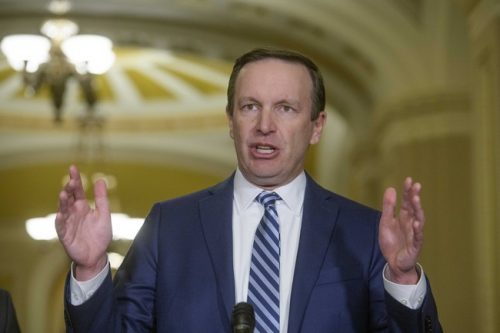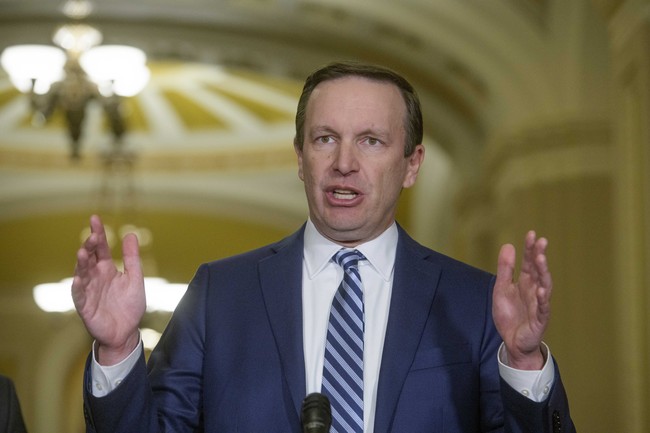
Sen. Chris Murphy (D-CT) squared off with Fox News host Shannon Bream in a live exchange that put his claims about ICE on the spot, and a key statistic was used to undercut his argument. The back-and-forth touched on enforcement priorities, accusations of abuse, and the political fight over immigration policy.
Sen. Chris Murphy (D-CT) appeared on Fox News and argued that ICE had stopped targeting criminal aliens, a claim that drew an immediate correction on air. Shannon Bream pushed back with a counterpoint, noting that almost 70 percent of ICE arrests involve people who already have criminal records. Murphy’s status as a senator from a D-plus-6700 state was mentioned as context for how insulated he can be from direct political consequences. The tone quickly moved from debate to a public fact-check in real time.
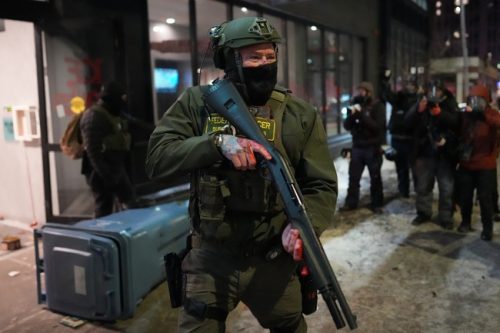
After the correction, Murphy persisted with broader allegations about federal agents, including dramatic talk about Americans being murdered or disappeared by authorities. Those claims were framed by the host and others as both historically inaccurate and alarmist, with comparisons to la ‘Guerra Sucia’ in Argentina dismissed as a false equivalence. The exchange highlighted how emotionally charged immigration enforcement has become, and how political narratives can drift into extremes. Viewers saw a clear clash between on-the-ground statistics and sweeping political rhetoric.
🚨 BREAKING: Dem Sen. Chris Murphy just got DECIMATED in front of MILLIONS for blatantly lying about ICE
MURPHY: Come on, we're still pretending that ICE is going after dangerous people?!
FOX: 70% of those they're arresting, and that's their number, DO have some kind of… pic.twitter.com/6CeXmfZnpd
— Eric Daugherty (@EricLDaugh) February 1, 2026
The argument quickly turned to policy priorities and electoral promises. Republicans pointed out that the 2024 vote, they argued, made clear the mandate many conservatives interpreted as a call to remove all illegal entrants over time. The initial emphasis, they say, was to start with criminal aliens while building out detention and processing capacity. That plan, they add, was complicated by what they describe as Democratic resistance to local cooperation and detention resources.
From the Republican perspective, the pushback was less about nitpicking a single number and more about defending the idea that law enforcement should be allowed to do its job. When local jails and police handed over suspects, Republicans claim ICE used those moments to transfer dangerous individuals out of communities. Critics on the left, according to this view, sought to politicize routine enforcement rather than address the root problems. That political fight has reshaped how operations are carried out on the ground.
There was also a broader critique of how narrative and reality diverge in modern media. One side accused the other of spreading a dramatic storyline of state violence that doesn’t line up with documented practice. The opposing side argued that enforcement tactics can be heavy-handed and that accountability is necessary. That tension between oversight and operational freedom plays out in congressional hearings and cable news segments alike.
Practicalities mattered in the debate about detention facilities and local cooperation. Republicans argued that honoring detention agreements would have kept enforcement orderly and limited the need for street-level sweeps. Instead, they contend, officials were forced into visible, large-scale operations that made headlines and stoked public fear. That, in turn, fed the narrative that enforcement had become indiscriminate rather than targeted.
The exchange also triggered predictable partisan reactions on social media and in opinion shops. Supporters of Murphy framed the host’s correction as partisan nitpicking aimed at deflecting from human rights concerns. Conservatives framed Murphy’s claims as evidence that Democrats willfully ignore facts that complicate their political messaging. Both sides dug in, and the segment became another skirmish in a larger communications war over immigration.
Beyond the cable segment, the debate raised questions about enforcement goals and public safety. Republicans emphasized the need to prioritize criminals and public threats, saying that statistics like the almost 70 percent figure matter for policy design. Democrats pushed back about civil liberties and the humane treatment of migrants, arguing for reforms to how people are processed and detained. Those differences continue to shape legislative proposals and agency directives.
The live correction by Shannon Bream underscored how quickly a single stat can change the tone of a discussion. For critics of Murphy, the moment showed that media fact-checks can blunt sweeping accusations when hard numbers are available. For his defenders, the same moment was proof that framing and emphasis matter more than isolated percentages. Either way, the clip circulated quickly and became shorthand for broader disputes.
Editor’s Note: Do you enjoy Townhall’s conservative reporting that takes on the radical left and woke media? Please support our work so that we can continue to bring you the truth.
Join TOWNHALL VIP and use the promo code FIGHT to get 60% off your VIP membership!